
.jpg)
Alle Klassenfahrt Aktivitäten IN Berlin
_result.webp)

Class Trip ACTIVITIES
London
Highlights
List of all class trip activities
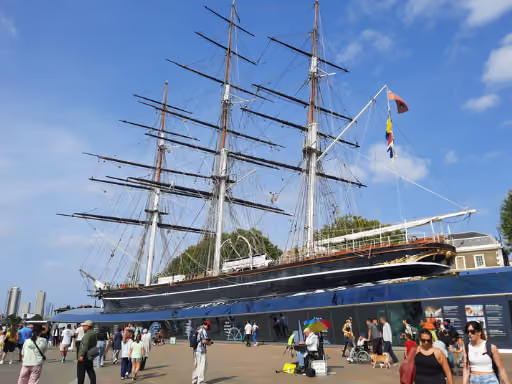

Step aboard a ship
Cutty Sark gives school groups the chance to step aboard a historic ship and explore maritime trade, engineering and life at sea. Pupils can learn how fast sailing ships connected Britain with global markets and how design, navigation and crew skills shaped long-distance travel. The visit supports history, geography, science and economics by linking an object pupils can walk through with wider themes of trade and empire. For teachers, it offers an active way to make maritime history more concrete and memorable.

.avif)
.avif)
.avif)


Cutty Sark gives school groups the chance to step aboard a historic ship and explore maritime trade, engineering and life at sea. Pupils can learn how fast sailing ships connected Britain with global markets and how design, navigation and crew skills shaped long-distance travel. The visit supports history, geography, science and economics by linking an object pupils can walk through with wider themes of trade and empire. For teachers, it offers an active way to make maritime history more concrete and memorable.
Museum
No
No
Indoor


Solve a spy-themed escape room
A spy-themed escape room at clueQuest gives school groups an exciting way to practise teamwork, communication and logical thinking. Pupils must solve puzzles, share clues, manage time and make decisions under pressure, which makes the activity valuable for problem-solving and class bonding. Although it is not a traditional museum visit, it supports skills that are important across the curriculum, including reasoning, resilience and collaboration. For teachers, it provides a structured challenge where pupils can learn by doing and see how different strengths contribute to a team result.
.avif)
.avif)
.avif)
A spy-themed escape room at clueQuest gives school groups an exciting way to practise teamwork, communication and logical thinking. Pupils must solve puzzles, share clues, manage time and make decisions under pressure, which makes the activity valuable for problem-solving and class bonding. Although it is not a traditional museum visit, it supports skills that are important across the curriculum, including reasoning, resilience and collaboration. For teachers, it provides a structured challenge where pupils can learn by doing and see how different strengths contribute to a team result.
No
Abend
No
Indoor


Learn about evolution and biology
At the Natural History Museum, pupils can explore evolution, biology, geology and biodiversity through specimens, displays and scientific collections. School groups can connect classroom science with real examples of animals, fossils, minerals and ecosystems, helping pupils understand how life on Earth has changed over time. The museum encourages curiosity, observation and scientific thinking, making it valuable for biology, geography and environmental studies. For teachers, it offers an inspiring setting where pupils can experience the scale and complexity of the natural world beyond the textbook.
.avif)
.avif)
.avif)
At the Natural History Museum, pupils can explore evolution, biology, geology and biodiversity through specimens, displays and scientific collections. School groups can connect classroom science with real examples of animals, fossils, minerals and ecosystems, helping pupils understand how life on Earth has changed over time. The museum encourages curiosity, observation and scientific thinking, making it valuable for biology, geography and environmental studies. For teachers, it offers an inspiring setting where pupils can experience the scale and complexity of the natural world beyond the textbook.
Museum
No
No
Indoor


Experience immersive art
FRAMELESS allows school groups to experience art through large-scale digital projections, sound and immersive spaces. Pupils can explore how technology changes the way artworks are presented and how viewers respond to colour, movement and atmosphere. The visit supports learning in art, media, design and digital culture, while encouraging pupils to discuss interpretation and sensory experience. For teachers, it offers a contemporary activity that can engage pupils who may not usually connect with traditional galleries, showing that art can be experienced in many different forms.
.avif)
.avif)
.avif)
FRAMELESS allows school groups to experience art through large-scale digital projections, sound and immersive spaces. Pupils can explore how technology changes the way artworks are presented and how viewers respond to colour, movement and atmosphere. The visit supports learning in art, media, design and digital culture, while encouraging pupils to discuss interpretation and sensory experience. For teachers, it offers a contemporary activity that can engage pupils who may not usually connect with traditional galleries, showing that art can be experienced in many different forms.
Museum
No
No
Indoor
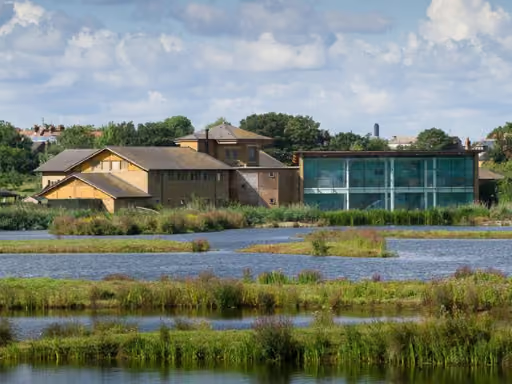

Study wetland habitats and animals
WWT London Wetland Centre gives school groups a strong fieldwork setting for studying wetland habitats, animals and conservation. Pupils can observe birds, insects, plants and water systems while learning why wetlands matter for biodiversity, flood management and climate resilience. The visit supports biology, geography and environmental science through direct observation and practical enquiry. For teachers, it offers a rich outdoor learning experience that helps pupils see ecosystems in action and understand how conservation work protects both wildlife and urban communities.
.avif)
.avif)
.avif)
WWT London Wetland Centre gives school groups a strong fieldwork setting for studying wetland habitats, animals and conservation. Pupils can observe birds, insects, plants and water systems while learning why wetlands matter for biodiversity, flood management and climate resilience. The visit supports biology, geography and environmental science through direct observation and practical enquiry. For teachers, it offers a rich outdoor learning experience that helps pupils see ecosystems in action and understand how conservation work protects both wildlife and urban communities.
No
No
No
Outdoor

.avif)
%201.avif)
.avif)

.avif)

comparison: class trip activites
Frequently asked questions: schoolrallye
FAQ


_converted.avif)
_converted.avif)
%20(2)_converted.avif)

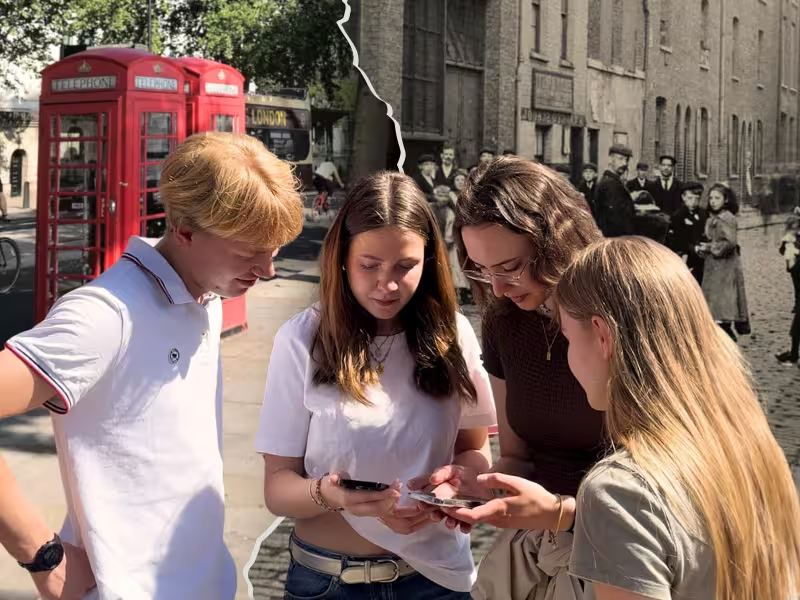
Murder & Corruption in the Streets of London

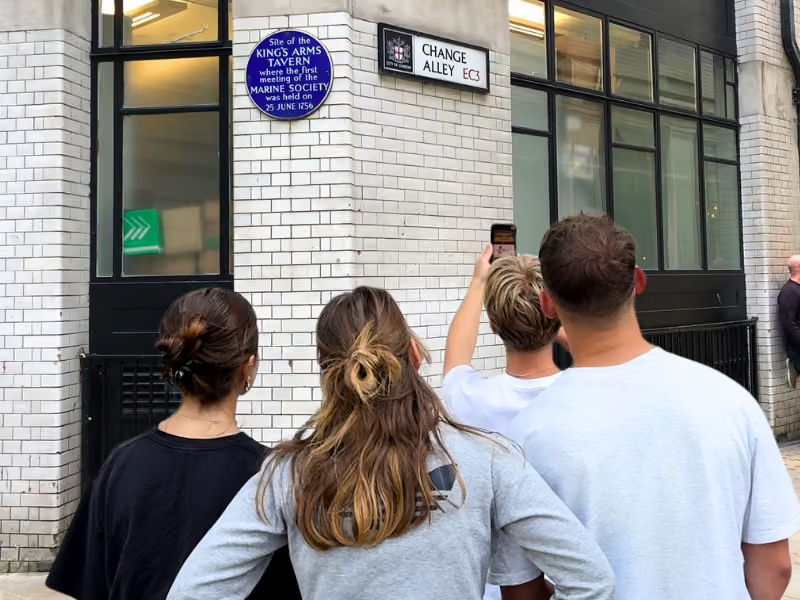
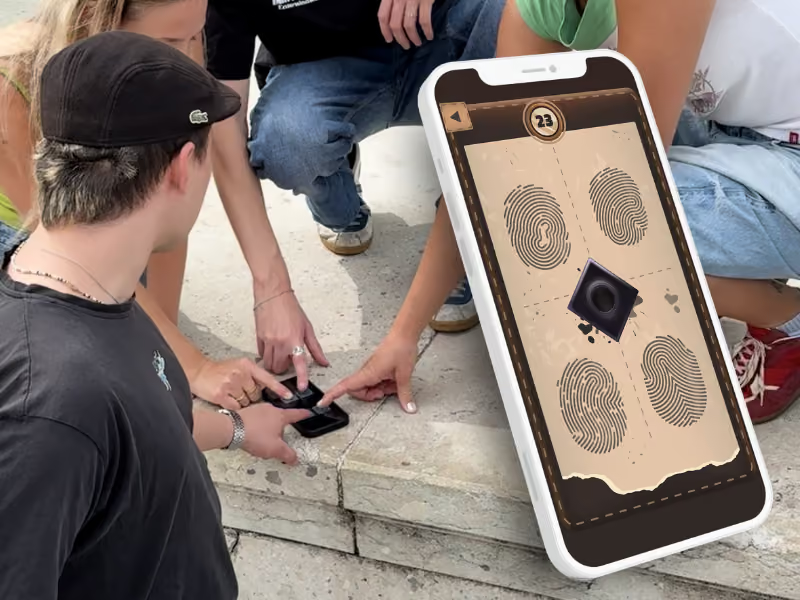
A spectacular mission awaits you! Scotland Yard sends a young detective to investigate a brutal murder. For the local police, the case is clear: a factory worker is the killer. But hidden in the thick fog of London’s streets lies a dark truth. Recover the stolen police file, examine the evidence and help the detective bring the real murderer to justice before an innocent man is convicted.
Learn more
Auch erhältlich bei
