
.svg)


.svg)


.svg)
.avif)
Class trips are often the social highlight of a student's entire school career. They create shared memories, foster social skills, and help a class truly bond. At the same time, they are among the most organizationally demanding projects for teachers: dealing with parents, financing, legal requirements, finding accommodation, and planning the itinerary all within a tight timeframe.
Digital formats—like the interactive city rallies from schoolrallye.com—are a blessing for on-site execution. They motivate students through gamification, provide structure, and take the pressure off you during moderation. However, digital tools are the spire, not the foundation. Whether a class trip runs smoothly or descends into chaos is usually decided not by programming the app, but by the hard logistics months in advance. This article gives you the best of both worlds: a practical strategy for managing logistics professionally and tips on how to integrate modern digital content so that it fully realizes its educational value.
Don't view the trip as a "vacation," but as a project management task. You are juggling time, budget, resources, and risks. Depending on the destination and grade level, a chain of dependencies emerges: school administration approvals depend on concrete quotes, letters to parents depend on fixed prices, and the availability of popular hostels often dictates the dates. Anyone who starts without a clear structure ("I'll just do a bit of Googling") pays for it with stress later on. It is particularly helpful to make the basic options visible early on: Which destinations fit the budget? What duration is realistic?
Pro tip: Instead of individual searches, use centralized overviews to compare destinations directly. This saves hours of research time and gives you an immediate feel for the price range.
From practice, for practice: This is where most plans fail—and here is how you can do it better.
Accommodations and time slots for popular programs are often booked up 6 to 12 months in advance. Those who start too late have less choice and pay higher prices for "leftover spots." Top destinations like Berlin, in particular, are in extremely high demand. Solution: Start counter-cyclically or book packages through specialized providers who hold allotments.
Many plans fail not because of the trip price itself, but because of hidden costs: local public transport, tourist taxes, security deposits, or spontaneous meals. The solution: build in a 10% buffer and be transparent about what is included. Pro tip: domestic destinations are often more budget-friendly to reach, leaving more room in the budget for activities.
First the "how" (duration, budget, travel, accommodation), then the "what" (program). Nothing is more frustrating than planning a great rally only to realize the accommodation is on the other side of town.
Calling bus companies, booking hostels, and sorting out travel insurance takes time. Use service providers for the "hardware" of the trip (travel/accommodation) and invest your energy in the "software" (pedagogy/students).
Five different points of contact (train, hostel, museum, guide) mean five times the potential for errors. Bundle services wherever possible.
Parents need peace of mind, especially when it comes to finances. Providing clear, binding information about costs and deadlines early on prevents the typical flood of emails right before departure.
A jam-packed itinerary creates stress. Buffer times aren't "wasted time"—they are valuable opportunities for educational freedom.
Digital formats and classic guided tours are often seen as opposites. In reality, they complement each other perfectly, provided the logistics are right.
- City tour: Ideal for the morning. Provides an overview, context, and orientation. Teacher's role: supervision.
- Digital scavenger hunt: Perfect for the afternoon. It energizes, gets people moving, and encourages teamwork. Teacher's role: facilitator/coach.
Digital formats work particularly well once the group has settled in. If you have already handled the logistics (meeting points, times, public transport tickets) through a tour operator, you can focus entirely on group dynamics during the scavenger hunt.
This structure makes planning successful regardless of the destination. Use this as your personal roadmap.
Clarify the "big points": destination (perhaps 2 options to choose from), timeframe, budget per person, and chaperones. Now is the time to get the green light from the
school administration.
Now you book the essentials. The goal: legal certainty and confirmed bookings.
- Accommodation: Pay attention to cancellation policies and separate rooms for chaperones.
- Travel: Secure bus or train bookings.
- Risk: Clarify insurance matters (often included in package deals from school trip providers).
Plan in blocks: morning input (museum/learning site), afternoon action (rally/exploration), evening social time. Book your slots for your Schoolrallye now and check the technical requirements (Wi-Fi/students' data plans).
Parent meetings, collecting money, packing lists. Tip: A fixed schedule for payments (deposit/final payment) saves you from having to chase people up.
- Double meeting points: Always define a "Plan B" meeting point in case the first one is overcrowded or closed.
- Write down the rules: Screen time, quiet hours, alcohol policies – having them in writing leads to fewer arguments.
- Use blocks instead of specific agenda items: If an activity is cancelled (e.g., due to weather), you only swap the content of that block rather than the entire daily schedule.
- Trust through technology: With digital scavenger hunts, you can let students roam more freely since the app often includes location checks. Use this to take a breather yourself.
Digital scavenger hunts and interactive explorations are modern tools for contemporary education. They are fun and take the pressure off. But they only work on a stable foundation.
The key to a stress-free class trip is a professional division of labor: use innovative tools like Schoolrallye for the experience – and rely on experienced partners for complex logistics to take the risks and planning burden off your shoulders.
Those who start early, build in buffer time, and get professional support will ultimately experience what it’s really all about: an unforgettable time with the class.
Start your planning now:
Get a quick overview of popular destinations and current prices for your next class trip here.

.avif)




%20(1).avif)
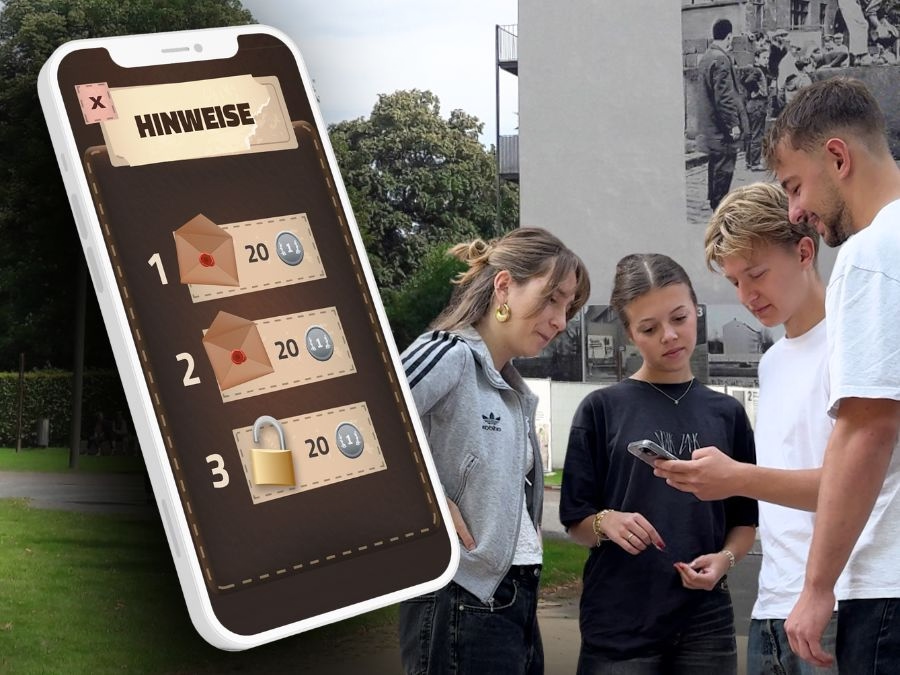
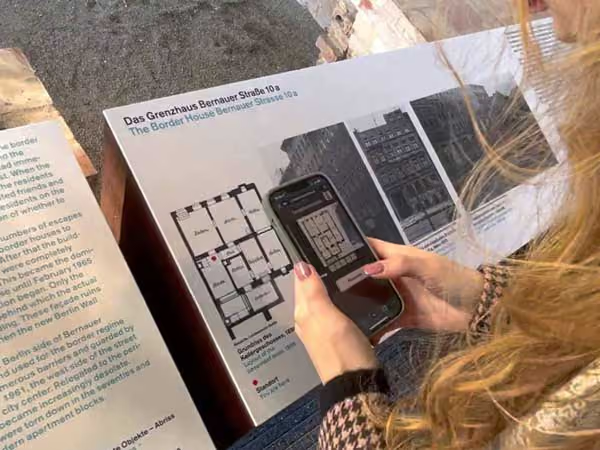
In this digital scavenger hunt, the Stasi is on your trail. They absolutely want to prevent your friend from trying to escape. Will you be able to find and solve the encrypted information about the escape tunnel under the Berlin Wall in front of them?
Read more.avif)
What happens on the route? [video]: Teacher experience tested with two colleagues | Insight into stations & puzzles | Rallye process | Solutions and tasks
Read articleClass trips are often the social highlight of a student's entire school career. They create shared memories, foster social skills, and help a class truly bond. At the same time, they are among the most organizationally demanding projects for teachers: dealing with parents, financing, legal requirements, finding accommodation, and planning the itinerary all within a tight timeframe.
Digital formats—like the interactive city rallies from schoolrallye.com—are a blessing for on-site execution. They motivate students through gamification, provide structure, and take the pressure off you during moderation. However, digital tools are the spire, not the foundation. Whether a class trip runs smoothly or descends into chaos is usually decided not by programming the app, but by the hard logistics months in advance. This article gives you the best of both worlds: a practical strategy for managing logistics professionally and tips on how to integrate modern digital content so that it fully realizes its educational value.
Don't view the trip as a "vacation," but as a project management task. You are juggling time, budget, resources, and risks. Depending on the destination and grade level, a chain of dependencies emerges: school administration approvals depend on concrete quotes, letters to parents depend on fixed prices, and the availability of popular hostels often dictates the dates. Anyone who starts without a clear structure ("I'll just do a bit of Googling") pays for it with stress later on. It is particularly helpful to make the basic options visible early on: Which destinations fit the budget? What duration is realistic?
Pro tip: Instead of individual searches, use centralized overviews to compare destinations directly. This saves hours of research time and gives you an immediate feel for the price range.
From practice, for practice: This is where most plans fail—and here is how you can do it better.
Accommodations and time slots for popular programs are often booked up 6 to 12 months in advance. Those who start too late have less choice and pay higher prices for "leftover spots." Top destinations like Berlin, in particular, are in extremely high demand. Solution: Start counter-cyclically or book packages through specialized providers who hold allotments.
Many plans fail not because of the trip price itself, but because of hidden costs: local public transport, tourist taxes, security deposits, or spontaneous meals. The solution: build in a 10% buffer and be transparent about what is included. Pro tip: domestic destinations are often more budget-friendly to reach, leaving more room in the budget for activities.
First the "how" (duration, budget, travel, accommodation), then the "what" (program). Nothing is more frustrating than planning a great rally only to realize the accommodation is on the other side of town.
Calling bus companies, booking hostels, and sorting out travel insurance takes time. Use service providers for the "hardware" of the trip (travel/accommodation) and invest your energy in the "software" (pedagogy/students).
Five different points of contact (train, hostel, museum, guide) mean five times the potential for errors. Bundle services wherever possible.
Parents need peace of mind, especially when it comes to finances. Providing clear, binding information about costs and deadlines early on prevents the typical flood of emails right before departure.
A jam-packed itinerary creates stress. Buffer times aren't "wasted time"—they are valuable opportunities for educational freedom.
Digital formats and classic guided tours are often seen as opposites. In reality, they complement each other perfectly, provided the logistics are right.
- City tour: Ideal for the morning. Provides an overview, context, and orientation. Teacher's role: supervision.
- Digital scavenger hunt: Perfect for the afternoon. It energizes, gets people moving, and encourages teamwork. Teacher's role: facilitator/coach.
Digital formats work particularly well once the group has settled in. If you have already handled the logistics (meeting points, times, public transport tickets) through a tour operator, you can focus entirely on group dynamics during the scavenger hunt.

.svg)
This structure makes planning successful regardless of the destination. Use this as your personal roadmap.
Clarify the "big points": destination (perhaps 2 options to choose from), timeframe, budget per person, and chaperones. Now is the time to get the green light from the
school administration.
Now you book the essentials. The goal: legal certainty and confirmed bookings.
- Accommodation: Pay attention to cancellation policies and separate rooms for chaperones.
- Travel: Secure bus or train bookings.
- Risk: Clarify insurance matters (often included in package deals from school trip providers).
Plan in blocks: morning input (museum/learning site), afternoon action (rally/exploration), evening social time. Book your slots for your Schoolrallye now and check the technical requirements (Wi-Fi/students' data plans).
Parent meetings, collecting money, packing lists. Tip: A fixed schedule for payments (deposit/final payment) saves you from having to chase people up.
- Double meeting points: Always define a "Plan B" meeting point in case the first one is overcrowded or closed.
- Write down the rules: Screen time, quiet hours, alcohol policies – having them in writing leads to fewer arguments.
- Use blocks instead of specific agenda items: If an activity is cancelled (e.g., due to weather), you only swap the content of that block rather than the entire daily schedule.
- Trust through technology: With digital scavenger hunts, you can let students roam more freely since the app often includes location checks. Use this to take a breather yourself.
Digital scavenger hunts and interactive explorations are modern tools for contemporary education. They are fun and take the pressure off. But they only work on a stable foundation.
The key to a stress-free class trip is a professional division of labor: use innovative tools like Schoolrallye for the experience – and rely on experienced partners for complex logistics to take the risks and planning burden off your shoulders.
Those who start early, build in buffer time, and get professional support will ultimately experience what it’s really all about: an unforgettable time with the class.
Start your planning now:
Get a quick overview of popular destinations and current prices for your next class trip here.
In this digital scavenger hunt, the Stasi is on your trail. They absolutely want to prevent your friend from trying to escape. Will you be able to find and solve the encrypted information about the escape tunnel under the Berlin Wall in front of them?
Learn more
2026 overview of all providers & prices for city tours in Berlin for school trips | Topics: General overview, The Wall & Division, Nazi era, neighborhoods & politics.
View article

