
.svg)


.svg)


.svg)
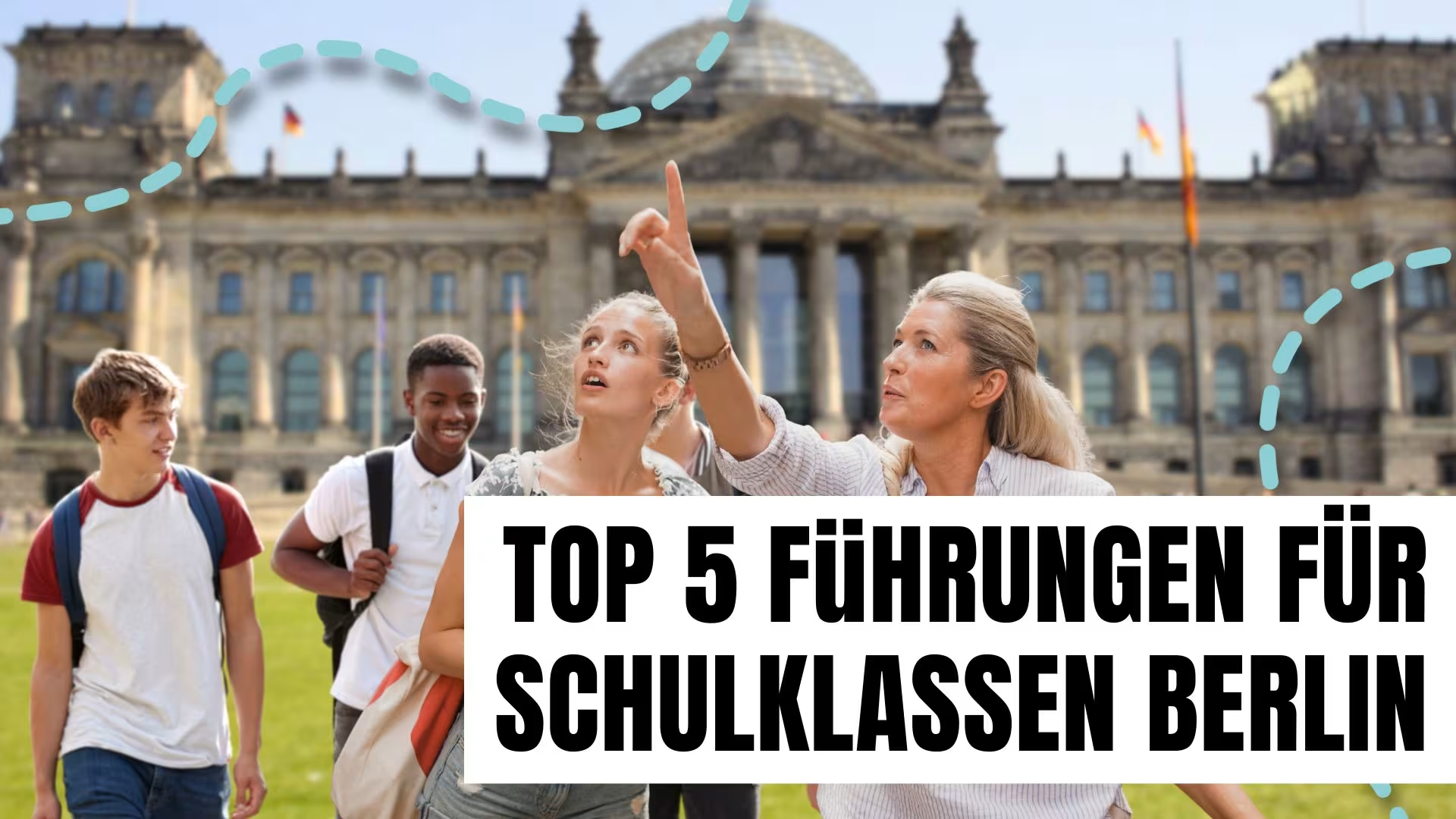
A guided walking tour with a tour guide specializing in school trips gives students the opportunity to learn more about the city's history at significant locations in Berlin. Hardly any other city offers such a high density of historical, political, and social learning sites. Whether it's German history, division and reunification, democracy, National Socialism, or contemporary urban culture: Berlin can be experienced directly in the urban space.
These are the most popular topics & prices for 2026 for an affordable city tour, including providers: The list includes free tours from subsidized institutions as well as affordable city tours specifically for school classes.

The classic overview tour provides a fundamental understanding of Berlin's urban history. From its medieval origins through the Prussian era, the German Empire, the Nazi period, the division, and reunification, right up to the present day. The focus is on the interplay between history, architecture, and urban development. This tour provides orientation within the city and often serves as an ideal starting point for school trips. Students connect key locations with historical contexts, gaining a foundation for more in-depth study.
Typical locations:
Price overview:
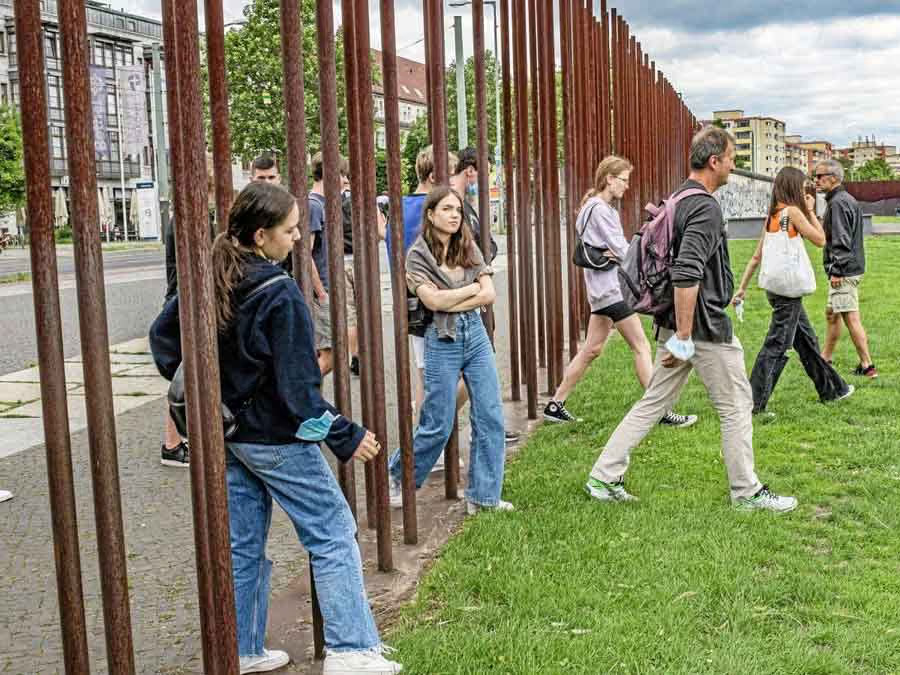
This city tour covers the division of Berlin during the Cold War, the construction of the Wall in 1961, daily life in a divided Berlin, and the fall of the Wall in 1989. The focus is on border regimes, surveillance, escape attempts, and the impact of the division on people's everyday lives. The tour highlights how significantly the Wall shaped the urban landscape and how East and West Berlin developed differently. Political history is linked to personal stories for students—a topic that is particularly impactful for school groups.
Typical locations:
Price overview:
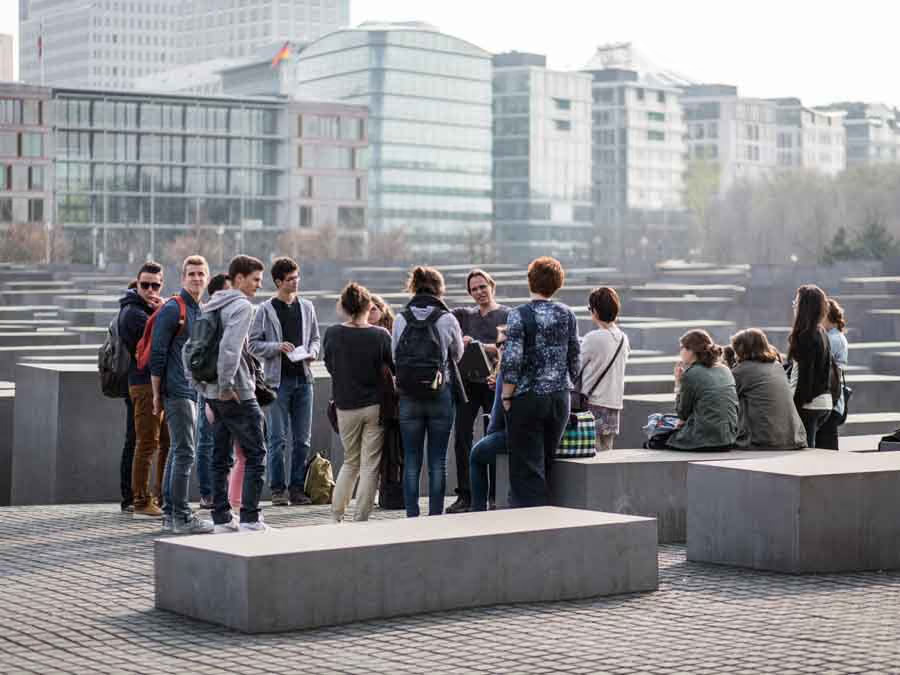
This tour explores Berlin as the power center of the National Socialist dictatorship. It covers the seizure of power, propaganda, structures of terror, and the systematic persecution and murder of Jewish people and other victim groups. The focus is on how the Nazi state manifested itself in the cityscape and how visible violence, exclusion, and resistance were in everyday life. There are numerous sites of remembrance dedicated to this. This tour is designed to encourage students to reflect and promotes critical thinking as well as a sense of historical responsibility.
Typical sites:
Price overview:
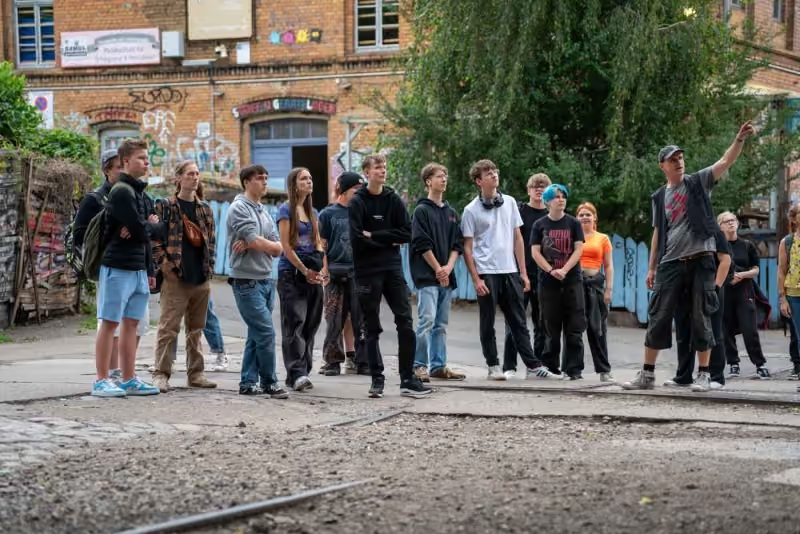
Neighborhood and alternative tours explore Berlin as a city of social diversity, migration, and cultural counter-movements. The focus is on districts shaped by immigration, subculture, squatting, and creative scenes that are currently undergoing significant change. Topics include the everyday coexistence of different communities, political movements, youth and music culture, as well as conflicts surrounding gentrification and displacement. Street art, clubs, and self-organized projects serve as visible expressions of urban culture and social negotiation processes. These student tours are practical, discussion-oriented, and provide direct access to current social issues, far beyond the classic tourist sights.
Typical locations:
Price overview:
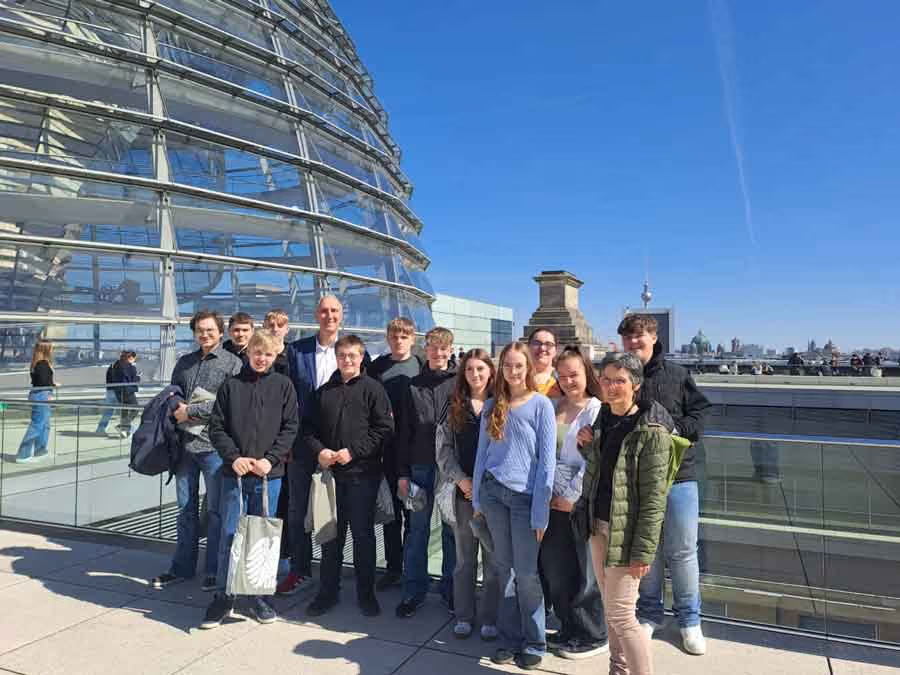
This guided tour takes students into the political heart of Germany. It explores the evolution of state systems from the German Empire and various dictatorships to today's democracy. The focus is on parliamentary institutions, the separation of powers, and the symbolic significance of political architecture. The tour illustrates how events such as the collapse of the Weimar Republic or the Nazi seizure of power led to a fundamental rethinking of the state's structure. The systemic contrast between the GDR and the Federal Republic is also addressed to highlight the importance of the rule of law, freedom of speech, and the separation of powers. This tour is particularly well-suited for politics and history classes, making abstract state structures tangible right where history happened.
Key locations:
Pricing overview:
A city tour is often the moment on a school trip when Berlin truly comes to life. Instead of dry facts, students experience history, politics, and society on-site, exactly where it happened or is still taking place today. Whether looking through the Brandenburg Gate, following the traces of the Wall, or in the middle of a Kreuzberg neighborhood: these tours offer not just knowledge, but real "aha" moments. Booking in advance ensures that the class is out and about with the best guides while also securing the most affordable or even free offers.

.avif)




%20(1).avif)
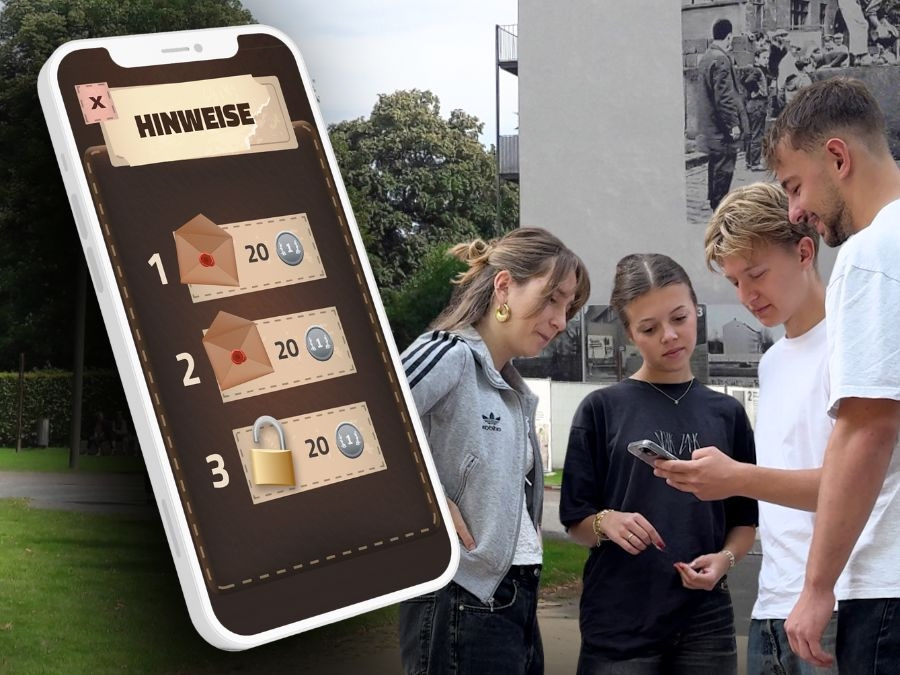
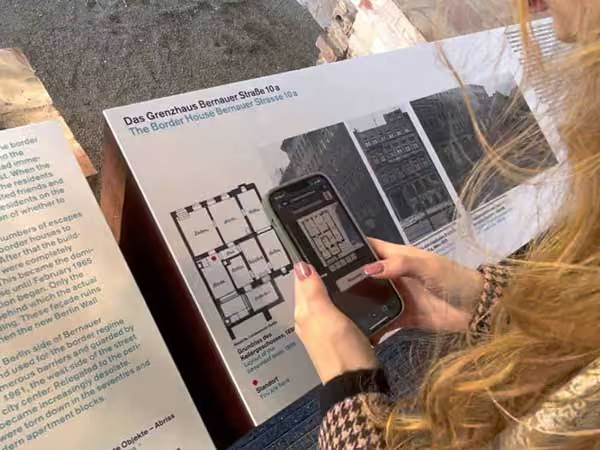
In this digital scavenger hunt, the Stasi is on your trail. They absolutely want to prevent your friend from trying to escape. Will you be able to find and solve the encrypted information about the escape tunnel under the Berlin Wall in front of them?
Read more.avif)
What happens on the route? [video]: Teacher experience tested with two colleagues | Insight into stations & puzzles | Rallye process | Solutions and tasks
Read articleA guided walking tour with a tour guide specializing in school trips gives students the opportunity to learn more about the city's history at significant locations in Berlin. Hardly any other city offers such a high density of historical, political, and social learning sites. Whether it's German history, division and reunification, democracy, National Socialism, or contemporary urban culture: Berlin can be experienced directly in the urban space.
These are the most popular topics & prices for 2026 for an affordable city tour, including providers: The list includes free tours from subsidized institutions as well as affordable city tours specifically for school classes.
The classic overview tour provides a fundamental understanding of Berlin's urban history. From its medieval origins through the Prussian era, the German Empire, the Nazi period, the division, and reunification, right up to the present day. The focus is on the interplay between history, architecture, and urban development. This tour provides orientation within the city and often serves as an ideal starting point for school trips. Students connect key locations with historical contexts, gaining a foundation for more in-depth study.
Typical locations:
Price overview:
This city tour covers the division of Berlin during the Cold War, the construction of the Wall in 1961, daily life in a divided Berlin, and the fall of the Wall in 1989. The focus is on border regimes, surveillance, escape attempts, and the impact of the division on people's everyday lives. The tour highlights how significantly the Wall shaped the urban landscape and how East and West Berlin developed differently. Political history is linked to personal stories for students—a topic that is particularly impactful for school groups.
Typical locations:
Price overview:

.svg)
This tour explores Berlin as the power center of the National Socialist dictatorship. It covers the seizure of power, propaganda, structures of terror, and the systematic persecution and murder of Jewish people and other victim groups. The focus is on how the Nazi state manifested itself in the cityscape and how visible violence, exclusion, and resistance were in everyday life. There are numerous sites of remembrance dedicated to this. This tour is designed to encourage students to reflect and promotes critical thinking as well as a sense of historical responsibility.
Typical sites:
Price overview:
Neighborhood and alternative tours explore Berlin as a city of social diversity, migration, and cultural counter-movements. The focus is on districts shaped by immigration, subculture, squatting, and creative scenes that are currently undergoing significant change. Topics include the everyday coexistence of different communities, political movements, youth and music culture, as well as conflicts surrounding gentrification and displacement. Street art, clubs, and self-organized projects serve as visible expressions of urban culture and social negotiation processes. These student tours are practical, discussion-oriented, and provide direct access to current social issues, far beyond the classic tourist sights.
Typical locations:
Price overview:
This guided tour takes students into the political heart of Germany. It explores the evolution of state systems from the German Empire and various dictatorships to today's democracy. The focus is on parliamentary institutions, the separation of powers, and the symbolic significance of political architecture. The tour illustrates how events such as the collapse of the Weimar Republic or the Nazi seizure of power led to a fundamental rethinking of the state's structure. The systemic contrast between the GDR and the Federal Republic is also addressed to highlight the importance of the rule of law, freedom of speech, and the separation of powers. This tour is particularly well-suited for politics and history classes, making abstract state structures tangible right where history happened.
Key locations:
Pricing overview:
A city tour is often the moment on a school trip when Berlin truly comes to life. Instead of dry facts, students experience history, politics, and society on-site, exactly where it happened or is still taking place today. Whether looking through the Brandenburg Gate, following the traces of the Wall, or in the middle of a Kreuzberg neighborhood: these tours offer not just knowledge, but real "aha" moments. Booking in advance ensures that the class is out and about with the best guides while also securing the most affordable or even free offers.
In this digital scavenger hunt, the Stasi is on your trail. They absolutely want to prevent your friend from trying to escape. Will you be able to find and solve the encrypted information about the escape tunnel under the Berlin Wall in front of them?
Learn more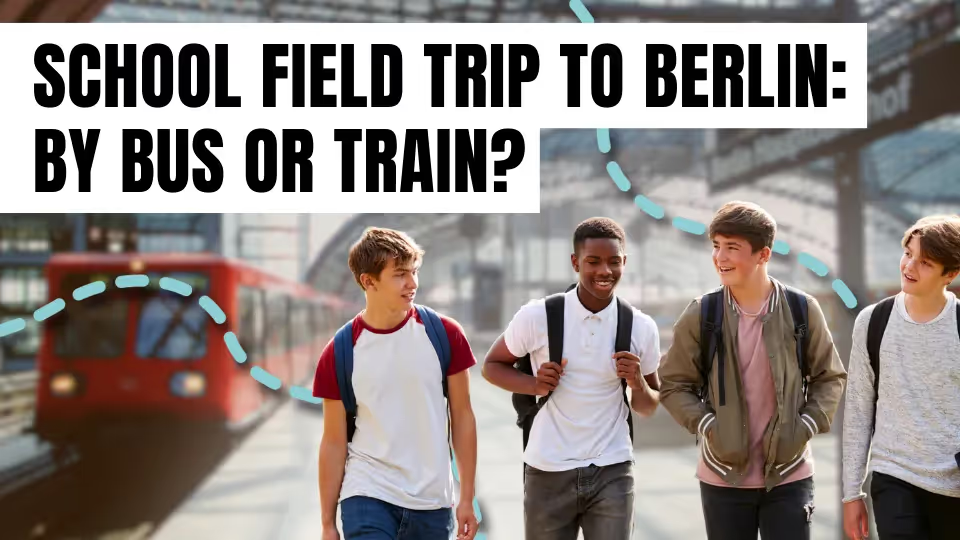
When is it worthwhile to travel to Berlin by train and when by bus? What costs should you be prepared for?
View article

