
.svg)


.svg)



.svg)
Amsterdam has a lot to offer for an educational school trip: canals, art, trade history, unusual museums and, of course, plenty of opportunities to explore the city independently. As a provider of an educational scavenger hunt activity in several cities, we at SchoolRallye know how hard it can be for teachers to create an itinerary that is both fun and educational, while avoiding too many museums and still keeping the school trip within budget.
That’s why we have put together a varied 4-day programme for your field trip to Amsterdam, combining education, sightseeing, free time and activities that are actually fun for pupils, including budget-friendly places to eat for each day! You will...
✅ ... discover some of Amsterdam’s most famous sights.
✅ ... learn more about trade, money, art and the history of the canals.
✅ ... have plenty of time to explore Amsterdam together as a class.
We have also designed this programme to keep travel times manageable and combine activities and lunch suggestions that are close to one another. There is also free time built into the itinerary, and optional evening activities if your class still has enough energy after dinner.
On the day of your arrival in Amsterdam, you will probably not have a full day available.
After arriving in Amsterdam, checking into your hostel or accommodation and dropping off your luggage, there is no need to fill the afternoon with too many activities.
Instead, start your field trip with one of the most relaxed ways to see Amsterdam: from the water!
Amsterdam and its canals belong together, making this activity a must! A canal cruise once you’ve arrives iis a great first introduction to the city.
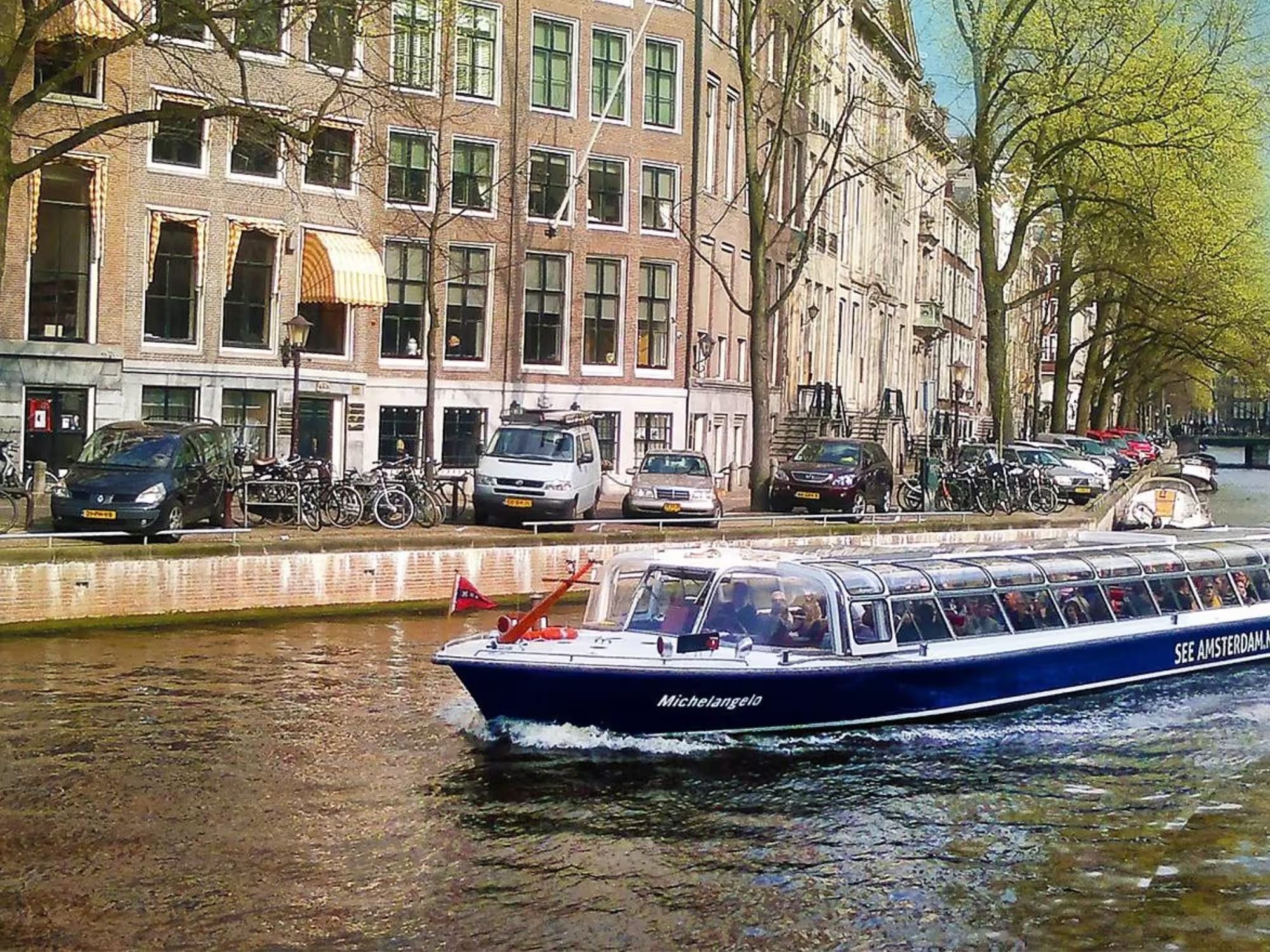
A one-hour sightseeing cruise takes you past canal houses, bridges and some of the best-known parts of central Amsterdam while giving pupils a first overview of the city.
Cruises depart from convenient locations around Amsterdam Centraal and Damrak, making this an easy activity to organise on your arrival day.
The big advantage is that everyone already gets to see plenty of Amsterdam without having to walk around the city for several hours straight after travelling.
Afterwards, you can return to your accommodation, have dinner and give everyone some time to settle in.
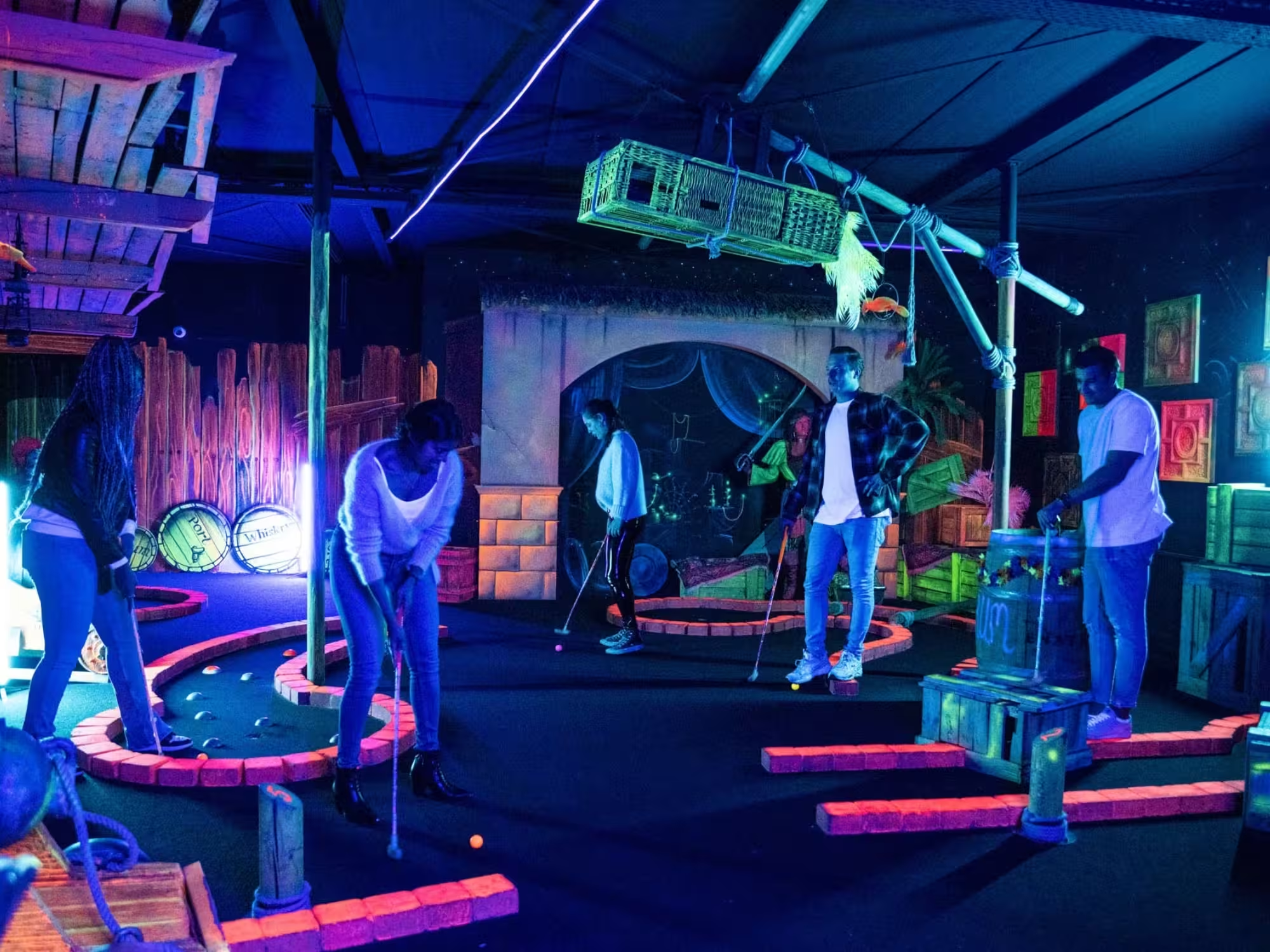
If your class still has some energy left, you can add a more playful activity in the evening.
At Aloha, pupils can play glow-in-the-dark minigolf in a colourful indoor setting.
It is deliberately not educational for once, but that is exactly why it works well on the first evening. After travelling and getting their first impressions of Amsterdam, the pupils can simply have some fun together.
Our tip: Do not overload the first day. Travelling with a whole class almost always takes longer than expected. Treat the evening activity as an optional extra rather than something the class absolutely has to fit in.
After breakfast at your accommodation, Day 2 begins with the history that shaped Amsterdam more than almost anything else: international trade.
Rather than starting with a traditional museum visit, the pupils first discover this history themselves during an interactive puzzle mission through the city.
In the morning, your class can play our scavenger hunt “Trade & Trickery in the Canals of Amsterdam”.
_converted.avif)
In this activity, The pupils are transported back to Amsterdam during the Dutch Golden Age, thanks to the interactive and immersive game that combines real-world places and puzzles with an engaging storyline.
A trading ship is about to leave the city, and twelve-year-old Jan desperately wants a place on board. For him, it could be his chance to escape poverty and build a different life. But first, he has to prove that he has what it takes.
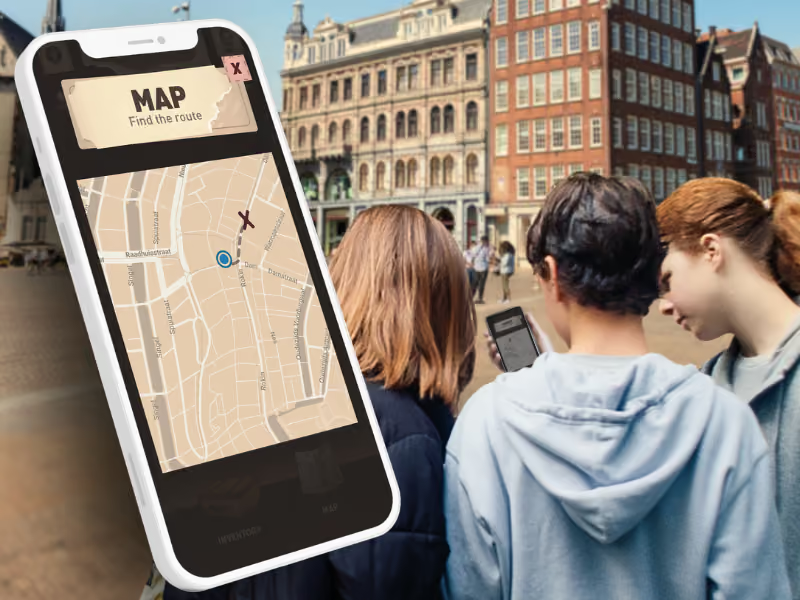
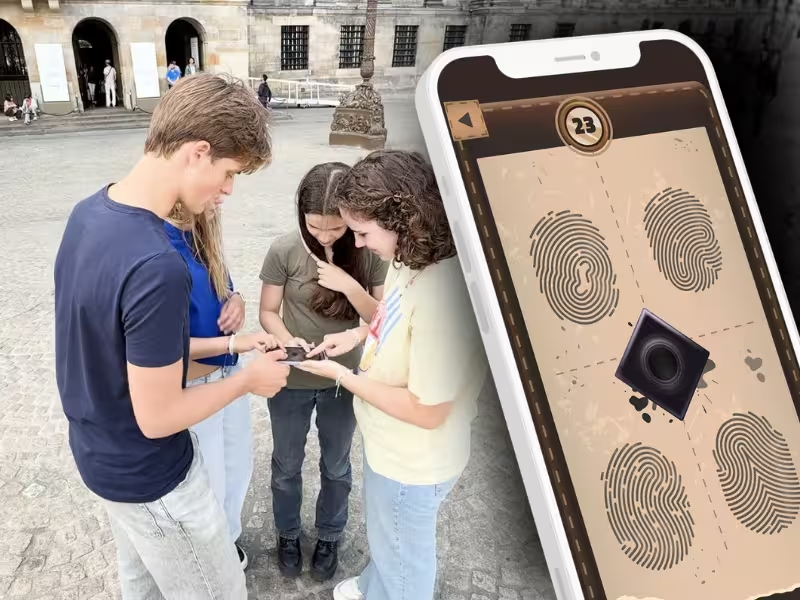
In small teams of three to four, pupils navigate themselves around the city, follow clues on their smartphones, solve puzzles and complete challenges involving orientation, observation and teamwork.
The route starts at Nieuwmarkt and leads through Amsterdam’s historic centre towards Dam Square, while of course excluding the Red Light District by a proper radius.
Along the way, pupils learn how Amsterdam became an international trading centre, but also learn that the promises of wealth and opportunity during this period often came at a very different cost for other people. Through having fun together and solving interactive riddles, the pupils create learning experiences that last beyond a traditional museum visit.
The route is around 1.6 kilometres long and the game takes approximately 1.5 to 2 hours.
Teachers can of course join a team themselves or use the time to have a coffee nearby while keeping track of the groups in the Teacher Cockpit.
_converted.avif)
After arriving at Dam Square, it is time for lunch.
From there, it is only around six to seven minutes on foot to HEMA Nieuwendijk.
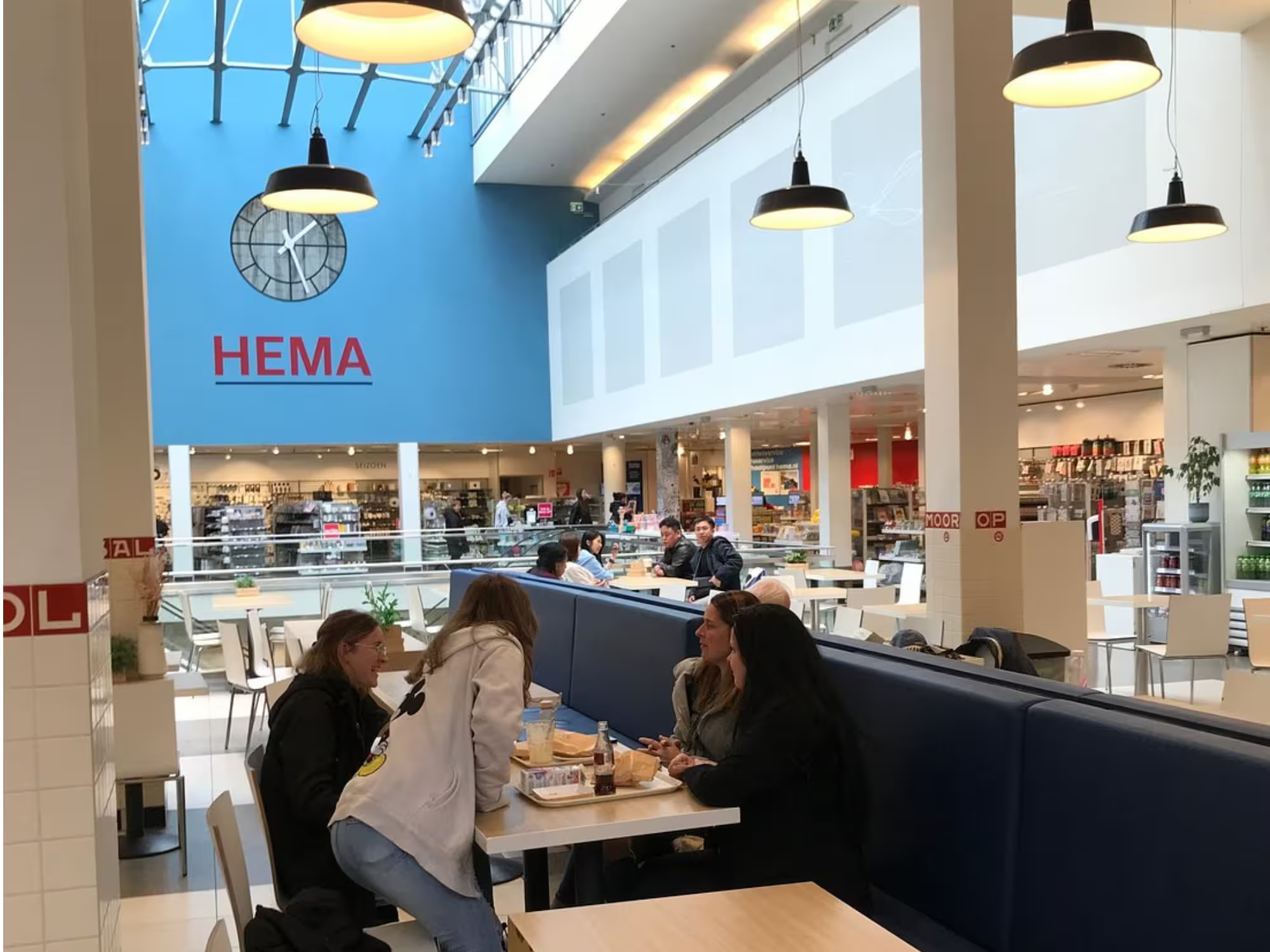
HEMA, a department store. is a practical option for school groups because their big cafeteria let's pupils choose relatively independently and there are affordable lunch options for approximately €7 to €10.
It also keeps the lunch stop simple, without having to organise a full restaurant booking for the whole class.
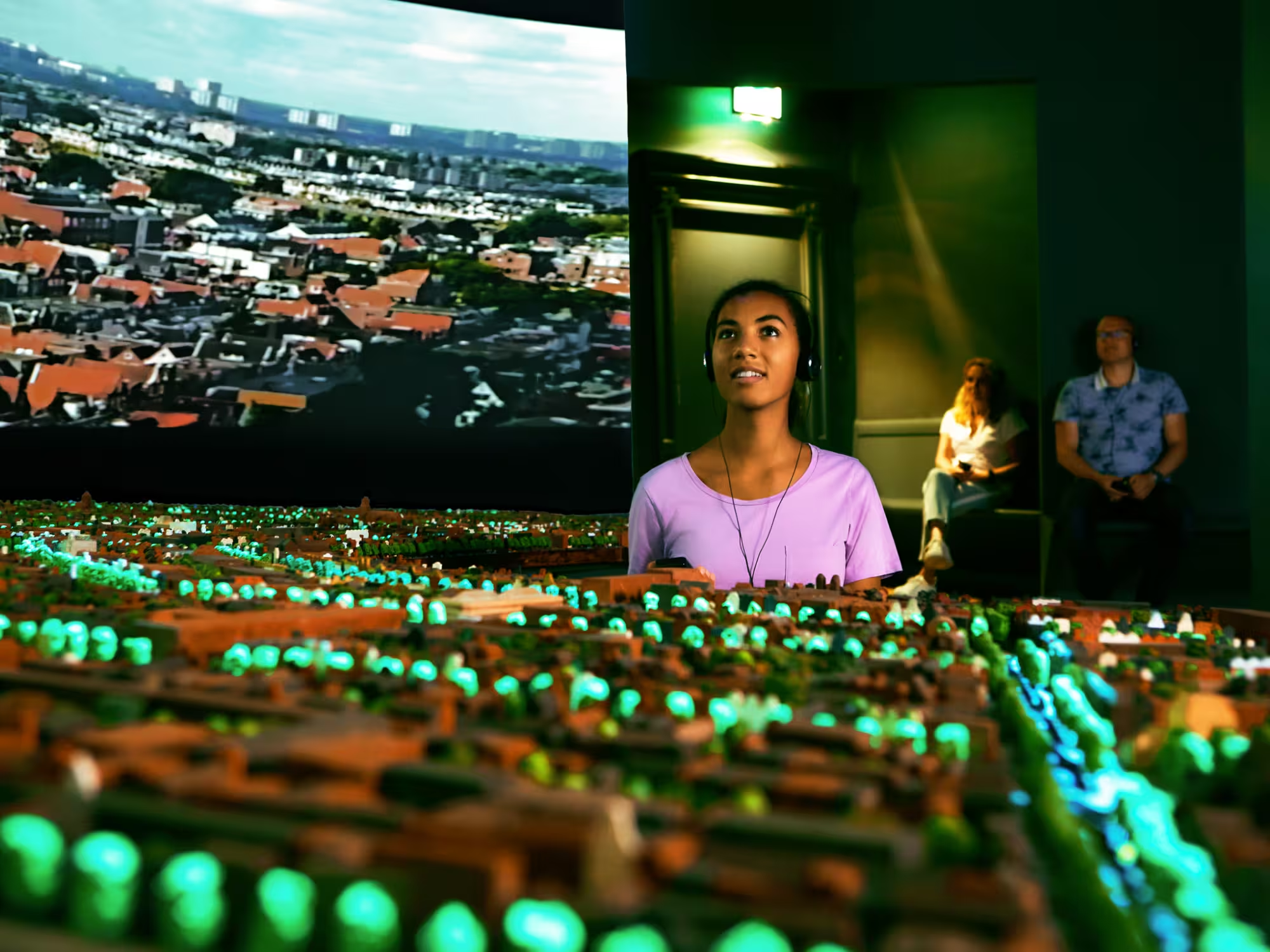
After lunch, continue to the Museum of the Canals.
It is around 1.1 kilometres from HEMA, which takes approximately 14 to 15 minutes on foot. Alternatively, you can cover part of the journey by tram.
The museum explains how Amsterdam’s famous canal belt was created and how closely its development was connected to trade, wealth and the expansion of the city.
Interactive displays help pupils understand how an enormous urban planning project like the canal ring was actually built.
It also provides useful historical context about Amsterdam’s role in international and colonial trade.
This works particularly well after the SchoolRallye because the pupils have already spent the morning exploring many of the places and themes connected to this period, and can now apply their own experience to the information in the museum.
After the museum, we would deliberately leave some space in the programme.
Give the pupils around an hour of free time in central Amsterdam.
They can explore in small groups, buy a souvenir or simply get something to eat before everyone meets again.
After several hours of structured activities, this independence is often just as important as a museum visit.
If you are looking for a relaxed evening activity, consider going to the cinema.
But not just any cinema.
The Royal Theatre Tuschinski is one of Amsterdam’s most impressive cinemas, with an elaborate historic interior that makes watching a film feel a little more special. But don’t get fooled by the decorative venue, ticket prices are still affordable, staying around 15 euros per person.
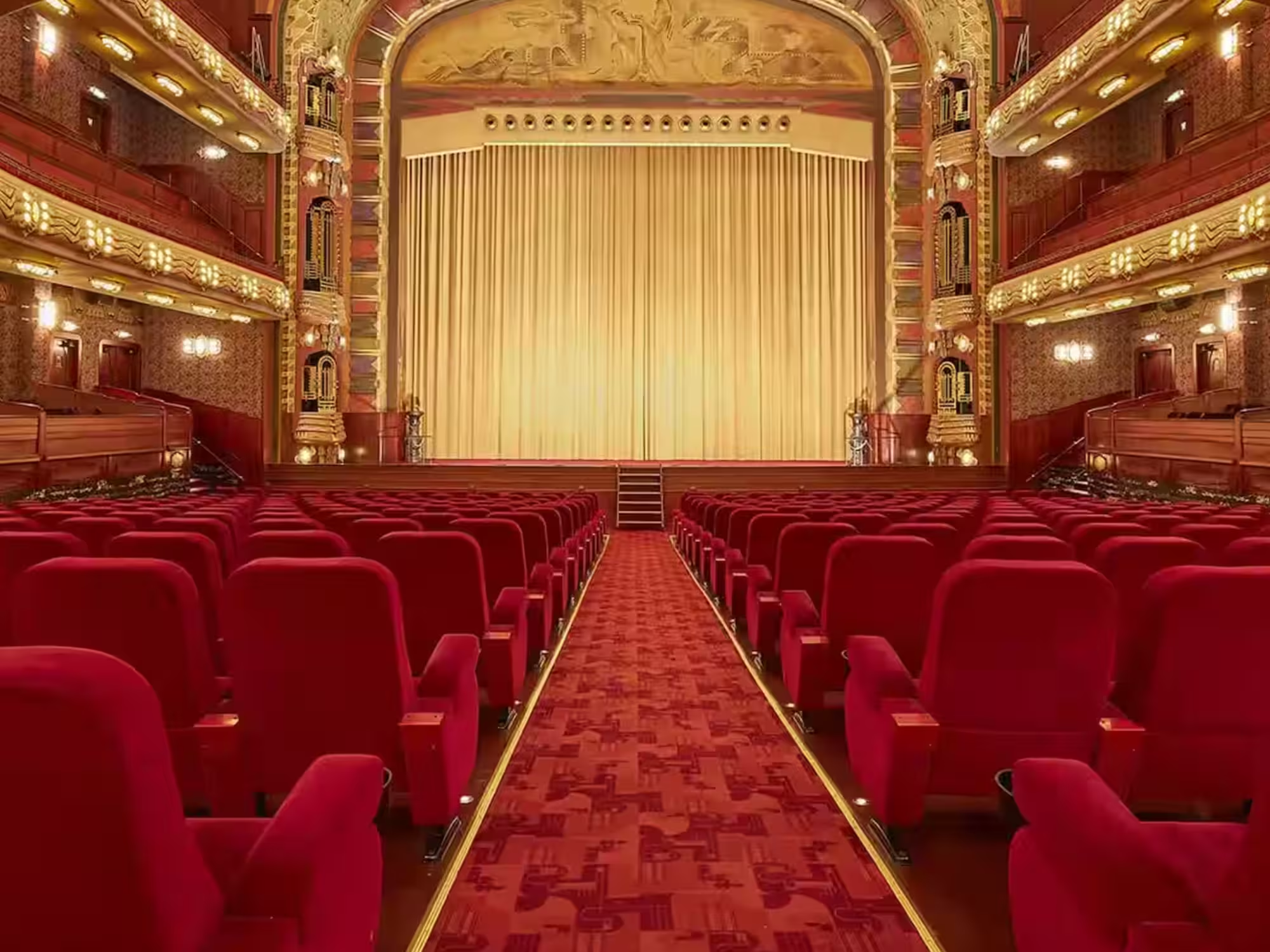
Choose an age-appropriate film and you have an easy evening programme that does not require much concentration after an already busy day.
Day 3 combines two very different sides of Amsterdam: money and art.
After breakfast, you start with a guided visit that looks at how money works before spending the afternoon with perhaps the most famous Dutch artist of all.
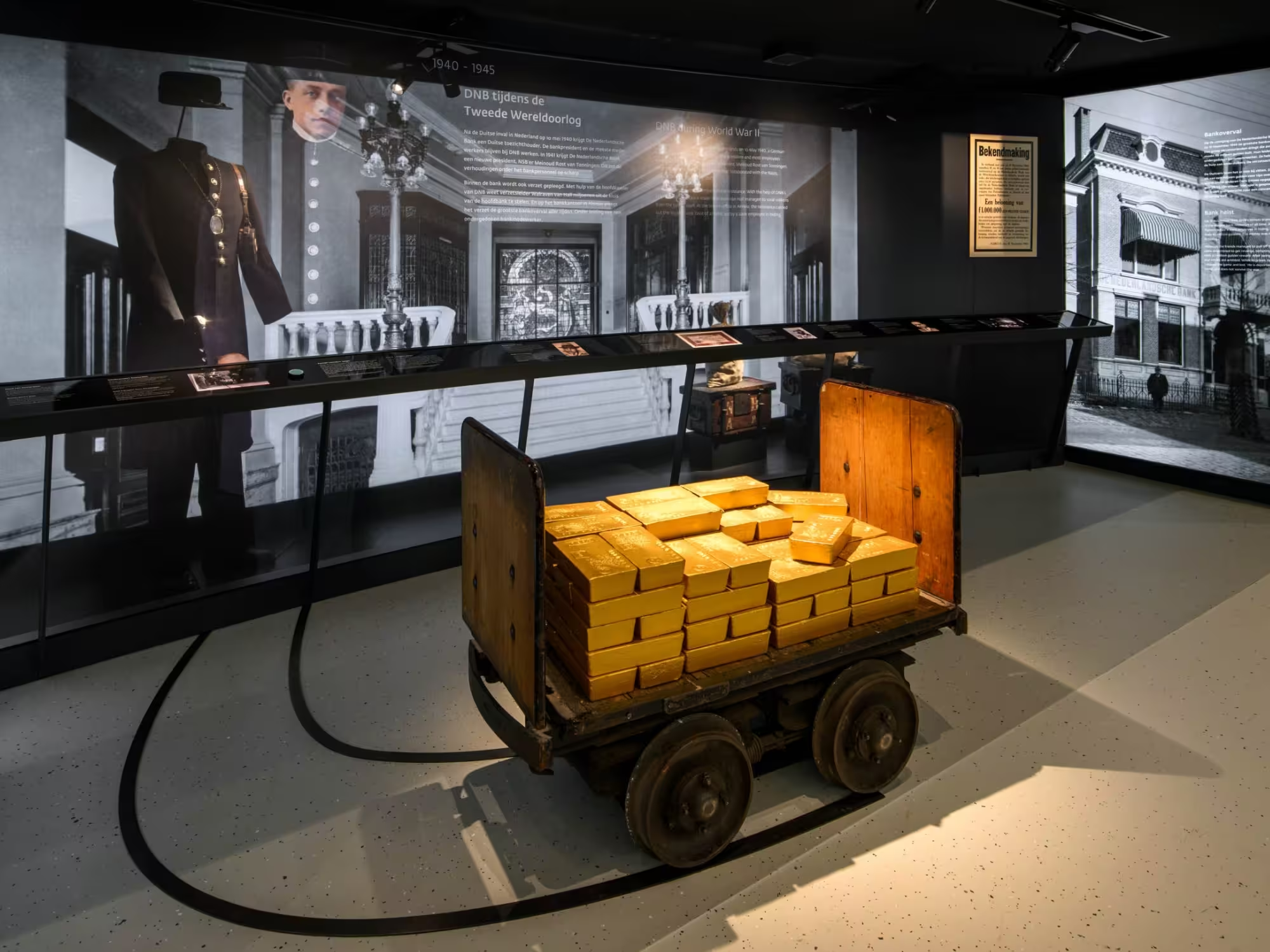
The morning starts with a guided visit at De Nederlandsche Bank.
Here, pupils can explore the subject of money in the past and present.
That makes the visit relevant not only for economics or business studies, but also for subjects such as history and social studies.
Instead of treating money as something pupils simply use every day, the visit encourages them to think about where it comes from, why people trust it and how our financial system has changed over time.
Plan approximately 1.5 hours for the guided programme.
After the morning programme, head towards Roeterseiland Campus for lunch at De Nieuwe Mensa. This Cheap Vegan food stand in the University's canteen is suitable for big groups of pupils, and welcomes anyone to eat at their location regardless of if you are a university student or not!

Eating at a university campus can itself be quite a nice experience for older pupils. They get a small taste of student life in Amsterdam while having an uncomplicated lunch before the afternoon programme.
It also puts you in a convenient position for continuing towards Museumplein, or the "Museum hub", of Amsterdam.
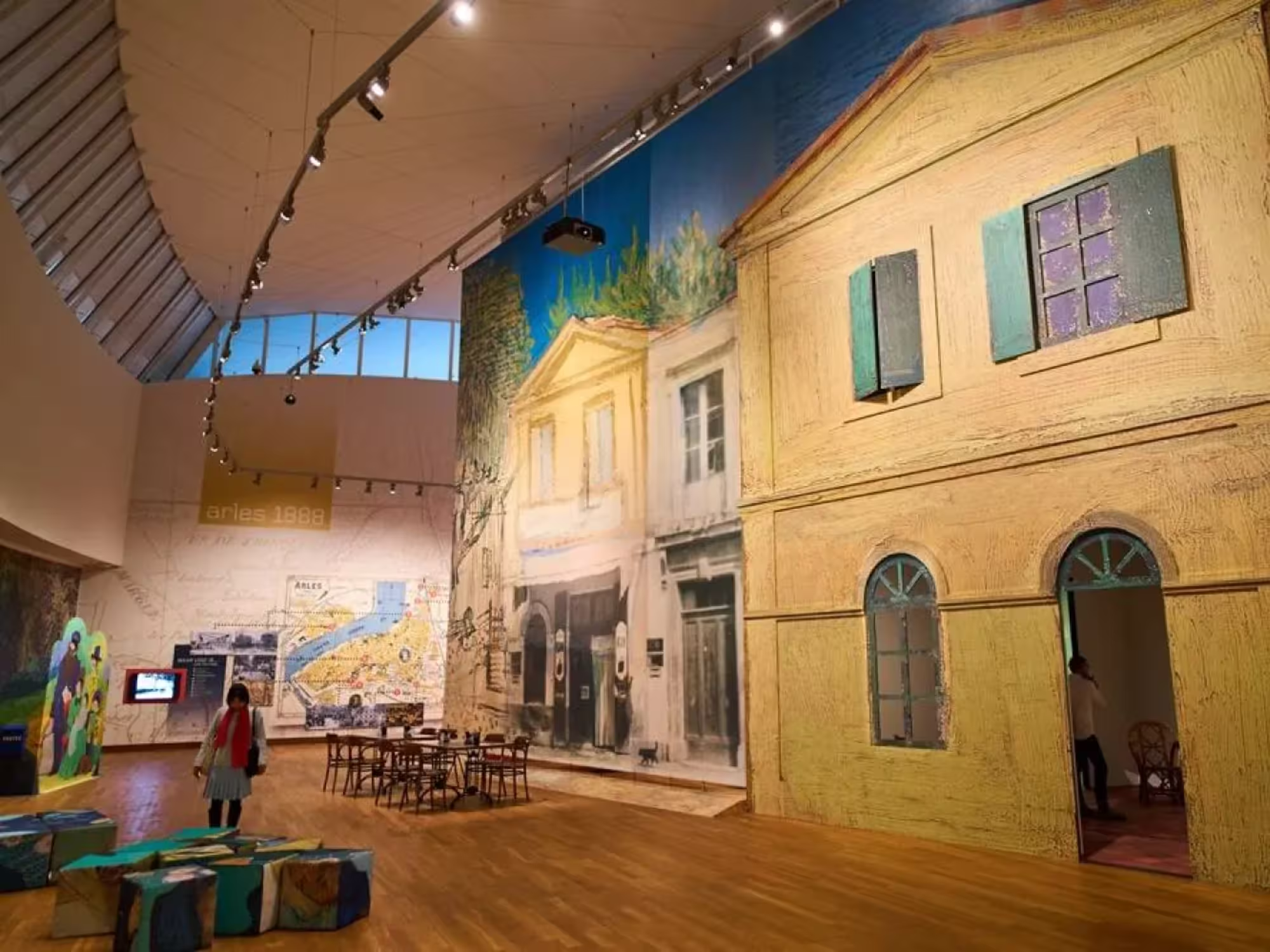
After lunch, take the tram directly towards the Van Gogh Museum.
The journey from Roeterseiland Campus takes roughly 12 minutes with a direct tram connection.
At the museum, pupils can discover the life and work of Vincent van Gogh, one of the Netherlands’ best-known artists.
The museum makes it possible to follow how his style developed, explore the stories behind some of his most famous paintings and learn more about the person behind the artwork.
For school groups, this is particularly interesting when the visit goes beyond simply walking from one painting to the next.
Van Gogh’s ambitions, struggles and development as an artist offer plenty of topics for discussion and make the visit accessible even to pupils who would not normally describe themselves as art fans.
After the museum, it is time to get outside again.
Vondelpark is only around 800 metres to one kilometre away, or approximately 12 minutes on foot.
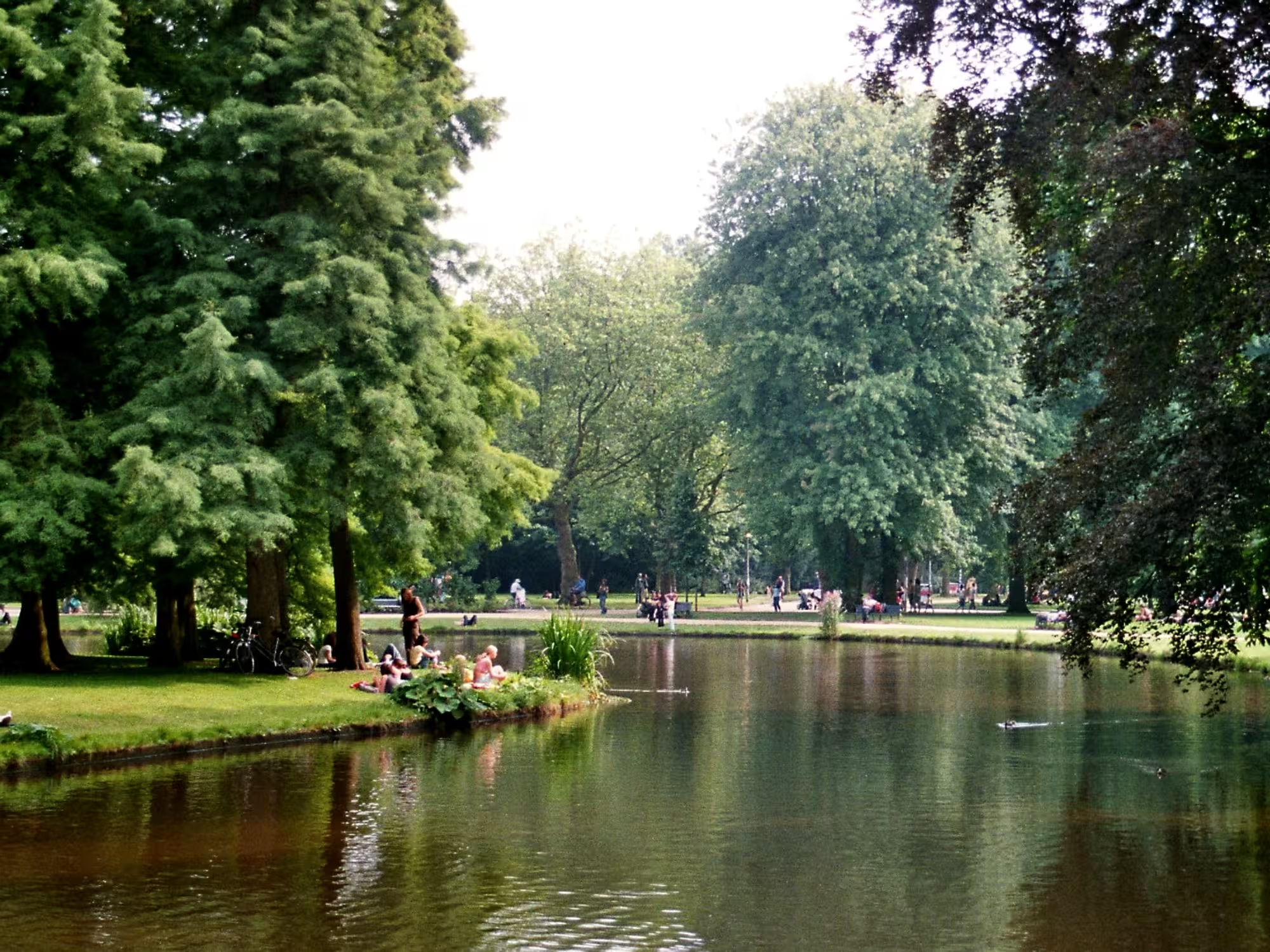
Here, the pupils can relax, spend some time in smaller groups or simply sit outside after the museum visit.
Amsterdam can feel very busy, so building a park into the programme is a good way of slowing things down for a while.
If the weather is good, this is also one of the easiest places to give the pupils some independent free time before meeting again at an agreed location.
If any pupil got inspired by Van Gogh’s art, Vondelpark is also an excellent location for sketching or drawing.
If you are looking for something completely different in the evening, BLAST Galaxy offers an entertaining option.
After two days filled with history, economics and art, an evening of arcade games and karaoke gives the class a chance to switch off and have fun together.
Especially on a school trip, not every activity needs an educational learning objective. Sometimes the shared experiences pupils will remember most happen when nobody is taking notes.
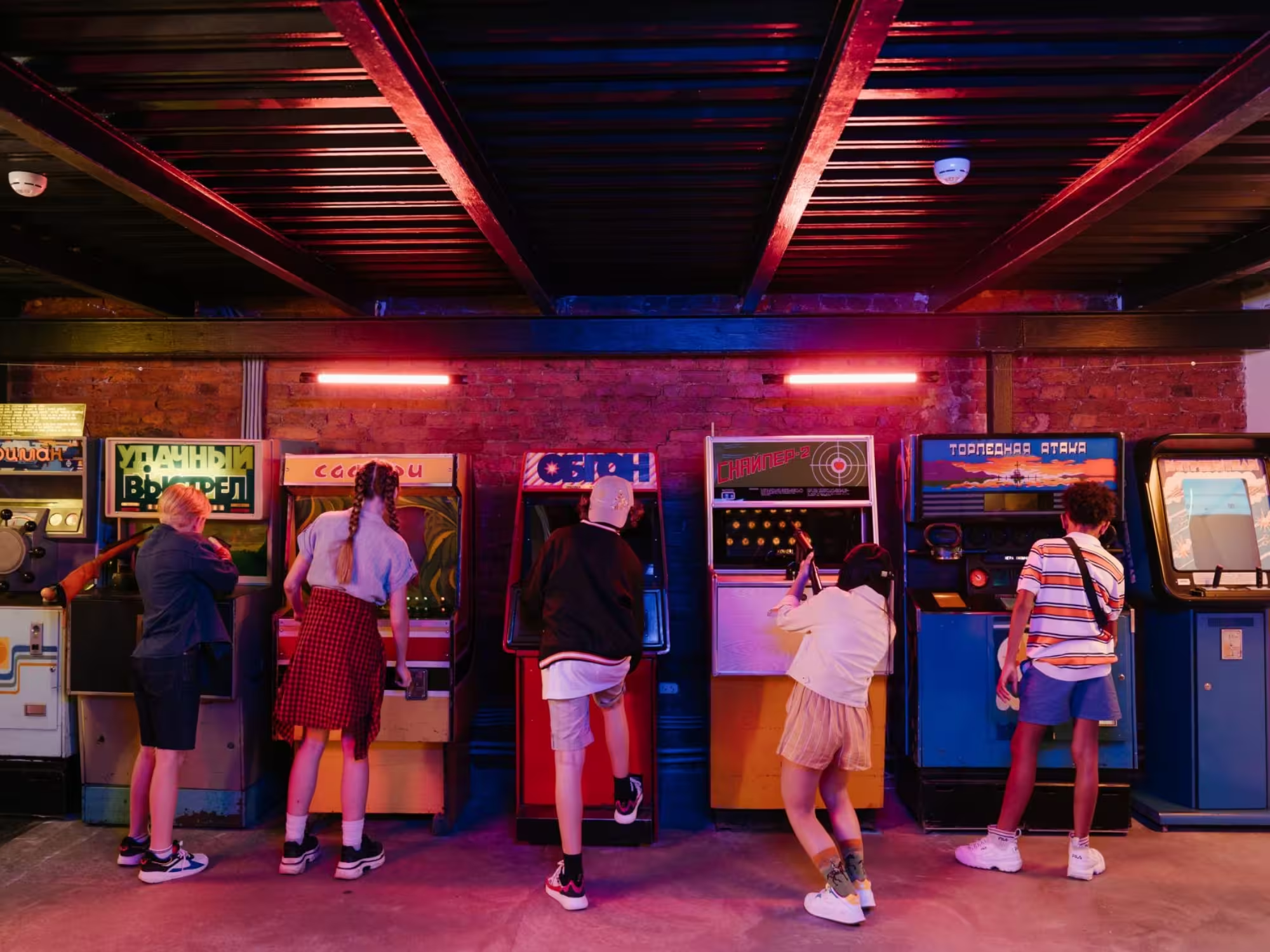
Blast Galaxy let’s student enter with a one-time fee, and after that they are welcomed to play as many games as they want! For the pupils not so interested in Arcade games, there are also Karaoke rooms they can enjoy together with their friends.
On the final day, it’s best to keep the programme flexible.
Depending on when your train, coach or flight leaves, you might need to shorten the day or skip one of these final activities.
Allow plenty of time in the morning for packing and checking out of the accommodation.
With an entire school class, collecting luggage and making sure nobody has left their charger underneath a bed can take longer than expected.
We would therefore keep approximately 09:00 to 11:00 free for breakfast, packing and check-out.
If possible, leave the luggage at your accommodation so you do not have to carry it around Amsterdam for the rest of the day.
For one last typically Dutch experience, stop at FEBO Nieuwendijk.
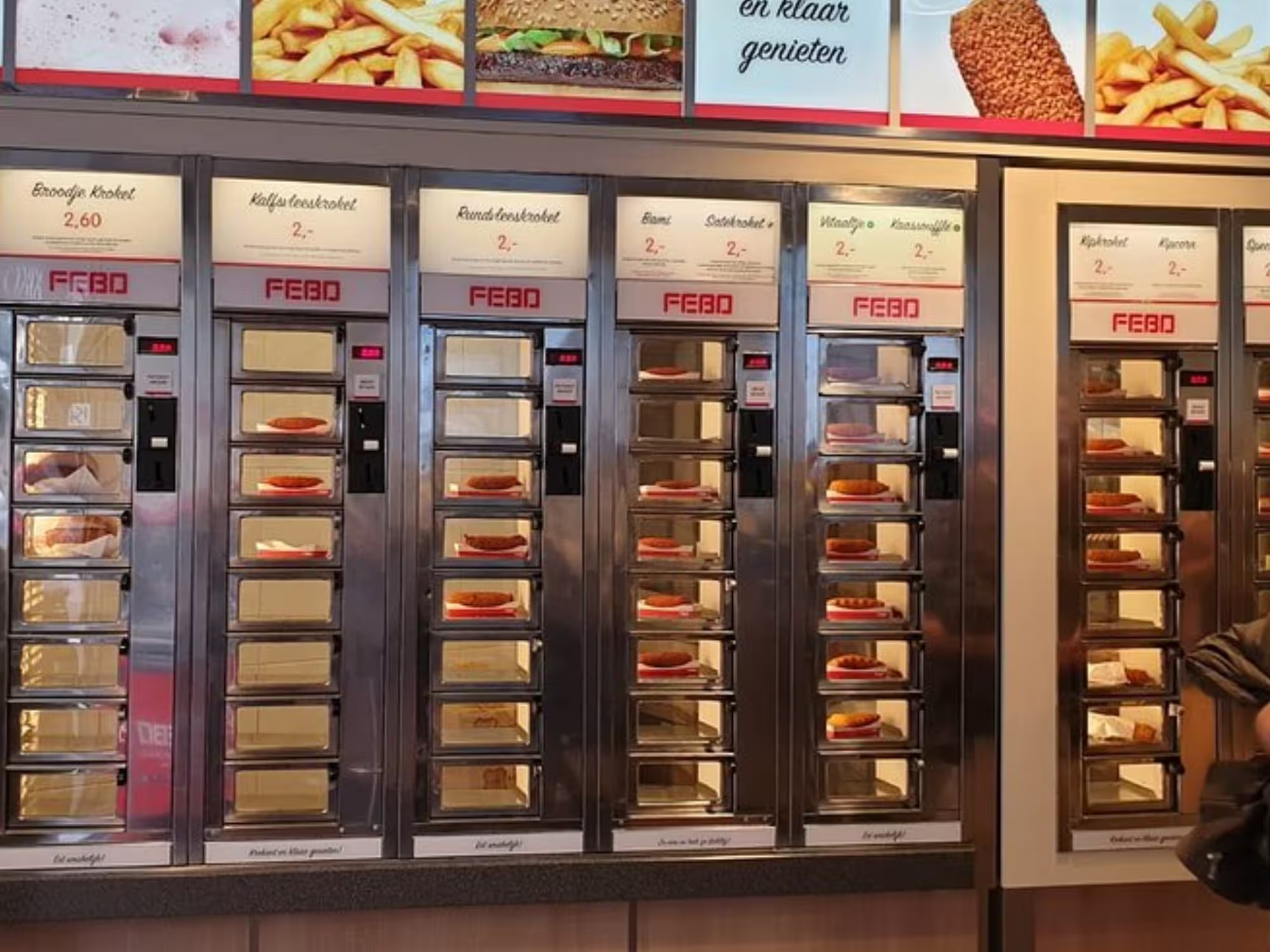
FEBO is liked by Amsterdam locals for its food vending walls, where you can simply take hot snacks from small compartments.
It is quick, inexpensive and something many pupils probably will not have experienced before while being an iconic stop that locals in Amsterdam love!
For your final major activity, cross the IJ to THIS IS HOLLAND.
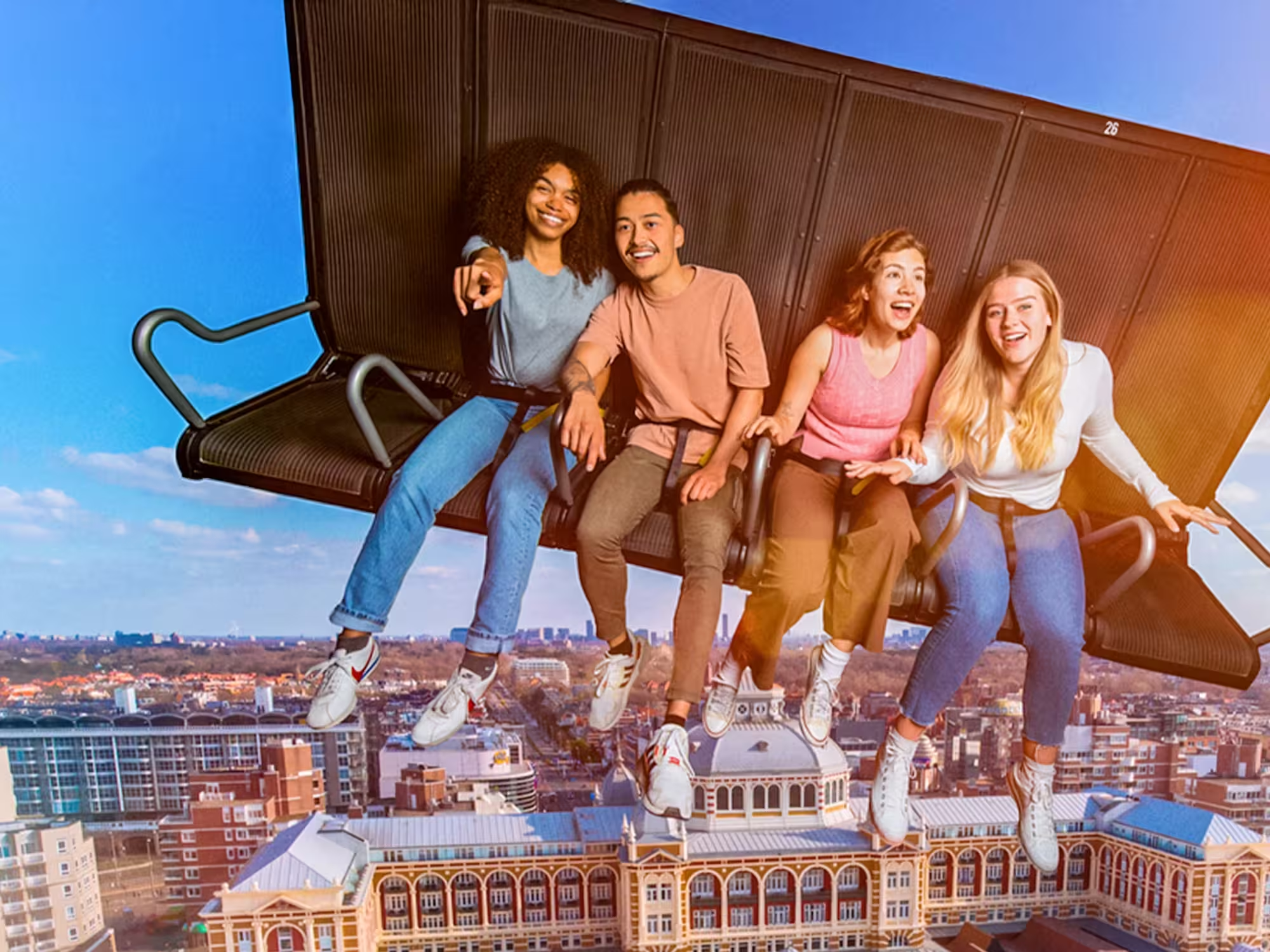
The attraction offers a very different way to see the Netherlands through an immersive flight experience.
Instead of exploring another museum on foot, pupils virtually fly over famous Dutch landscapes and landmarks.
It is a fun final activity and also helps place Amsterdam in a wider national context before the class travels home.
If your departure is later in the afternoon, use the remaining time for one last bit of independent exploration.
One option is Waterlooplein Market, Amsterdam’s oldest flea market.
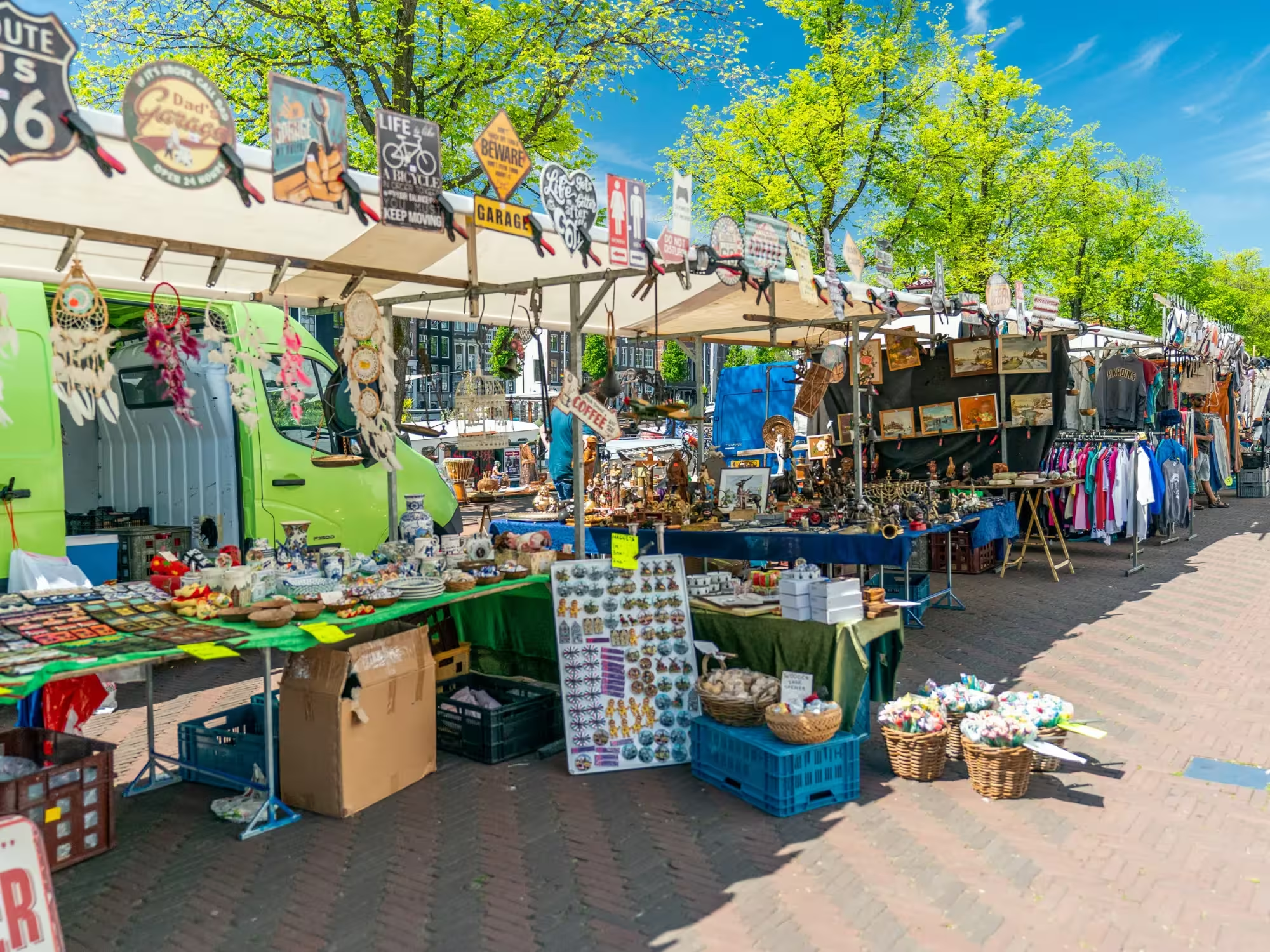
Pupils can browse vintage clothing, books, antiques and unusual second-hand items and spend the last of their souvenir budget.
The market feels much more like everyday Amsterdam than a conventional tourist attraction and works well as an informal final activity.
If your journey home starts earlier, simply skip this part and head directly back to collect your luggage.
Amsterdam is a particularly convenient city for a four-day field trip because many of its main attractions are relatively close together.
Our itinerary combines several different themes without filling every hour of every day.
There is trade and history with SchoolRallye, money at De Nederlandsche Bank, art at the Van Gogh Museum, Amsterdam’s famous canals and plenty of time for pupils to explore independently.
At the same time, relaxed activities such as the canal cruise, Vondelpark and optional evening programmes prevent the trip from feeling like four consecutive days of lessons outside the classroom.
Of course, you can adapt the order depending on opening hours, availability, the age of your pupils and your curriculum.
We hope this helped you with the planning for your school trip to Amsterdam! This itinerary gives you a varied, convenient and budget friendly class trip that doesn’t rely too much on museums!
For more inspiration, take a look at our overview of field trip activities in Amsterdam, with further ideas for educational activities, museums, outdoor experiences and free-time programmes.
That way, you can put together an Amsterdam school trip that fits both your class and your curriculum!
%20(1).avif)
_converted.avif)
_converted.avif)

%20(2)_converted.avif)


In this digital scavenger hunt, you need to pass the Captain's challenges. The ship leaves in 2 hours, and this might be your last chance at changing your destiny. Will you have what it takes to prove yourself to the Captain and carve out a new path in life?
Read more
We’ve put together 7 ideas that are sure to keep your school group entertained during a trip to Amsterdam! From scavenger hunts to interactive museums, this list will help you plan an unforgettable school trip.
Read articleAmsterdam has a lot to offer for an educational school trip: canals, art, trade history, unusual museums and, of course, plenty of opportunities to explore the city independently. As a provider of an educational scavenger hunt activity in several cities, we at SchoolRallye know how hard it can be for teachers to create an itinerary that is both fun and educational, while avoiding too many museums and still keeping the school trip within budget.
That’s why we have put together a varied 4-day programme for your field trip to Amsterdam, combining education, sightseeing, free time and activities that are actually fun for pupils, including budget-friendly places to eat for each day! You will...
✅ ... discover some of Amsterdam’s most famous sights.
✅ ... learn more about trade, money, art and the history of the canals.
✅ ... have plenty of time to explore Amsterdam together as a class.
We have also designed this programme to keep travel times manageable and combine activities and lunch suggestions that are close to one another. There is also free time built into the itinerary, and optional evening activities if your class still has enough energy after dinner.
On the day of your arrival in Amsterdam, you will probably not have a full day available.
After arriving in Amsterdam, checking into your hostel or accommodation and dropping off your luggage, there is no need to fill the afternoon with too many activities.
Instead, start your field trip with one of the most relaxed ways to see Amsterdam: from the water!
Amsterdam and its canals belong together, making this activity a must! A canal cruise once you’ve arrives iis a great first introduction to the city.
A one-hour sightseeing cruise takes you past canal houses, bridges and some of the best-known parts of central Amsterdam while giving pupils a first overview of the city.
Cruises depart from convenient locations around Amsterdam Centraal and Damrak, making this an easy activity to organise on your arrival day.
The big advantage is that everyone already gets to see plenty of Amsterdam without having to walk around the city for several hours straight after travelling.
Afterwards, you can return to your accommodation, have dinner and give everyone some time to settle in.
If your class still has some energy left, you can add a more playful activity in the evening.
At Aloha, pupils can play glow-in-the-dark minigolf in a colourful indoor setting.
It is deliberately not educational for once, but that is exactly why it works well on the first evening. After travelling and getting their first impressions of Amsterdam, the pupils can simply have some fun together.
Our tip: Do not overload the first day. Travelling with a whole class almost always takes longer than expected. Treat the evening activity as an optional extra rather than something the class absolutely has to fit in.
After breakfast at your accommodation, Day 2 begins with the history that shaped Amsterdam more than almost anything else: international trade.
Rather than starting with a traditional museum visit, the pupils first discover this history themselves during an interactive puzzle mission through the city.
In the morning, your class can play our scavenger hunt “Trade & Trickery in the Canals of Amsterdam”.
In this activity, The pupils are transported back to Amsterdam during the Dutch Golden Age, thanks to the interactive and immersive game that combines real-world places and puzzles with an engaging storyline.
A trading ship is about to leave the city, and twelve-year-old Jan desperately wants a place on board. For him, it could be his chance to escape poverty and build a different life. But first, he has to prove that he has what it takes.
In small teams of three to four, pupils navigate themselves around the city, follow clues on their smartphones, solve puzzles and complete challenges involving orientation, observation and teamwork.
The route starts at Nieuwmarkt and leads through Amsterdam’s historic centre towards Dam Square, while of course excluding the Red Light District by a proper radius.
Along the way, pupils learn how Amsterdam became an international trading centre, but also learn that the promises of wealth and opportunity during this period often came at a very different cost for other people. Through having fun together and solving interactive riddles, the pupils create learning experiences that last beyond a traditional museum visit.
The route is around 1.6 kilometres long and the game takes approximately 1.5 to 2 hours.
Teachers can of course join a team themselves or use the time to have a coffee nearby while keeping track of the groups in the Teacher Cockpit.
After arriving at Dam Square, it is time for lunch.
From there, it is only around six to seven minutes on foot to HEMA Nieuwendijk.
HEMA, a department store. is a practical option for school groups because their big cafeteria let's pupils choose relatively independently and there are affordable lunch options for approximately €7 to €10.
It also keeps the lunch stop simple, without having to organise a full restaurant booking for the whole class.
After lunch, continue to the Museum of the Canals.
It is around 1.1 kilometres from HEMA, which takes approximately 14 to 15 minutes on foot. Alternatively, you can cover part of the journey by tram.
The museum explains how Amsterdam’s famous canal belt was created and how closely its development was connected to trade, wealth and the expansion of the city.
Interactive displays help pupils understand how an enormous urban planning project like the canal ring was actually built.
It also provides useful historical context about Amsterdam’s role in international and colonial trade.
This works particularly well after the SchoolRallye because the pupils have already spent the morning exploring many of the places and themes connected to this period, and can now apply their own experience to the information in the museum.
After the museum, we would deliberately leave some space in the programme.
Give the pupils around an hour of free time in central Amsterdam.
They can explore in small groups, buy a souvenir or simply get something to eat before everyone meets again.
After several hours of structured activities, this independence is often just as important as a museum visit.
If you are looking for a relaxed evening activity, consider going to the cinema.
But not just any cinema.
The Royal Theatre Tuschinski is one of Amsterdam’s most impressive cinemas, with an elaborate historic interior that makes watching a film feel a little more special. But don’t get fooled by the decorative venue, ticket prices are still affordable, staying around 15 euros per person.
Choose an age-appropriate film and you have an easy evening programme that does not require much concentration after an already busy day.

.svg)
Day 3 combines two very different sides of Amsterdam: money and art.
After breakfast, you start with a guided visit that looks at how money works before spending the afternoon with perhaps the most famous Dutch artist of all.
The morning starts with a guided visit at De Nederlandsche Bank.
Here, pupils can explore the subject of money in the past and present.
That makes the visit relevant not only for economics or business studies, but also for subjects such as history and social studies.
Instead of treating money as something pupils simply use every day, the visit encourages them to think about where it comes from, why people trust it and how our financial system has changed over time.
Plan approximately 1.5 hours for the guided programme.
After the morning programme, head towards Roeterseiland Campus for lunch at De Nieuwe Mensa. This Cheap Vegan food stand in the University's canteen is suitable for big groups of pupils, and welcomes anyone to eat at their location regardless of if you are a university student or not!
Eating at a university campus can itself be quite a nice experience for older pupils. They get a small taste of student life in Amsterdam while having an uncomplicated lunch before the afternoon programme.
It also puts you in a convenient position for continuing towards Museumplein, or the "Museum hub", of Amsterdam.
After lunch, take the tram directly towards the Van Gogh Museum.
The journey from Roeterseiland Campus takes roughly 12 minutes with a direct tram connection.
At the museum, pupils can discover the life and work of Vincent van Gogh, one of the Netherlands’ best-known artists.
The museum makes it possible to follow how his style developed, explore the stories behind some of his most famous paintings and learn more about the person behind the artwork.
For school groups, this is particularly interesting when the visit goes beyond simply walking from one painting to the next.
Van Gogh’s ambitions, struggles and development as an artist offer plenty of topics for discussion and make the visit accessible even to pupils who would not normally describe themselves as art fans.
After the museum, it is time to get outside again.
Vondelpark is only around 800 metres to one kilometre away, or approximately 12 minutes on foot.
Here, the pupils can relax, spend some time in smaller groups or simply sit outside after the museum visit.
Amsterdam can feel very busy, so building a park into the programme is a good way of slowing things down for a while.
If the weather is good, this is also one of the easiest places to give the pupils some independent free time before meeting again at an agreed location.
If any pupil got inspired by Van Gogh’s art, Vondelpark is also an excellent location for sketching or drawing.
If you are looking for something completely different in the evening, BLAST Galaxy offers an entertaining option.
After two days filled with history, economics and art, an evening of arcade games and karaoke gives the class a chance to switch off and have fun together.
Especially on a school trip, not every activity needs an educational learning objective. Sometimes the shared experiences pupils will remember most happen when nobody is taking notes.
Blast Galaxy let’s student enter with a one-time fee, and after that they are welcomed to play as many games as they want! For the pupils not so interested in Arcade games, there are also Karaoke rooms they can enjoy together with their friends.
On the final day, it’s best to keep the programme flexible.
Depending on when your train, coach or flight leaves, you might need to shorten the day or skip one of these final activities.
Allow plenty of time in the morning for packing and checking out of the accommodation.
With an entire school class, collecting luggage and making sure nobody has left their charger underneath a bed can take longer than expected.
We would therefore keep approximately 09:00 to 11:00 free for breakfast, packing and check-out.
If possible, leave the luggage at your accommodation so you do not have to carry it around Amsterdam for the rest of the day.
For one last typically Dutch experience, stop at FEBO Nieuwendijk.
FEBO is liked by Amsterdam locals for its food vending walls, where you can simply take hot snacks from small compartments.
It is quick, inexpensive and something many pupils probably will not have experienced before while being an iconic stop that locals in Amsterdam love!
For your final major activity, cross the IJ to THIS IS HOLLAND.
The attraction offers a very different way to see the Netherlands through an immersive flight experience.
Instead of exploring another museum on foot, pupils virtually fly over famous Dutch landscapes and landmarks.
It is a fun final activity and also helps place Amsterdam in a wider national context before the class travels home.
If your departure is later in the afternoon, use the remaining time for one last bit of independent exploration.
One option is Waterlooplein Market, Amsterdam’s oldest flea market.
Pupils can browse vintage clothing, books, antiques and unusual second-hand items and spend the last of their souvenir budget.
The market feels much more like everyday Amsterdam than a conventional tourist attraction and works well as an informal final activity.
If your journey home starts earlier, simply skip this part and head directly back to collect your luggage.
Amsterdam is a particularly convenient city for a four-day field trip because many of its main attractions are relatively close together.
Our itinerary combines several different themes without filling every hour of every day.
There is trade and history with SchoolRallye, money at De Nederlandsche Bank, art at the Van Gogh Museum, Amsterdam’s famous canals and plenty of time for pupils to explore independently.
At the same time, relaxed activities such as the canal cruise, Vondelpark and optional evening programmes prevent the trip from feeling like four consecutive days of lessons outside the classroom.
Of course, you can adapt the order depending on opening hours, availability, the age of your pupils and your curriculum.
We hope this helped you with the planning for your school trip to Amsterdam! This itinerary gives you a varied, convenient and budget friendly class trip that doesn’t rely too much on museums!
For more inspiration, take a look at our overview of field trip activities in Amsterdam, with further ideas for educational activities, museums, outdoor experiences and free-time programmes.
That way, you can put together an Amsterdam school trip that fits both your class and your curriculum!
In this digital scavenger hunt, you need to pass the Captain's challenges. The ship leaves in 2 hours, and this might be your last chance at changing your destiny. Will you have what it takes to prove yourself to the Captain and carve out a new path in life?
Learn moreWe’ve put together 7 ideas that are sure to keep your school group entertained during a trip to Amsterdam! From scavenger hunts to interactive museums, this list will help you plan an unforgettable school trip.
View article

