
.svg)


.svg)


.svg)

Are you planning a field trip to London and looking for activities that are both fun and educational? London is full of famous landmarks, but the best school trip experiences allow pupils to do more than simply look at them. They invite the class to investigate, solve problems, experiment and discover the city from a new perspective!
At SchoolRallye, we have gathered eight ideas that bring subjects such as history, geography, science and design to life. From exploring a tidal creek and boarding a Victorian sailing ship to solving a murder case in the East End, these activities combine learning with movement, teamwork and memorable experiences.
Organising a safe school trip in a busy city can feel challenging. The activities below offer structured programmes, school resources or clearly defined experiences that make planning easier. Teachers should still check the latest risk assessments, supervision requirements, accessibility information and booking conditions directly with each provider.
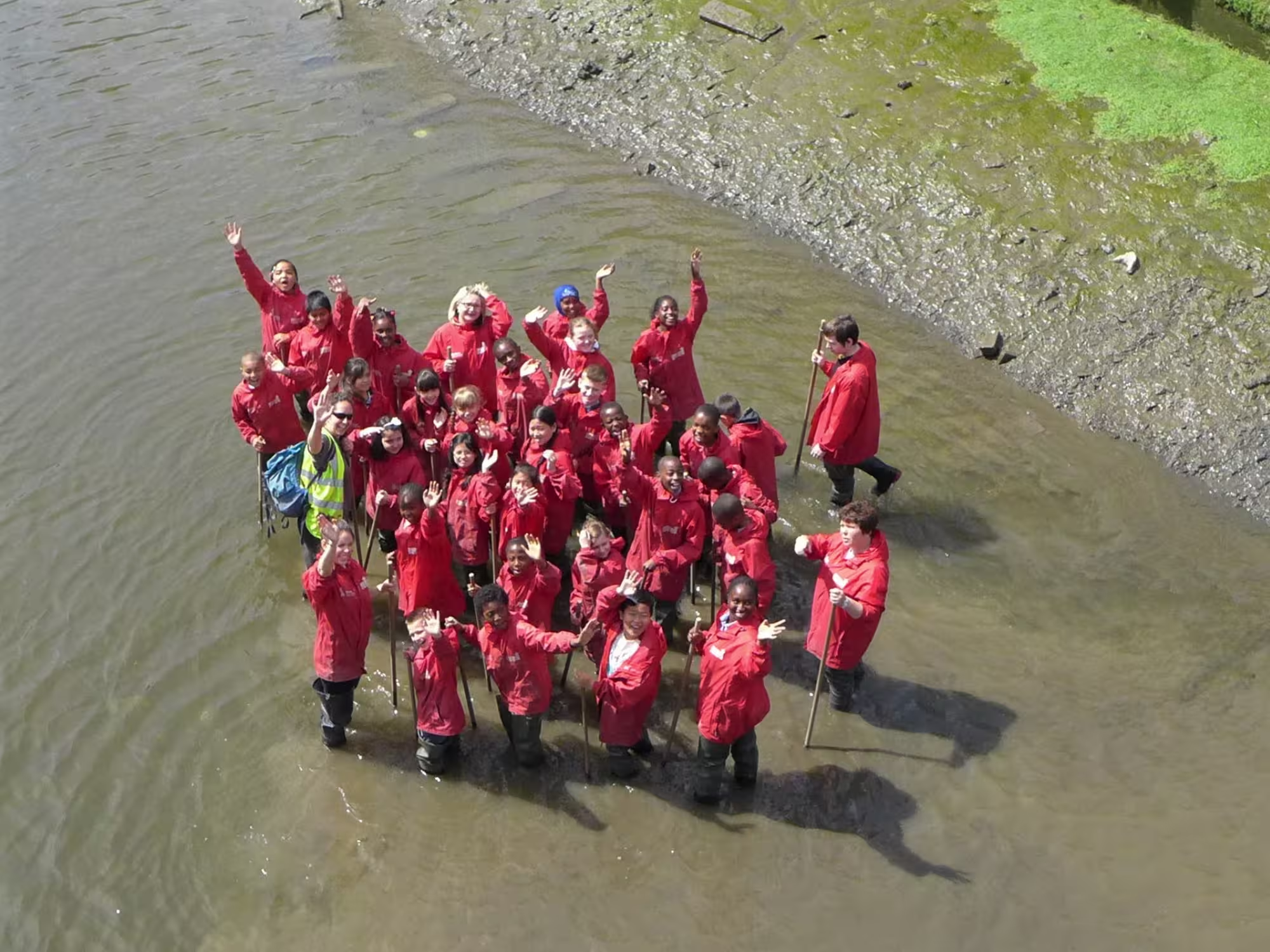
It is easy to think of London as a landscape of roads, buildings and Underground stations. At the Creekside Discovery Centre in Deptford, pupils discover a much wilder side of the capital.
Deptford Creek is a tidal tributary of the Thames and an unusual outdoor classroom in the middle of the city. During a school visit, pupils can investigate the creek's habitats, study plants and invertebrates, and explore how tides and human activity influence an urban ecosystem. Depending on the chosen programme, they may even put on waders and step into the creek themselves.
The hands-on format encourages pupils to observe, form hypotheses, collect evidence and draw conclusions. This makes the experience particularly useful for connecting science and geography lessons with a real environment. It also raises questions about biodiversity, pollution, conservation and the ways cities can coexist with nature.
The centre provides private access to the creek, indoor learning and lunch spaces, and safety equipment including waders and waterproof clothing. For a school group looking for an active and educational field trip away from London's busiest tourist routes, Deptford Creek is a memorable choice.
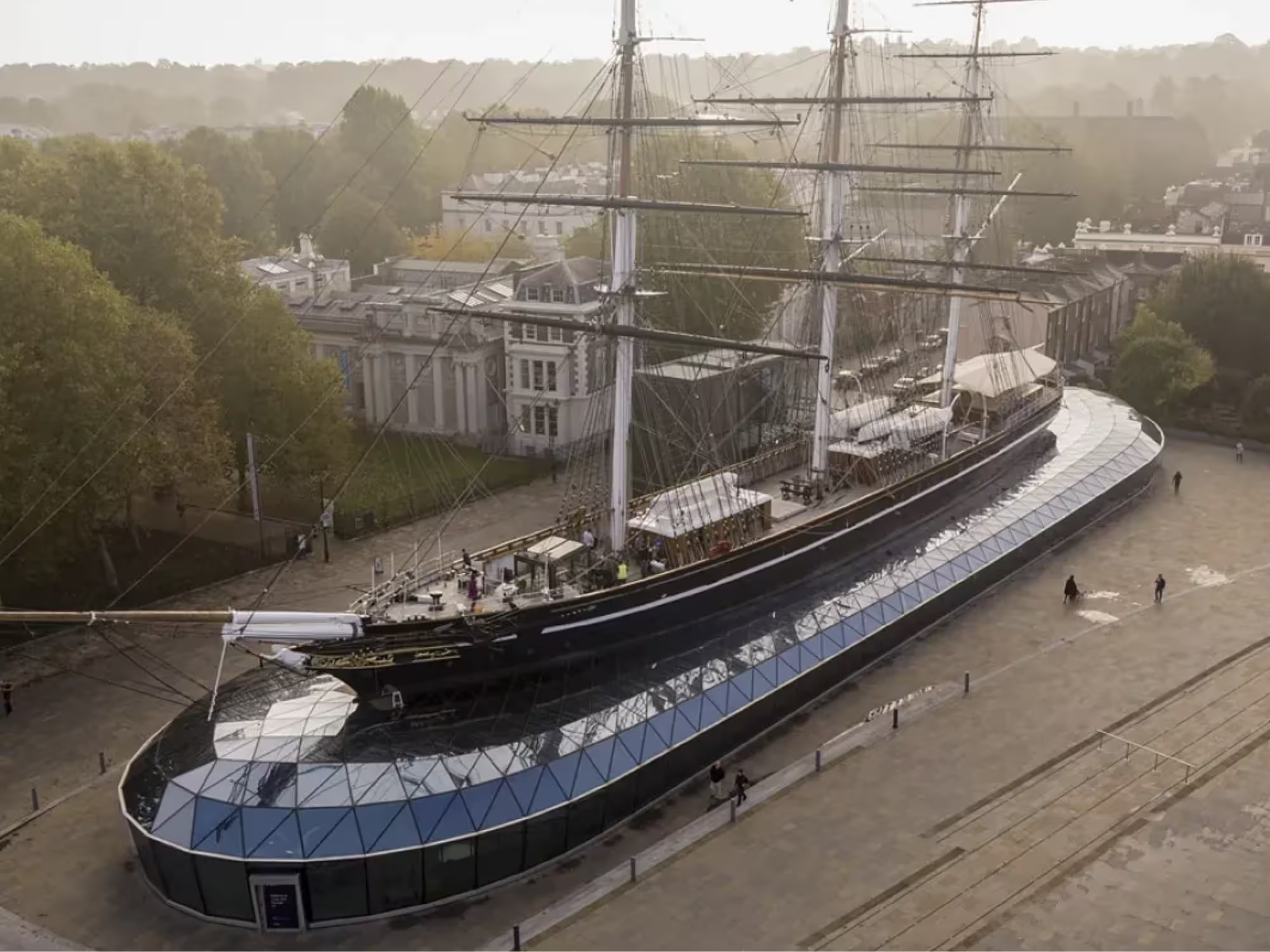
The Cutty Sark gives pupils the chance to explore history aboard a real nineteenth-century sailing ship. Instead of learning about maritime trade only from a textbook, the class can stand on the ship's decks, examine its construction and imagine daily life at sea.
School groups can choose from guided sessions and self-guided visits. Learning sessions explore topics such as the cargo carried around the world, the experiences of Victorian sailors, the science behind the ship and the connections between historic and modern global trade.
The ship makes big historical themes easier to understand. Pupils can consider why speed mattered in international commerce, how goods travelled between continents and what working conditions were like for the crew. A visit can also open age-appropriate discussions about the British Empire and the people and resources behind global trading networks.
With its narrow spaces, towering masts and view across Greenwich, the Cutty Sark feels very different from a conventional museum. This combination of an authentic setting, human stories and hands-on learning makes it a strong addition to a London school trip.
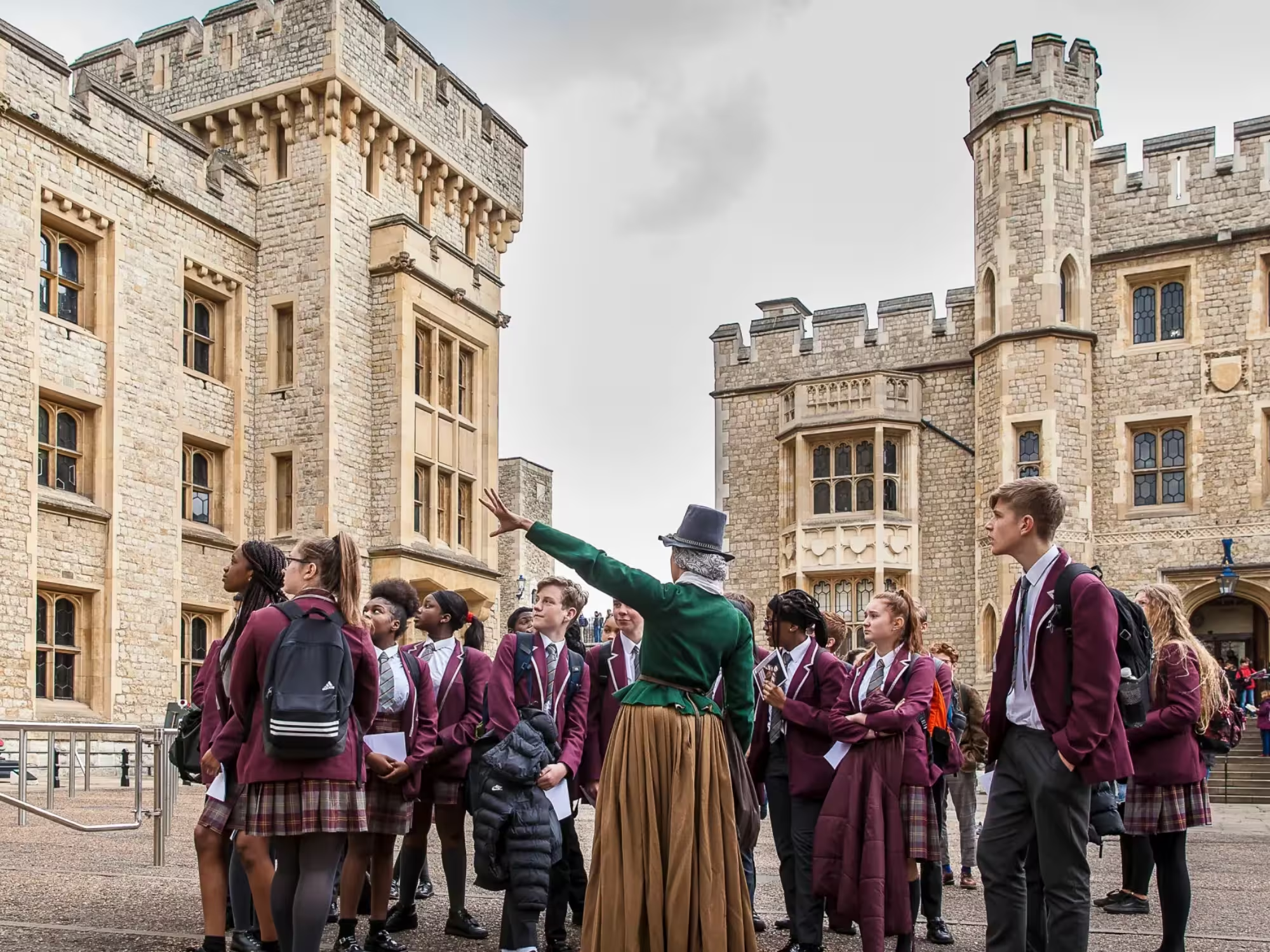
Few places bring British history to life as vividly as the Tower of London. The fortress has served as a royal palace, prison, armoury and place of execution, giving school groups many different routes into the past.
Pupils can explore the White Tower, see the Crown Jewels and discover stories connected to figures such as William the Conqueror, Anne Boleyn and Walter Raleigh. These stories introduce themes including monarchy, religion, conflict, propaganda, crime and punishment.
The Tower offers interactive, enquiry-based school sessions as well as self-led activity trails for different key stages and international school groups. Rather than treating history as a simple list of dates, pupils are encouraged to examine evidence, compare perspectives and think about how power was created and defended.
The dramatic setting also adds plenty of excitement. Ravens, battlements, armour and tales of imprisonment help hold pupils' attention while creating clear connections to the curriculum. Advance booking is important because the Tower is one of London's most popular destinations for school visits.
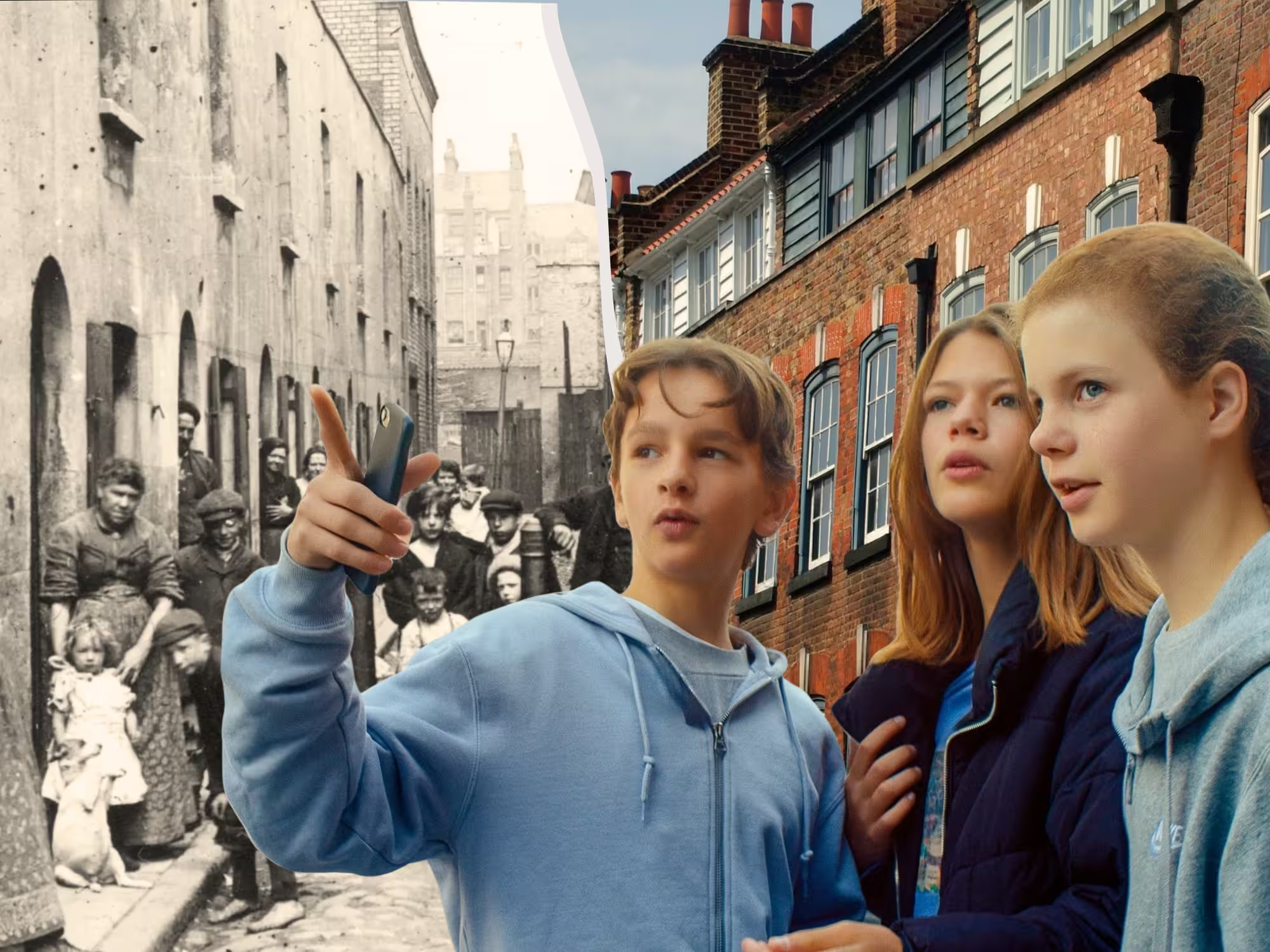
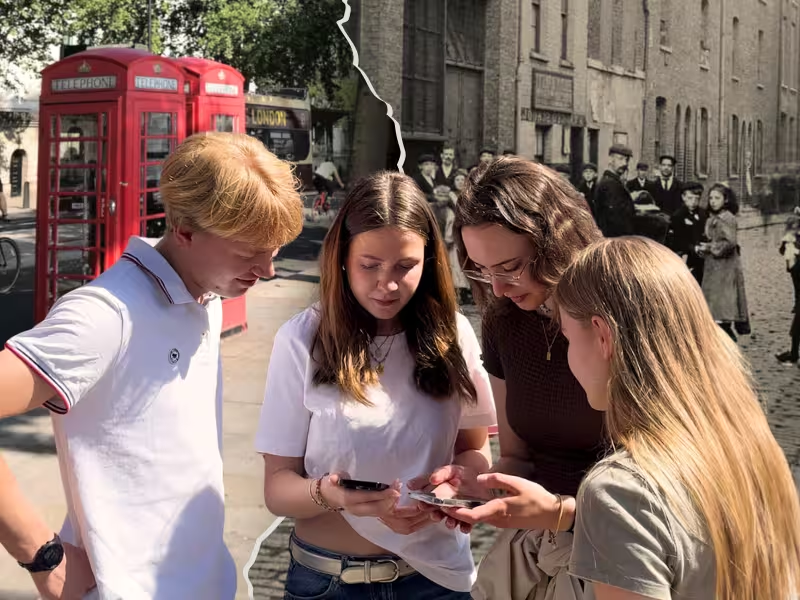
For an activity that combines sightseeing, history and teamwork, take on the digital puzzle mission Murder & Corruption in the Streets of London by SchoolRallye.
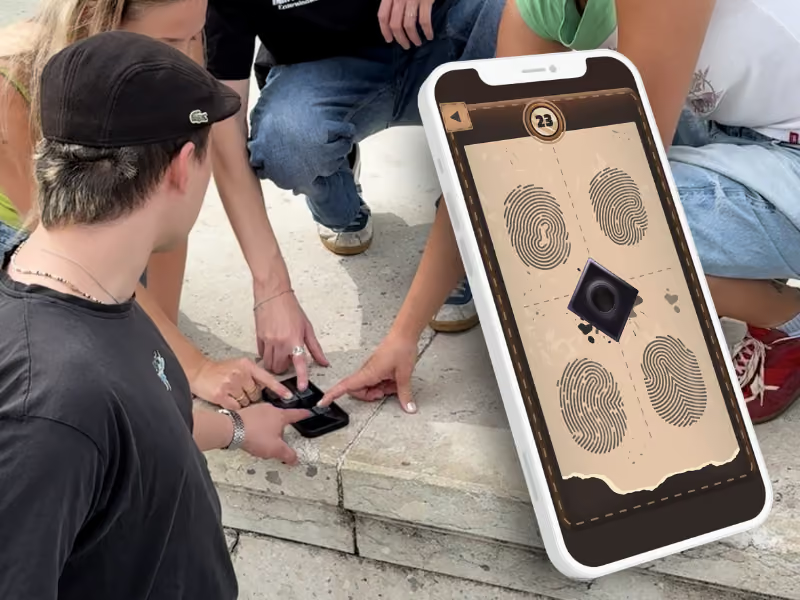
London, 1884: a factory worker has been accused of murder, but his nine-year-old daughter Lizzie believes he is innocent. In small teams, pupils follow her trail through the East End and help the young Detective Arthur Vane investigate the case. Using one smartphone per team, they recover a missing police file, examine witness statements, identify manipulated evidence and try to reveal the real murderer before an innocent man is convicted.
The mission introduces pupils to social inequality, policing and daily life in Victorian London. It also encourages them to question first impressions and consider how prejudice can influence an investigation. The puzzles require close observation, logical thinking and clear communication, so every team member can contribute.
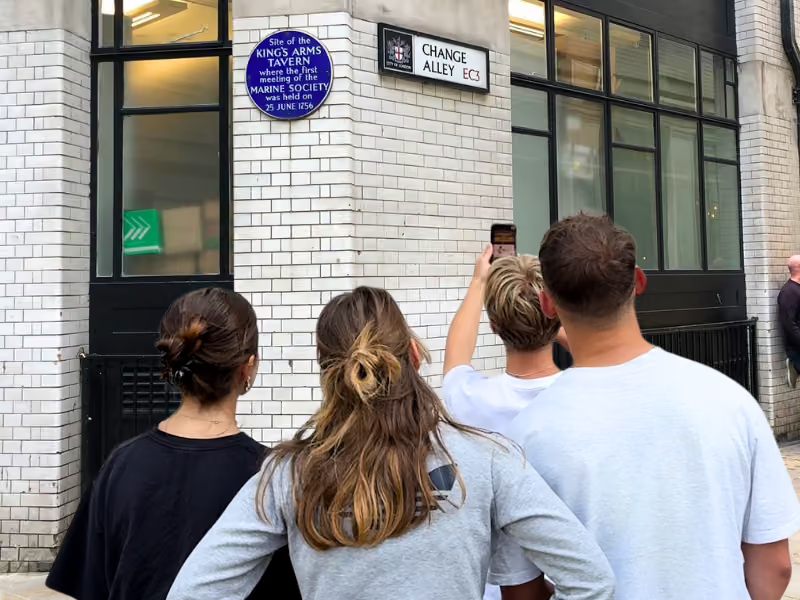
The experience takes around one and a half to two hours and follows a 1.3-kilometre route through a mainly calm, low-traffic part of the East End. Teams of three or four start at short intervals, which gives pupils independence while keeping the activity structured. For teachers who want an educational school trip activity without adding another museum, it is an engaging way to explore London on foot.
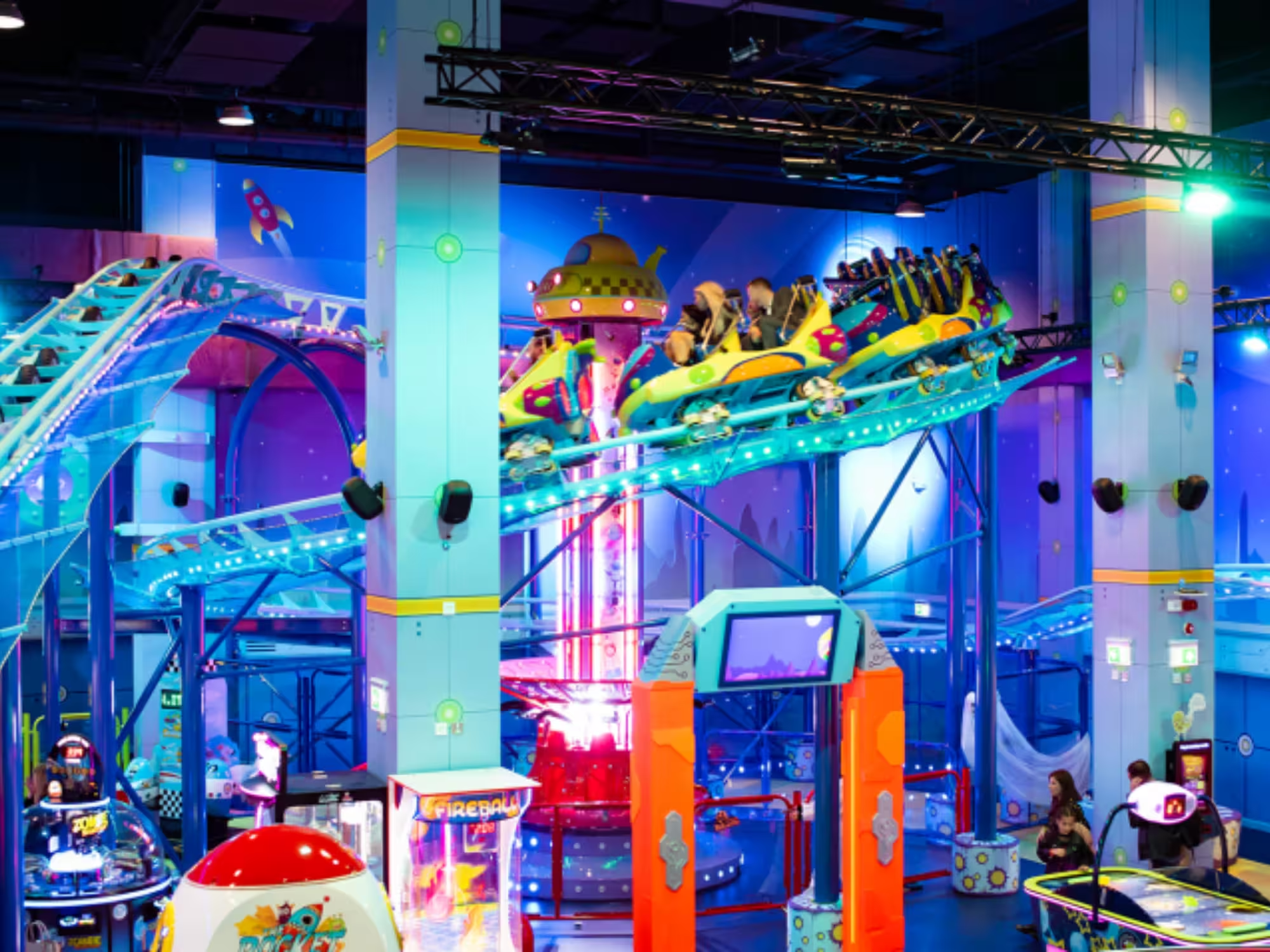
After a full programme of historic sites and educational activities, pupils may need time to relax and simply enjoy being together. Babylon Park London offers two indoor floors of rides, arcade games and space-themed entertainment.
Although this is the least curriculum-focused activity on the list, it still has a valuable place in a school trip. Arcade challenges encourage quick decision-making, hand-eye coordination and friendly competition. Multiplayer games give pupils opportunities to communicate, take turns and support classmates outside the usual classroom setting.
The indoor environment also makes Babylon Park a useful option when the weather is poor or as an evening activity after a day of sightseeing. The venue offers school group packages, free teacher admission and a free pre-visit for teachers. Risk assessments and health and safety documentation are available to support planning.
For pupils, it feels like a well-earned break. For teachers, it provides a structured group activity in one venue. This balance makes it a fun addition to a longer educational visit to London.
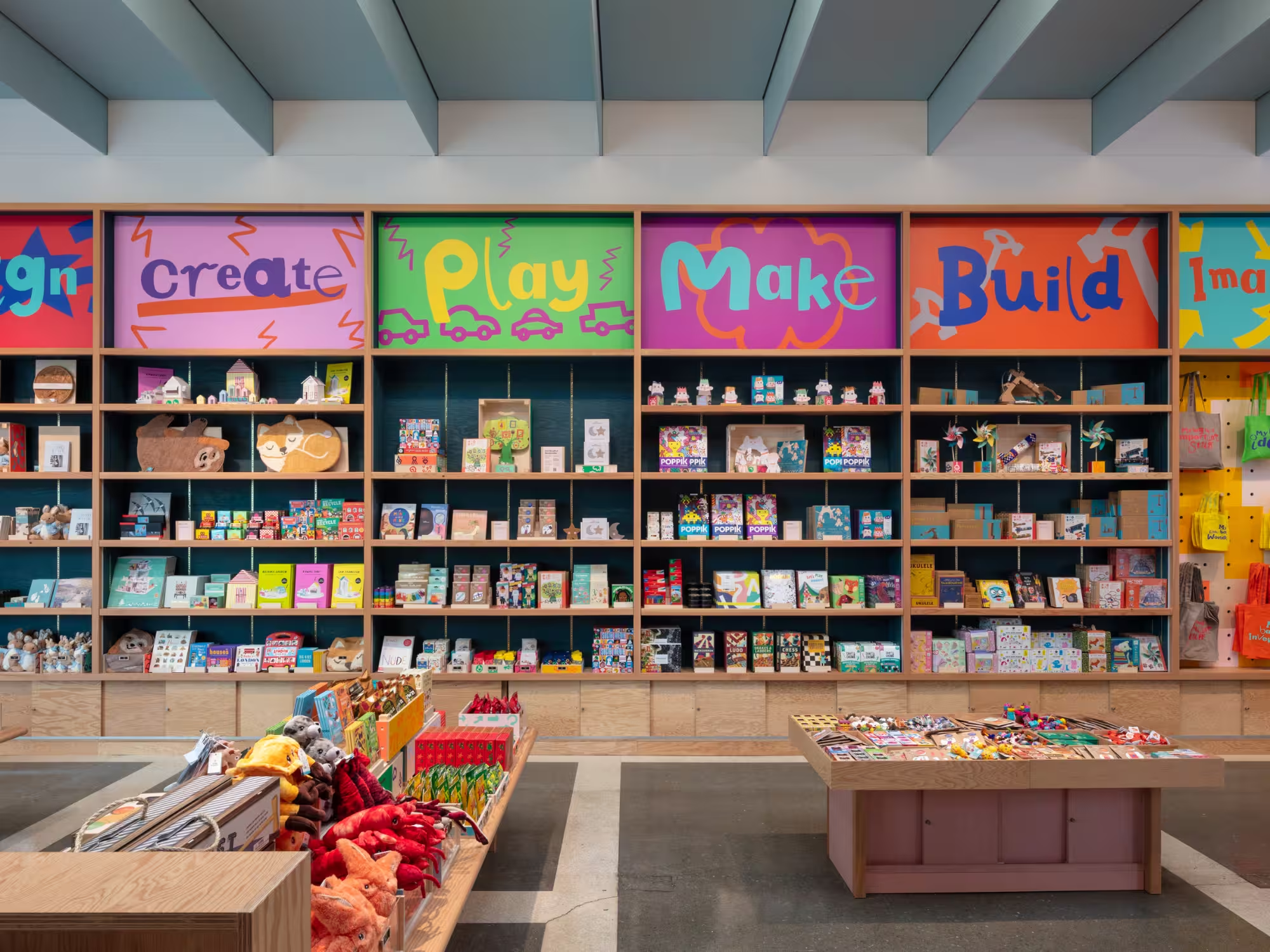
At Young V&A, pupils are encouraged to imagine, play and design. The museum in Bethnal Green presents objects and activities in three main galleries built around exactly those themes.
Rather than asking visitors to move quietly from display case to display case, Young V&A invites them to explore how ideas become objects. Pupils can investigate design processes, storytelling, materials and the relationship between creativity and everyday life. The experience is especially suitable for younger school groups, although design-focused workshops and exhibitions may also interest older pupils.
A visit can support subjects such as art, design and technology. Teachers can encourage pupils to choose an object, analyse the problem it was designed to solve and develop an improved version of their own. This turns the museum visit into a creative challenge rather than a passive tour.
General admission is free, which makes Young V&A a helpful option for schools working with a limited budget. School visits must be booked in advance, allowing the museum to manage groups and help provide an organised experience.
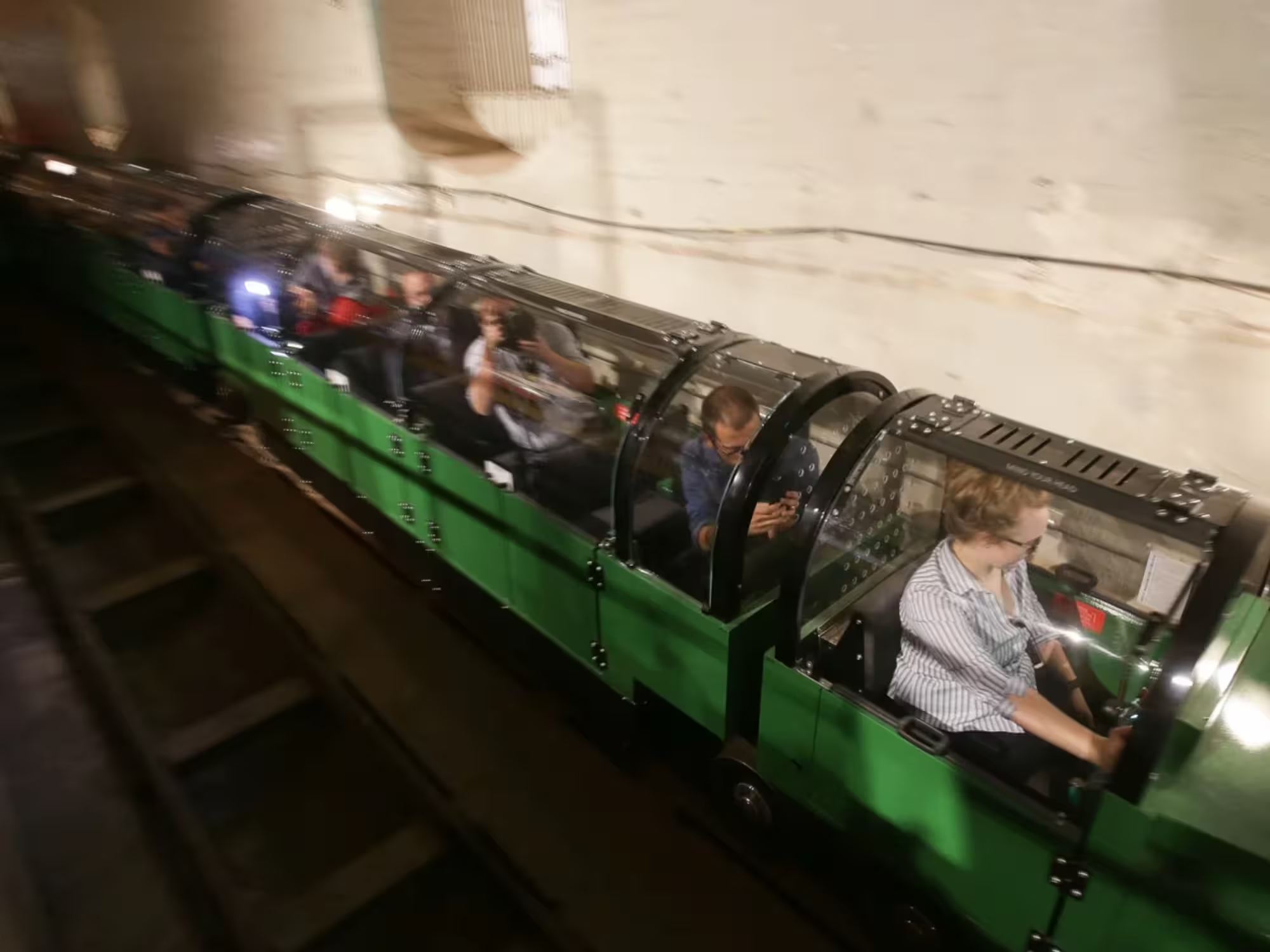
The Postal Museum shows how communication, engineering and public services helped connect people across Britain. Its best-known attraction is Mail Rail, the small underground railway that carried post beneath London's streets from 1927 until 2003.
During the immersive train ride, pupils travel through part of the hidden tunnel network and discover how huge quantities of mail once moved around the city. Interactive exhibitions above ground explore more than 500 years of postal history, from handwritten letters and early delivery systems to technological change and modern communication.
The museum works particularly well for an educational school trip because it connects several subjects. History pupils can examine how communication changed society. Science and design classes can investigate transport systems and engineering. Discussions about letters, censorship and access to information can also support English and citizenship lessons.
Schools can book facilitated days with an interactive session, exhibitions, a Mail Rail ride and a lunch slot, or arrange a self-led visit. The variety keeps pupils involved and makes the museum feel more like an investigation into a hidden system than a traditional collection of objects.
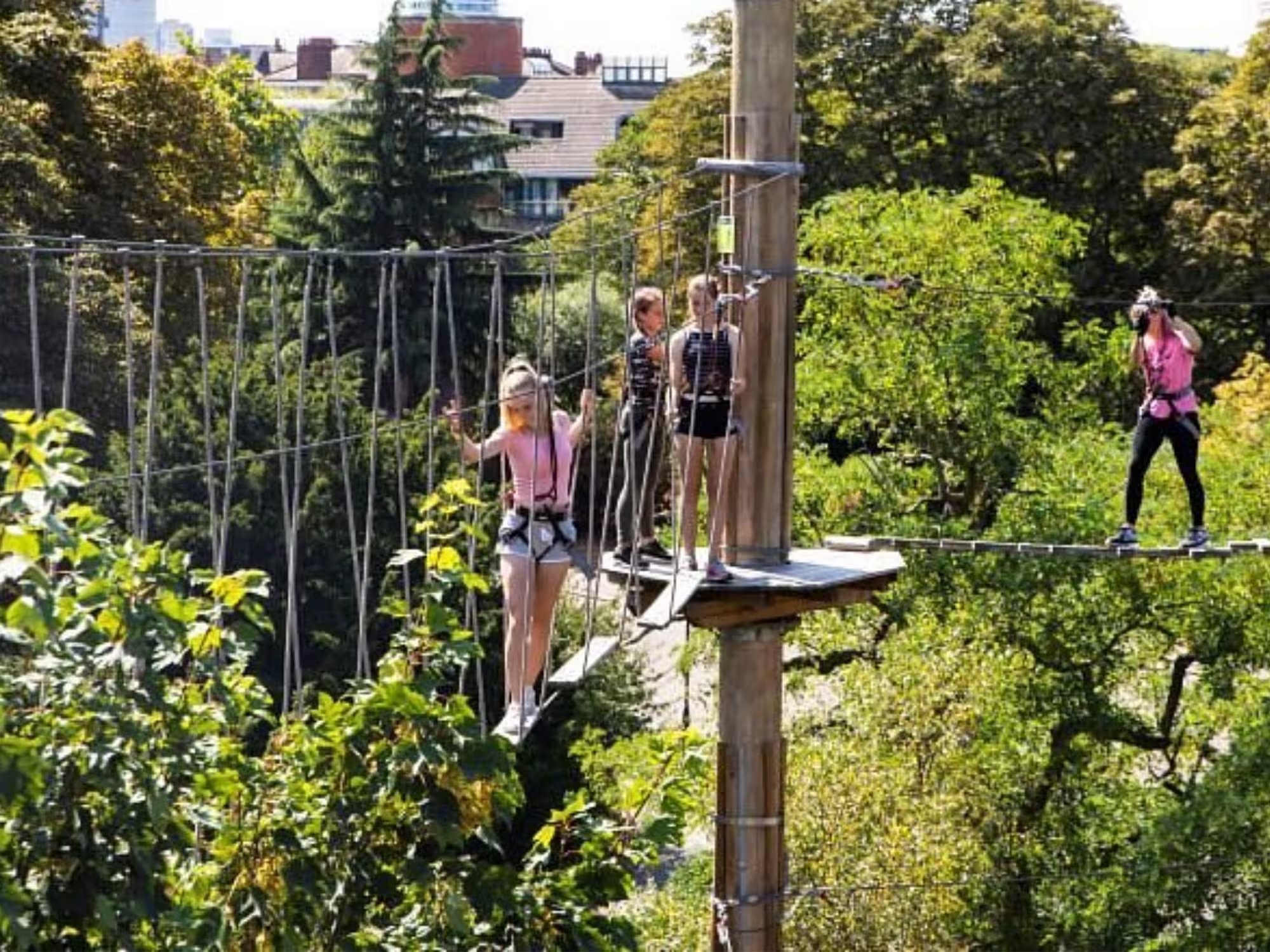
For school groups looking for an active outdoor adventure, Go Ape offers high-rope courses designed to develop confidence, resilience and teamwork.
Pupils climb between platforms, cross suspended obstacles and travel along zip wires. Each challenge requires concentration, balance and determination. Classmates can encourage one another and celebrate their achievements together, helping to strengthen relationships within the group.
The activity gives pupils an opportunity to step outside their comfort zones in a structured environment. Experienced instructors and the on-site team support groups throughout the experience. Many Go Ape locations also hold the Learning Outside the Classroom Quality Badge.
Go Ape has three London locations at Battersea Park, Alexandra Palace and Cockfosters. Different courses are available depending on the pupils’ ages and abilities. For an educational field trip that combines physical activity, personal development and plenty of fun, Go Ape is an exciting alternative to another museum visit.
London offers far more than famous photo stops. A well-planned field trip let’s pupils experience learnings they wouldn’t in the classroom, while letting the class bond together as a group.
The best programme combines different kinds of learning. Follow a museum visit with an outdoor puzzle mission. Balance a history-focused morning with river fieldwork or a relaxed visit to Babylon Park. This variety helps pupils stay curious and gives different strengths within the class a chance to shine.
For a safe and manageable school trip, book group activities early and request the latest risk assessment and supervision guidance from every provider. Check travel times, accessibility, weather alternatives and lunch arrangements. Outdoor activities near tidal water require particular attention to provider instructions and suitable clothing.
With the right mix of structure, independence and fun, a field trip to London can become much more than a day away from school. It can help pupils see how history, science, design and city life connect in the world around them.
%20(4).png)
_converted.avif)
_converted.avif)
%20(2)_converted.avif)
A spectacular mission awaits you! Scotland Yard sends a young detective to investigate a brutal murder. For the local police, the case is clear: a factory worker is the killer. But hidden in the thick fog of London’s streets lies a dark truth. Recover the stolen police file, examine the evidence and help the detective bring the real murderer to justice before an innocent man is convicted.
Read more_converted.avif)
Planning a school trip to London and looking for a programme that combines learning, sightseeing and time together? This four-day itinerary brings together famous landmarks, an East End murder mystery, royal traditions and relaxed evenings, with suggestions for cheap lunches along the way.
Read articleAre you planning a field trip to London and looking for activities that are both fun and educational? London is full of famous landmarks, but the best school trip experiences allow pupils to do more than simply look at them. They invite the class to investigate, solve problems, experiment and discover the city from a new perspective!
At SchoolRallye, we have gathered eight ideas that bring subjects such as history, geography, science and design to life. From exploring a tidal creek and boarding a Victorian sailing ship to solving a murder case in the East End, these activities combine learning with movement, teamwork and memorable experiences.
Organising a safe school trip in a busy city can feel challenging. The activities below offer structured programmes, school resources or clearly defined experiences that make planning easier. Teachers should still check the latest risk assessments, supervision requirements, accessibility information and booking conditions directly with each provider.
It is easy to think of London as a landscape of roads, buildings and Underground stations. At the Creekside Discovery Centre in Deptford, pupils discover a much wilder side of the capital.
Deptford Creek is a tidal tributary of the Thames and an unusual outdoor classroom in the middle of the city. During a school visit, pupils can investigate the creek's habitats, study plants and invertebrates, and explore how tides and human activity influence an urban ecosystem. Depending on the chosen programme, they may even put on waders and step into the creek themselves.
The hands-on format encourages pupils to observe, form hypotheses, collect evidence and draw conclusions. This makes the experience particularly useful for connecting science and geography lessons with a real environment. It also raises questions about biodiversity, pollution, conservation and the ways cities can coexist with nature.
The centre provides private access to the creek, indoor learning and lunch spaces, and safety equipment including waders and waterproof clothing. For a school group looking for an active and educational field trip away from London's busiest tourist routes, Deptford Creek is a memorable choice.
The Cutty Sark gives pupils the chance to explore history aboard a real nineteenth-century sailing ship. Instead of learning about maritime trade only from a textbook, the class can stand on the ship's decks, examine its construction and imagine daily life at sea.
School groups can choose from guided sessions and self-guided visits. Learning sessions explore topics such as the cargo carried around the world, the experiences of Victorian sailors, the science behind the ship and the connections between historic and modern global trade.
The ship makes big historical themes easier to understand. Pupils can consider why speed mattered in international commerce, how goods travelled between continents and what working conditions were like for the crew. A visit can also open age-appropriate discussions about the British Empire and the people and resources behind global trading networks.
With its narrow spaces, towering masts and view across Greenwich, the Cutty Sark feels very different from a conventional museum. This combination of an authentic setting, human stories and hands-on learning makes it a strong addition to a London school trip.
Few places bring British history to life as vividly as the Tower of London. The fortress has served as a royal palace, prison, armoury and place of execution, giving school groups many different routes into the past.
Pupils can explore the White Tower, see the Crown Jewels and discover stories connected to figures such as William the Conqueror, Anne Boleyn and Walter Raleigh. These stories introduce themes including monarchy, religion, conflict, propaganda, crime and punishment.
The Tower offers interactive, enquiry-based school sessions as well as self-led activity trails for different key stages and international school groups. Rather than treating history as a simple list of dates, pupils are encouraged to examine evidence, compare perspectives and think about how power was created and defended.
The dramatic setting also adds plenty of excitement. Ravens, battlements, armour and tales of imprisonment help hold pupils' attention while creating clear connections to the curriculum. Advance booking is important because the Tower is one of London's most popular destinations for school visits.
For an activity that combines sightseeing, history and teamwork, take on the digital puzzle mission Murder & Corruption in the Streets of London by SchoolRallye.
London, 1884: a factory worker has been accused of murder, but his nine-year-old daughter Lizzie believes he is innocent. In small teams, pupils follow her trail through the East End and help the young Detective Arthur Vane investigate the case. Using one smartphone per team, they recover a missing police file, examine witness statements, identify manipulated evidence and try to reveal the real murderer before an innocent man is convicted.
The mission introduces pupils to social inequality, policing and daily life in Victorian London. It also encourages them to question first impressions and consider how prejudice can influence an investigation. The puzzles require close observation, logical thinking and clear communication, so every team member can contribute.
The experience takes around one and a half to two hours and follows a 1.3-kilometre route through a mainly calm, low-traffic part of the East End. Teams of three or four start at short intervals, which gives pupils independence while keeping the activity structured. For teachers who want an educational school trip activity without adding another museum, it is an engaging way to explore London on foot.

.svg)
After a full programme of historic sites and educational activities, pupils may need time to relax and simply enjoy being together. Babylon Park London offers two indoor floors of rides, arcade games and space-themed entertainment.
Although this is the least curriculum-focused activity on the list, it still has a valuable place in a school trip. Arcade challenges encourage quick decision-making, hand-eye coordination and friendly competition. Multiplayer games give pupils opportunities to communicate, take turns and support classmates outside the usual classroom setting.
The indoor environment also makes Babylon Park a useful option when the weather is poor or as an evening activity after a day of sightseeing. The venue offers school group packages, free teacher admission and a free pre-visit for teachers. Risk assessments and health and safety documentation are available to support planning.
For pupils, it feels like a well-earned break. For teachers, it provides a structured group activity in one venue. This balance makes it a fun addition to a longer educational visit to London.
At Young V&A, pupils are encouraged to imagine, play and design. The museum in Bethnal Green presents objects and activities in three main galleries built around exactly those themes.
Rather than asking visitors to move quietly from display case to display case, Young V&A invites them to explore how ideas become objects. Pupils can investigate design processes, storytelling, materials and the relationship between creativity and everyday life. The experience is especially suitable for younger school groups, although design-focused workshops and exhibitions may also interest older pupils.
A visit can support subjects such as art, design and technology. Teachers can encourage pupils to choose an object, analyse the problem it was designed to solve and develop an improved version of their own. This turns the museum visit into a creative challenge rather than a passive tour.
General admission is free, which makes Young V&A a helpful option for schools working with a limited budget. School visits must be booked in advance, allowing the museum to manage groups and help provide an organised experience.
The Postal Museum shows how communication, engineering and public services helped connect people across Britain. Its best-known attraction is Mail Rail, the small underground railway that carried post beneath London's streets from 1927 until 2003.
During the immersive train ride, pupils travel through part of the hidden tunnel network and discover how huge quantities of mail once moved around the city. Interactive exhibitions above ground explore more than 500 years of postal history, from handwritten letters and early delivery systems to technological change and modern communication.
The museum works particularly well for an educational school trip because it connects several subjects. History pupils can examine how communication changed society. Science and design classes can investigate transport systems and engineering. Discussions about letters, censorship and access to information can also support English and citizenship lessons.
Schools can book facilitated days with an interactive session, exhibitions, a Mail Rail ride and a lunch slot, or arrange a self-led visit. The variety keeps pupils involved and makes the museum feel more like an investigation into a hidden system than a traditional collection of objects.
For school groups looking for an active outdoor adventure, Go Ape offers high-rope courses designed to develop confidence, resilience and teamwork.
Pupils climb between platforms, cross suspended obstacles and travel along zip wires. Each challenge requires concentration, balance and determination. Classmates can encourage one another and celebrate their achievements together, helping to strengthen relationships within the group.
The activity gives pupils an opportunity to step outside their comfort zones in a structured environment. Experienced instructors and the on-site team support groups throughout the experience. Many Go Ape locations also hold the Learning Outside the Classroom Quality Badge.
Go Ape has three London locations at Battersea Park, Alexandra Palace and Cockfosters. Different courses are available depending on the pupils’ ages and abilities. For an educational field trip that combines physical activity, personal development and plenty of fun, Go Ape is an exciting alternative to another museum visit.
London offers far more than famous photo stops. A well-planned field trip let’s pupils experience learnings they wouldn’t in the classroom, while letting the class bond together as a group.
The best programme combines different kinds of learning. Follow a museum visit with an outdoor puzzle mission. Balance a history-focused morning with river fieldwork or a relaxed visit to Babylon Park. This variety helps pupils stay curious and gives different strengths within the class a chance to shine.
For a safe and manageable school trip, book group activities early and request the latest risk assessment and supervision guidance from every provider. Check travel times, accessibility, weather alternatives and lunch arrangements. Outdoor activities near tidal water require particular attention to provider instructions and suitable clothing.
With the right mix of structure, independence and fun, a field trip to London can become much more than a day away from school. It can help pupils see how history, science, design and city life connect in the world around them.
A spectacular mission awaits you! Scotland Yard sends a young detective to investigate a brutal murder. For the local police, the case is clear: a factory worker is the killer. But hidden in the thick fog of London’s streets lies a dark truth. Recover the stolen police file, examine the evidence and help the detective bring the real murderer to justice before an innocent man is convicted.
Learn morePlanning a school trip to London and looking for a programme that combines learning, sightseeing and time together? This four-day itinerary brings together famous landmarks, an East End murder mystery, royal traditions and relaxed evenings, with suggestions for cheap lunches along the way.
View article

