
.svg)


.svg)


.svg)
Planning a school trip to London and looking for a programme that combines learning, sightseeing and time together? This four-day itinerary brings together famous landmarks, an East End murder mystery, royal traditions and relaxed evenings, with suggestions for cheap lunches along the way.
Finding a good combination of fun, education, and convenience while staying within budget on a school trip can be really frustrating. As providers of an educational svavenger hunt in five major European cities, we at SchoolRallye know all too well how hard it can be for teachers to plan the perfect school trip. That’s why this itinerary is planned with short travel distances in mind, while also prioritising cheap prices and nearby lunches for big groups!
In this plan, you’ll…
✅ … discover some of London’s best-known sights, from the Thames to Buckingham Palace.
✅ … explore crime, social inequality, royal history and cultures from around the world.
✅ … solve puzzles together, practise English and enjoy some free time as a class.
The programme groups activities by area where possible, with short Underground journeys between neighbourhoods. The goal of this plan is to make your field trip in London as convenient as possible. There are also regular breaks and optional evening activities, so you can adapt each day to your students and budget.
The first day is all about settling in. After travelling to London, transfer to your accommodation and leave your luggage.
Keep the morning free of organised activities. A delayed journey is much easier to manage when your first booking isn’t immediately after arrival. Have lunch at your accommodation before heading out for your first look at the city.
Start your London school trip with a different view of the capital: from the Thames.
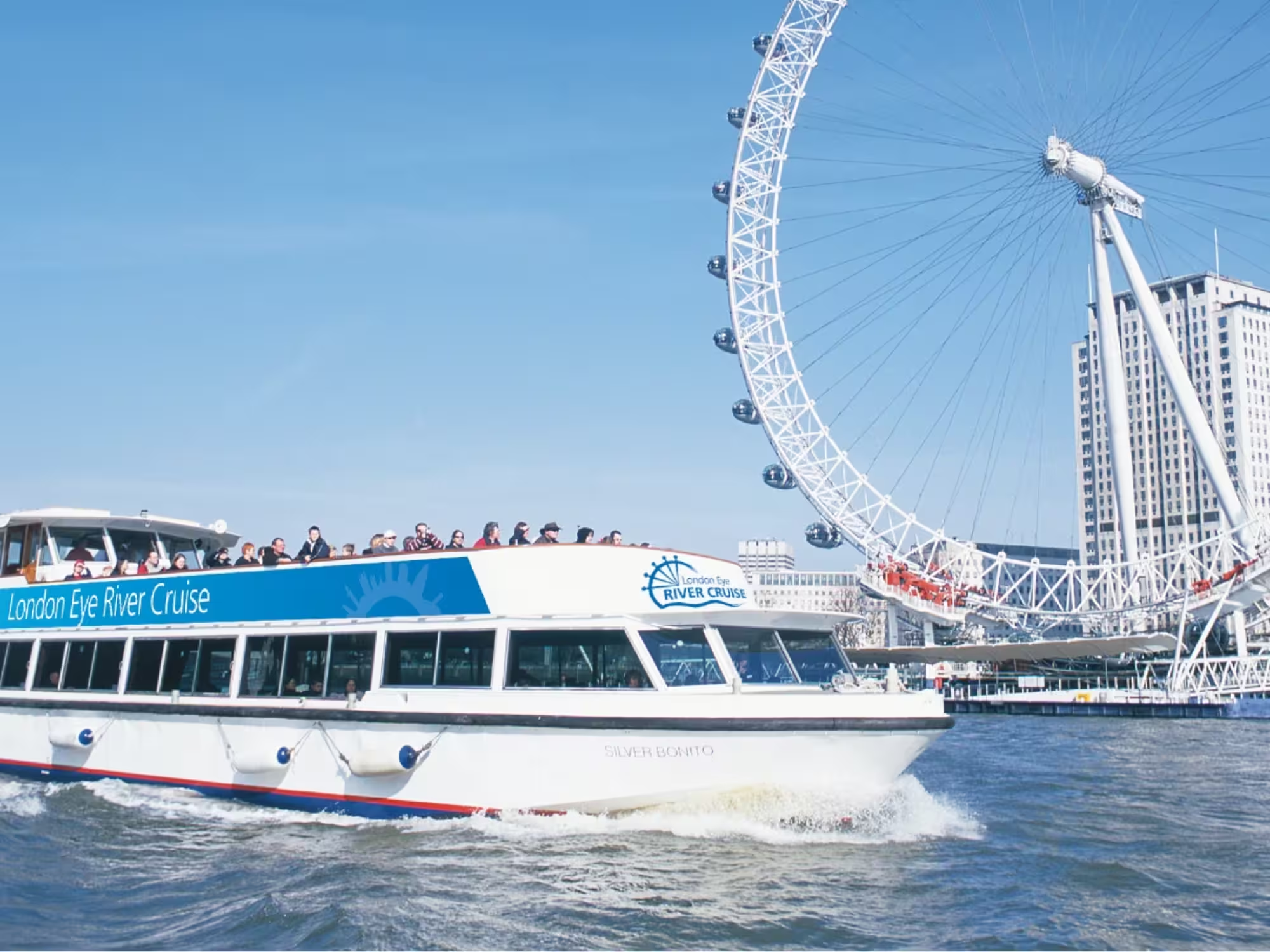
The London Eye River Cruise takes you past landmarks including the Houses of Parliament, St Paul’s Cathedral, Shakespeare’s Globe and Tower Bridge. Live commentary introduces the sights as you travel along the river.
It’s an easy way to get your bearings after the journey. Students can spot places they already recognise, take photographs and listen to English commentary without starting the trip with a long walk.
Book through the operator’s schools service and confirm the rate and accompanying-teacher allowance for your date.
After the cruise, stay on the South Bank for some relaxed free time.

The area between the London Eye, Jubilee Gardens and Royal Festival Hall gives students space to enjoy the riverside, take photographs or pick up a souvenir.
Agree on clear boundaries and a meeting point before everyone heads off in smaller groups. With the first sightseeing activity already behind you, there’s no need to squeeze in another attraction.
Head back to your accommodation for dinner, unpacking and a relaxed evening.
A few card games or board games are enough for the first night. Everyone gets a chance to settle in and spend time together before the first full day of exploring.

After breakfast, head towards the East End.
Today connects a fictional Victorian investigation with real questions about London’s past. Who had power? Whose version of events was believed? And how did someone’s social position affect the way they were treated?
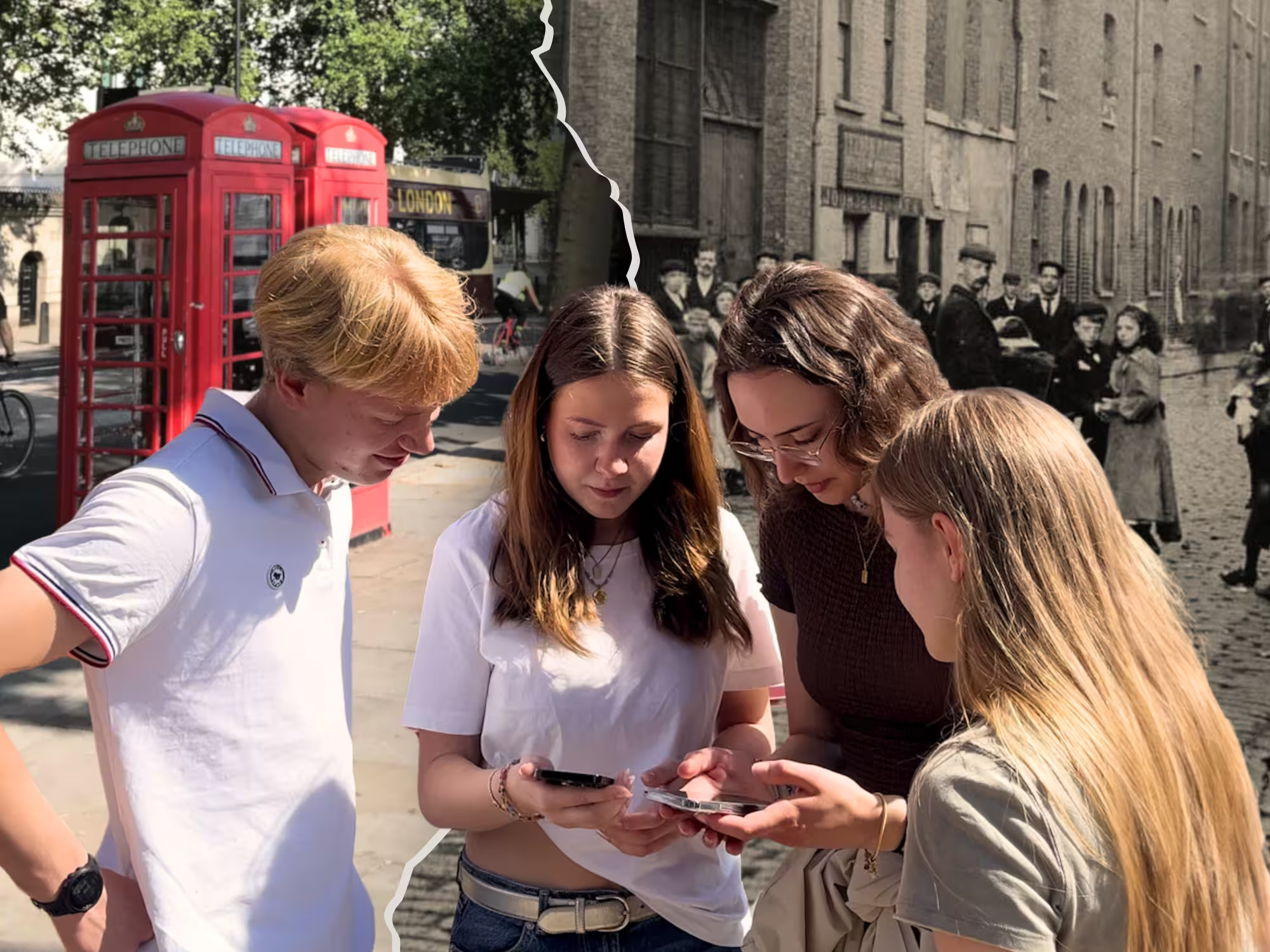
A murder has been committed. The police believe they have found the culprit. But does the evidence tell the same story?
In SchoolRallye’s “Murder & Corruption in the Streets of London”, students become investigators in teams of three or four.
They follow clues, examine evidence and solve puzzles based on early forensic methods as they explore the East End historical district. The mission combines a fictional case with themes from Victorian working-class history, including prejudice, justice and social inequality.
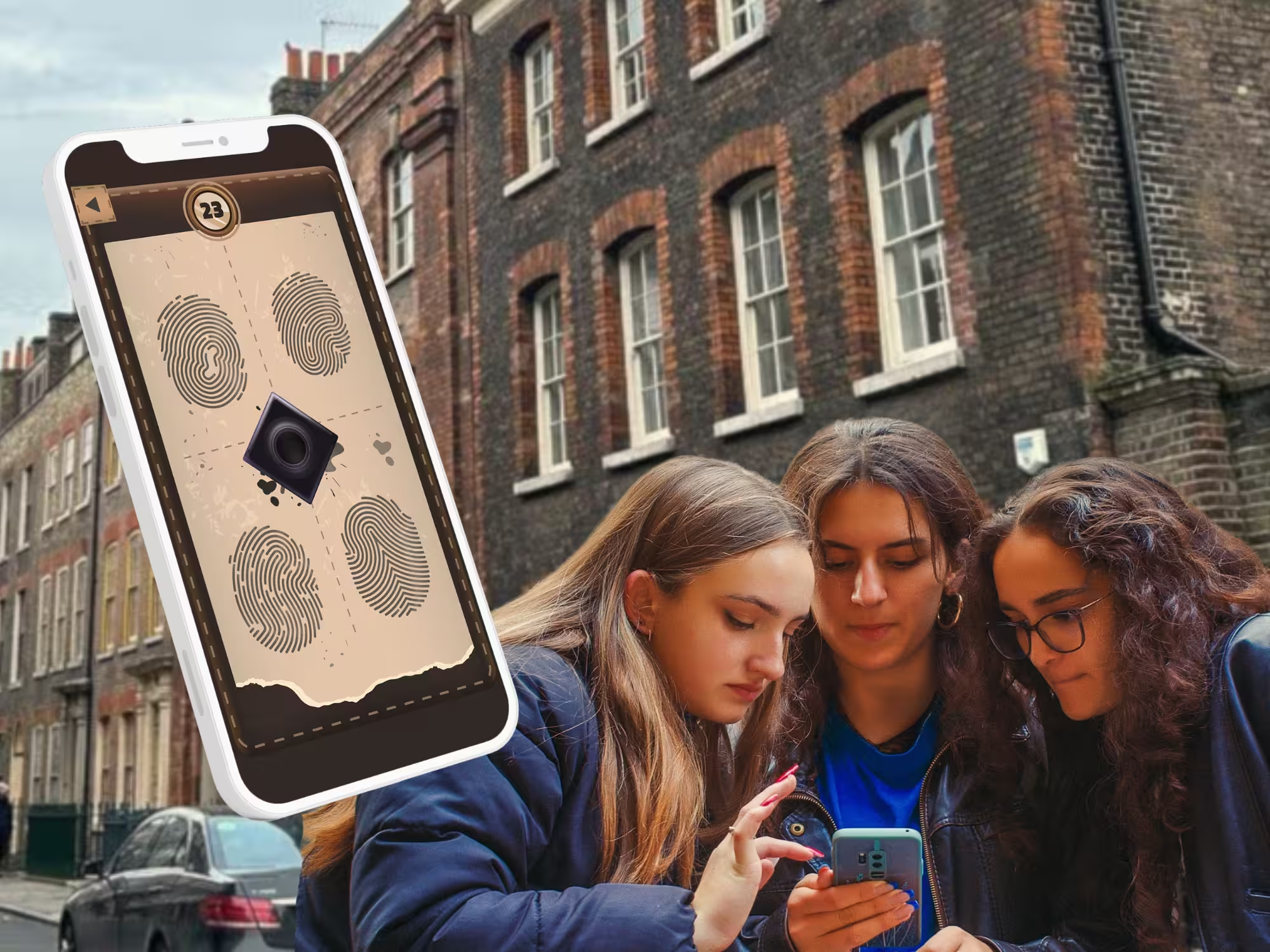
The activity lasts around one and a half to two hours. Your planned route begins and finishes at Spitalfields Markets, covering approximately 1.3 kilometres or 0.8 miles.
It gives students a shared challenge and a reason to look closely at their surroundings. They need to discuss their ideas, question assumptions and work together to move the investigation forward.
The scavenger hunt costs £9.50 per student, with teachers taking part for free! Teachers can choose to play along with their students, or grab a coffee in a nearby café and follow the groups’ progress in the Teacher Cockpit.
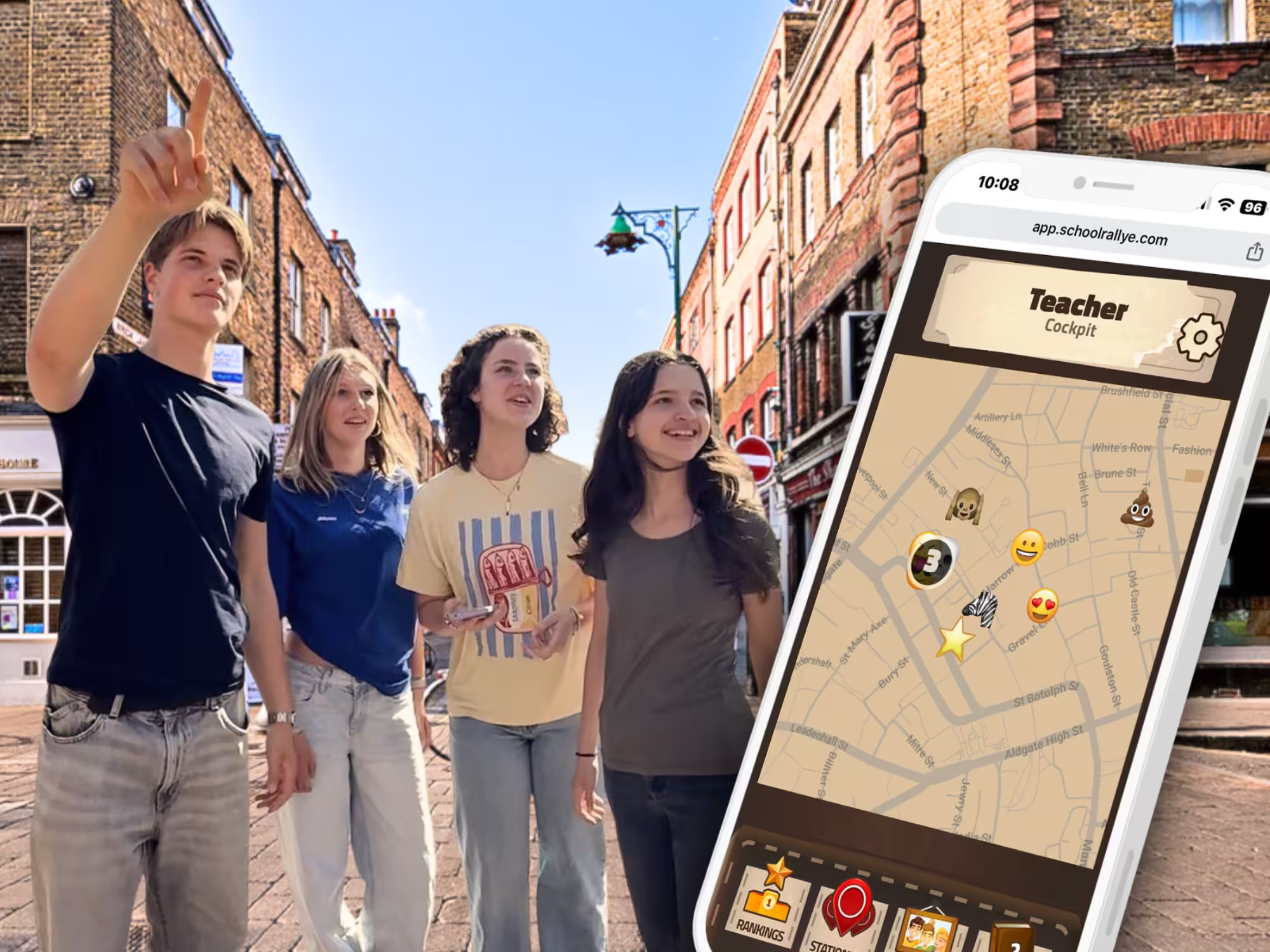
After the investigation, head towards Ely’s Yard for lunch.
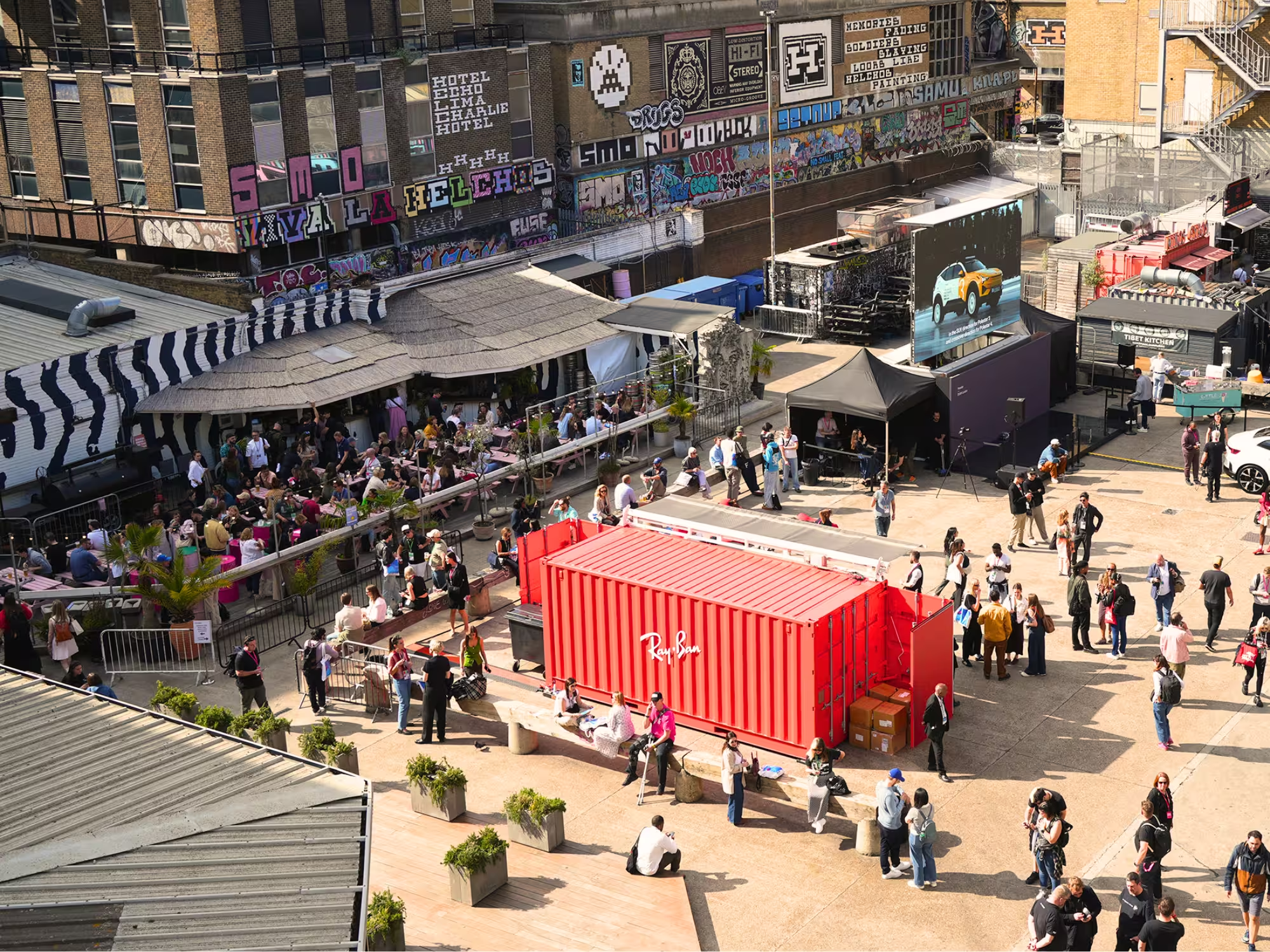
The street-food options let students choose something for themselves before regrouping. Outdoor seating makes this a weather-dependent stop, so have an alternative in mind if rain is forecast. Luckily, the surrounding area offers lots of options, with the Spitalfields Market being one of them.
To get to the Tower of London, you can include a short walk down Brick Lane before hopping on the Underground. This is the most iconic street of the London East End, and gives the class a chance to view street art, vendors, and iconic buildings along the way. At the end of Brick Lane, take the Underground for one stop to the Tower of London.
At the Tower, keep the focus on crime, punishment and power. A booked school session or suitable tour can help students connect the morning’s questions about justice with the stories of a historic fortress and prison.
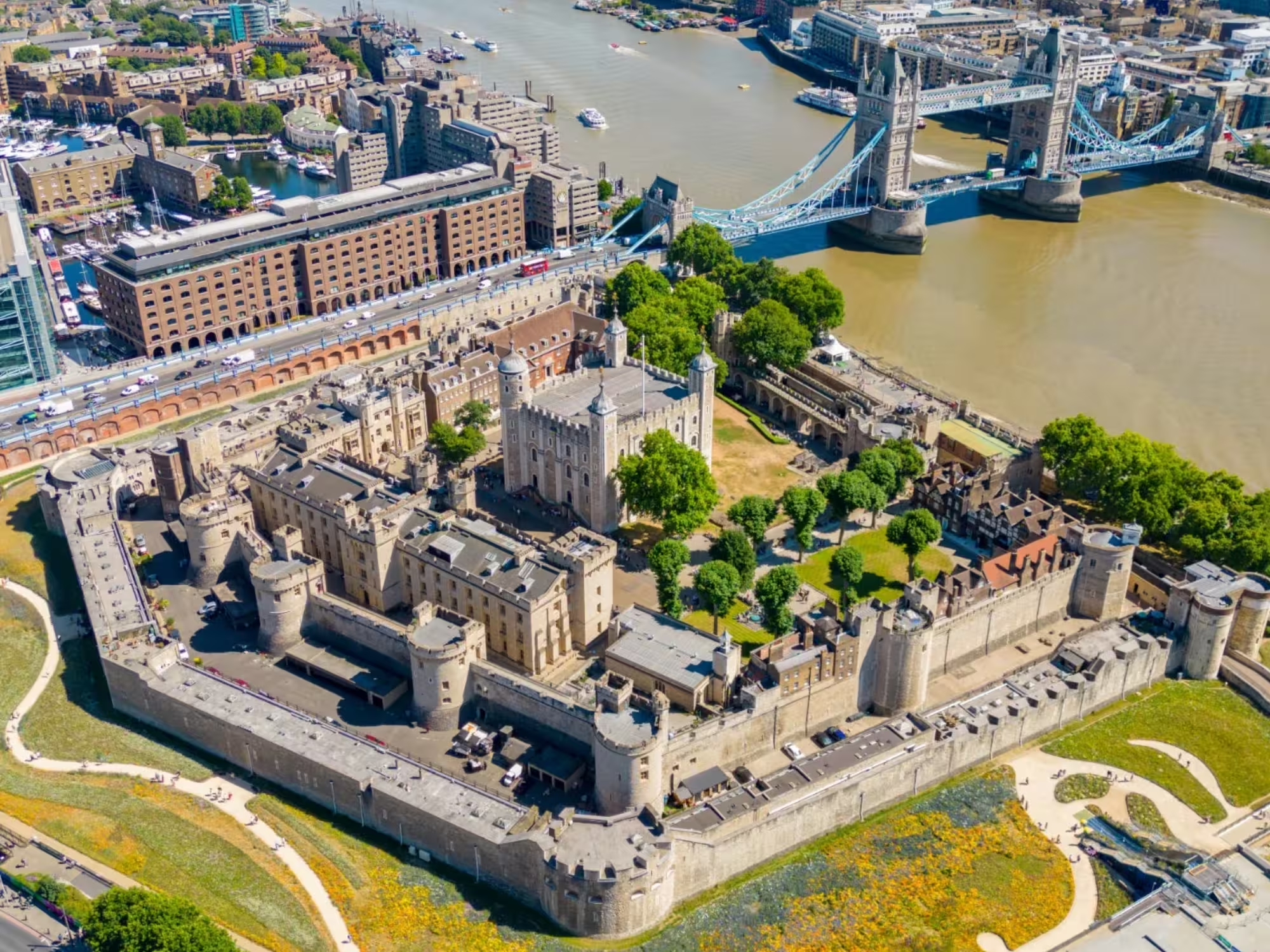
Who ended up imprisoned here, and why? How were accusations used against political opponents? These questions give the visit a clear theme and connection to the day’s programme!
After the Tower of London, give the class a break around Tower Gardens and the nearby riverside.
Students can take photographs of Tower Bridge, find a snack or sit down after a busy day. Set a clear meeting point and keep everyone within an agreed area.
Leave time for dinner before the evening programme.
If the performance calendar fits your dates, you can spend the evening at Shakespeare’s Globe!
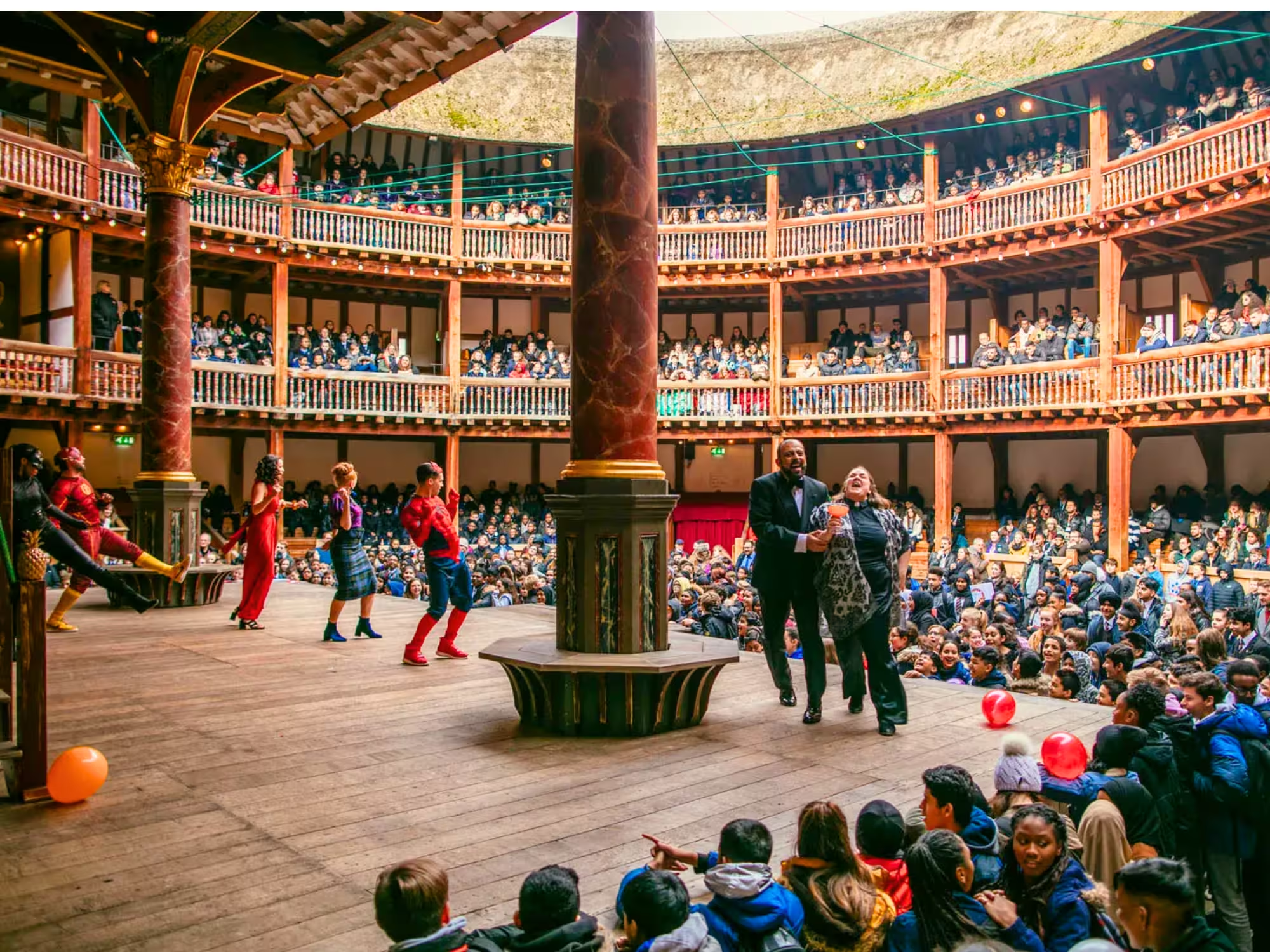
Watching a play gives students a different way to engage with the English language, and especially the site immerses the students in English history. Everyone knows Shakespeare, and getting to watch a play in this historical theathre is definitely a memorable experience for everyone.
Choose a production that suits your class, and check the seating or standing arrangements before booking. After a full day out, it could be a good idea to avoid the standard standing ticket option.
The third day starts with the ceremonial side of London.
After exploring the East End the day before, students will approach Buckingham Palace and its surroundings from a more nuanced point of view. Including this side of London on the third day is a chance to talk about how different parts of the same city reflect differences in wealth, status and tradition.
Begin the day near Wellington Barracks and, when the ceremony is scheduled, watch the New Guard prepare before following their route towards Buckingham Palace.
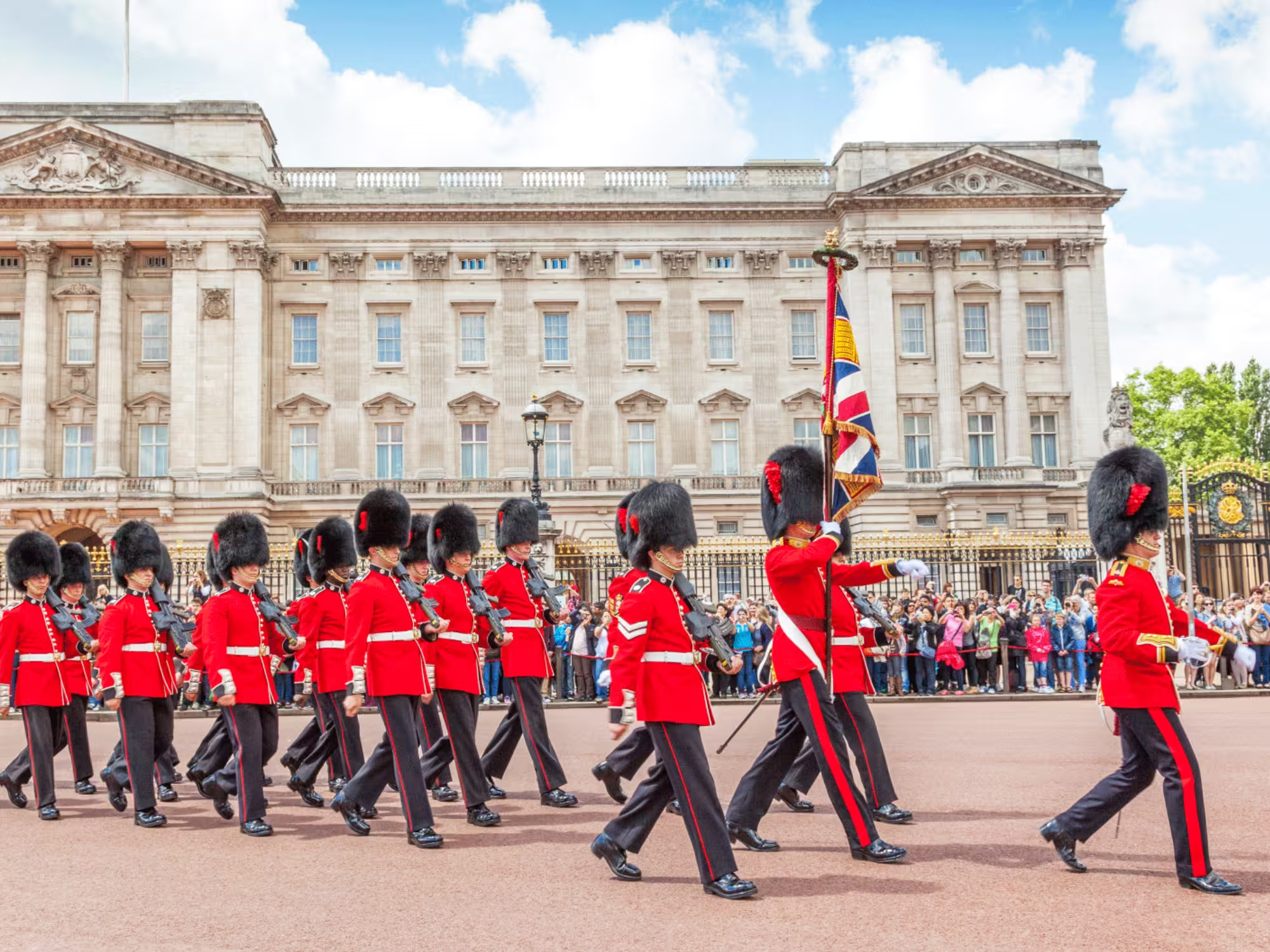
The uniforms, music and procession make this a memorable introduction to royal London. You can watch the outdoor ceremony without paying for a ticket.
Check the official Household Division calendar before deciding which day to visit. The ceremony takes place only a few days a week, and arrangements can change.
If the changing of guards isn’t running, use the morning for Buckingham Palace from the outside and a walk through St James’s Park. You can also switch the order of days in this itinerary to fit your schedule.
For lunch, head to Fresco at the Wash House, inside the Abbey Centre on Great Smith Street.

The café serves options such as jacket potatoes, panini, salads and hot lunch specials. Its indoor seating makes it a useful stop when the class needs a proper break.
Contact the café beforehand to discuss space for your group and a meal option that fits your budget.
After lunch, continue to the London Dungeon.
Actors, theatrical scenes and special effects introduce some of the darker stories associated with London’s past. It’s a lively change of pace after the royal sights, particularly for students who enjoy suspense and performance.
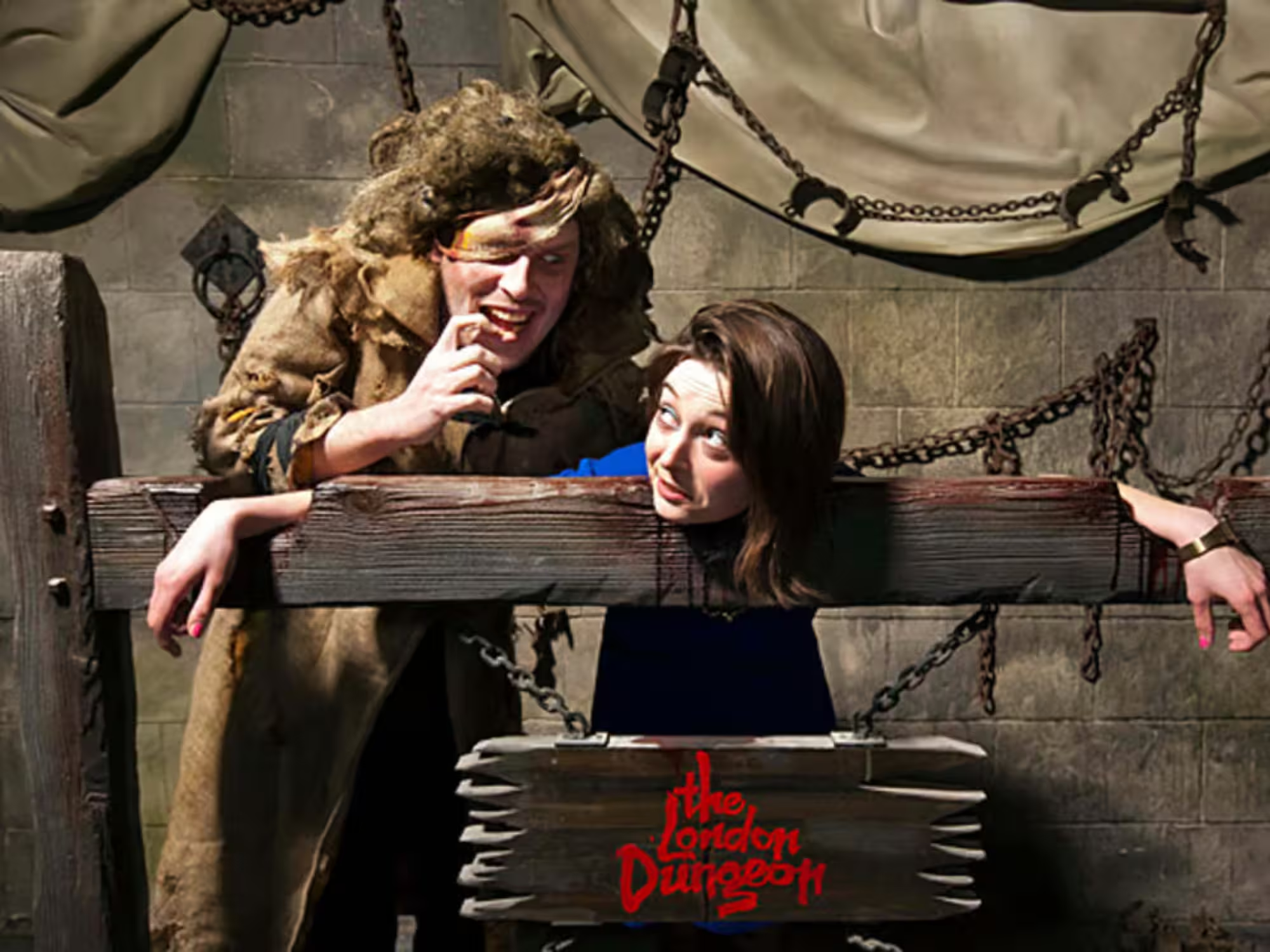
Check that the experience suits your class: the scares are part of the attraction.
Prefer a different option? Swap the Dungeon for Madame Tussauds if your students would enjoy wax figures and photo opportunities more. Allow extra travel time for this alternative, as it takes you away from the Westminster area. Madame Tussauds can be reached easily with the Underground.
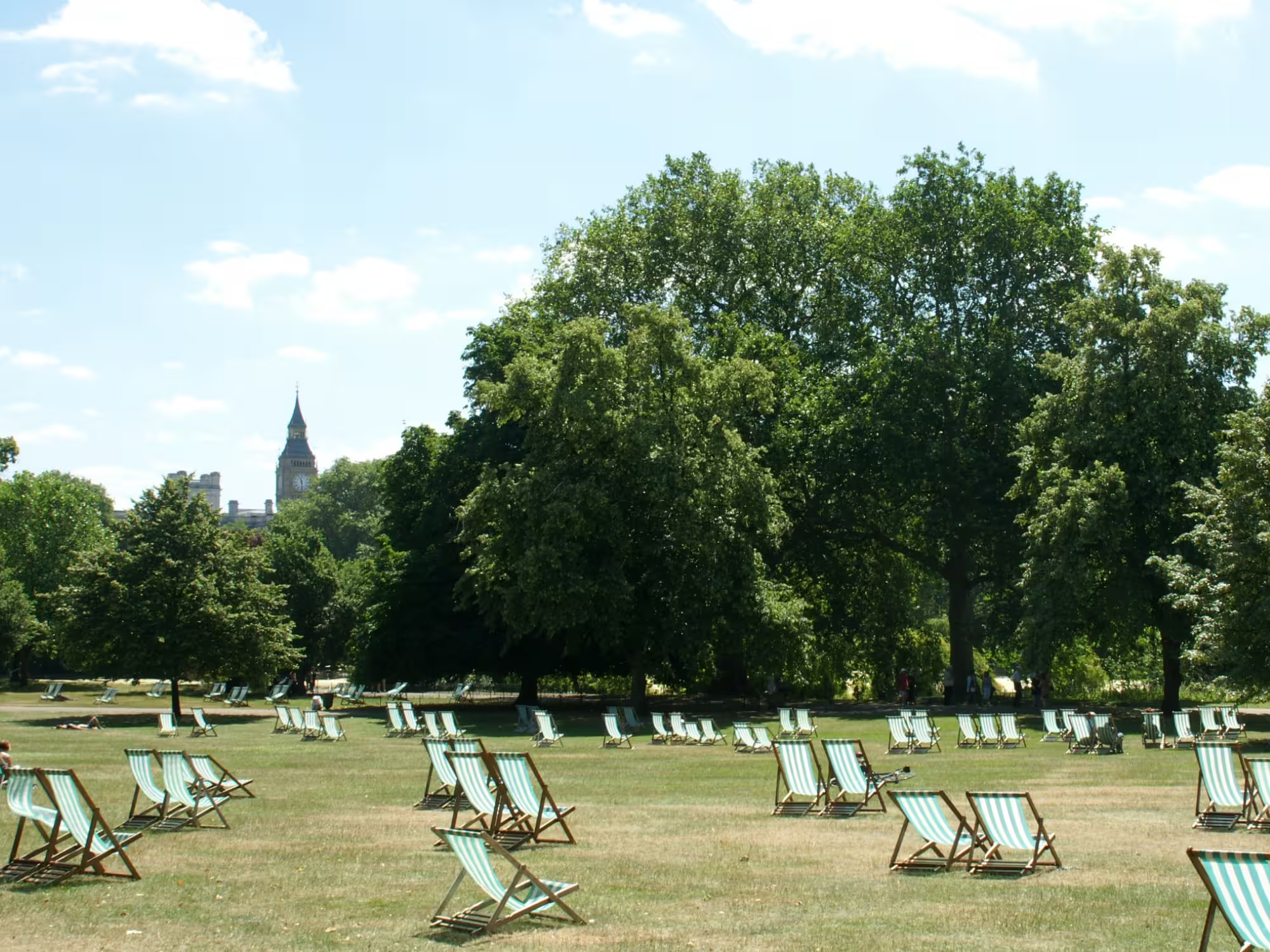
After the afternoon attraction, return to St James’s Park for some breathing space.
Students can relax near the lake, chat or explore the area around Big Ben which is conveniently closeby.
For the evening, choose something simple and sociable: minigolf or bowling.
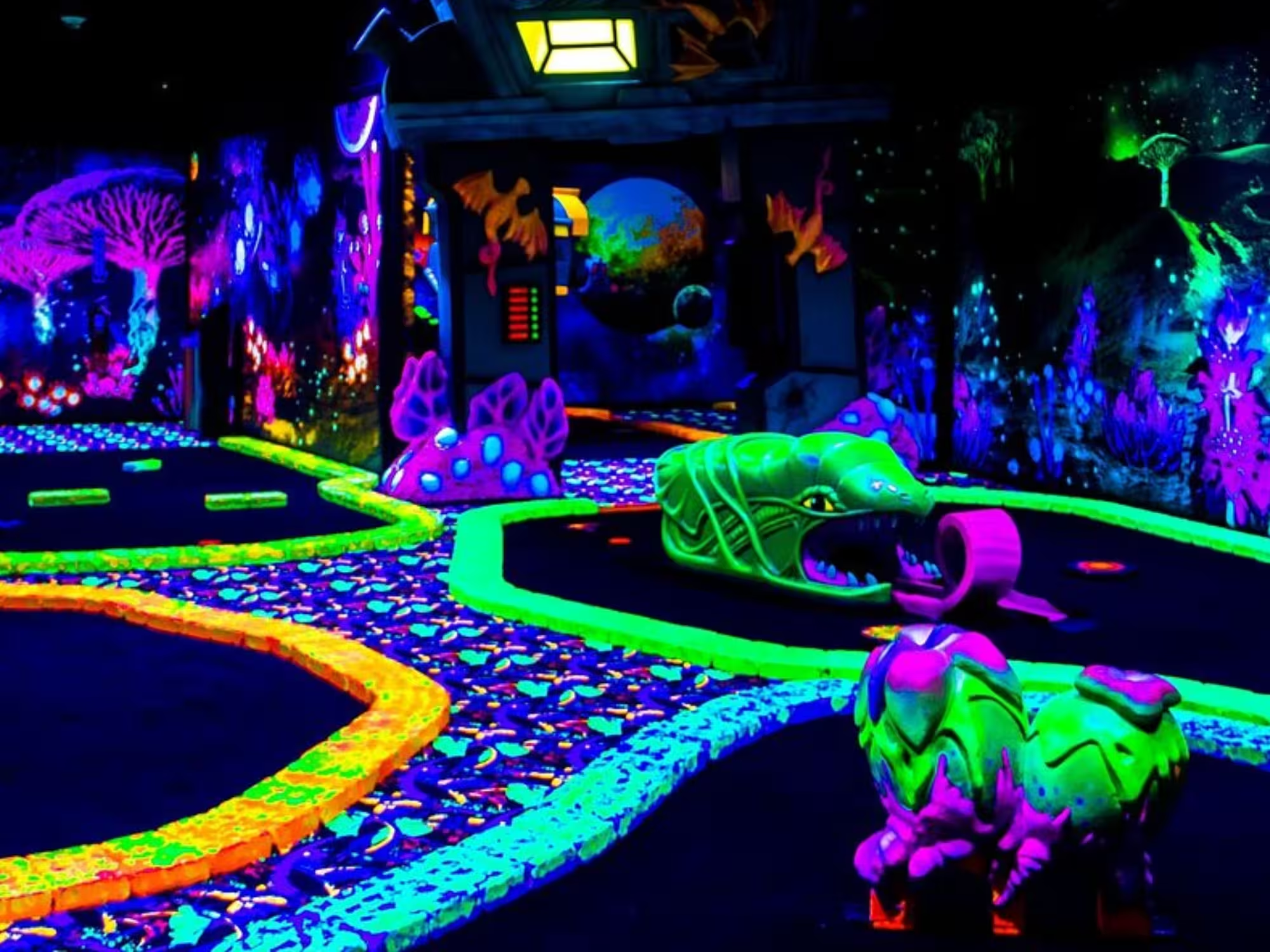
Both give students a chance to spend time together without another information-heavy activity. A little friendly competition is always a good way to finish the day!
Look for a venue that accepts school-age groups during your chosen evening session, and book lanes or playing slots in advance.
The final full day combines one focused museum visit with a more relaxed afternoon.
Keep the morning manageable. After several days in London, students will appreciate having time to explore at their own pace later on.
Start the day at the iconic British Museum.
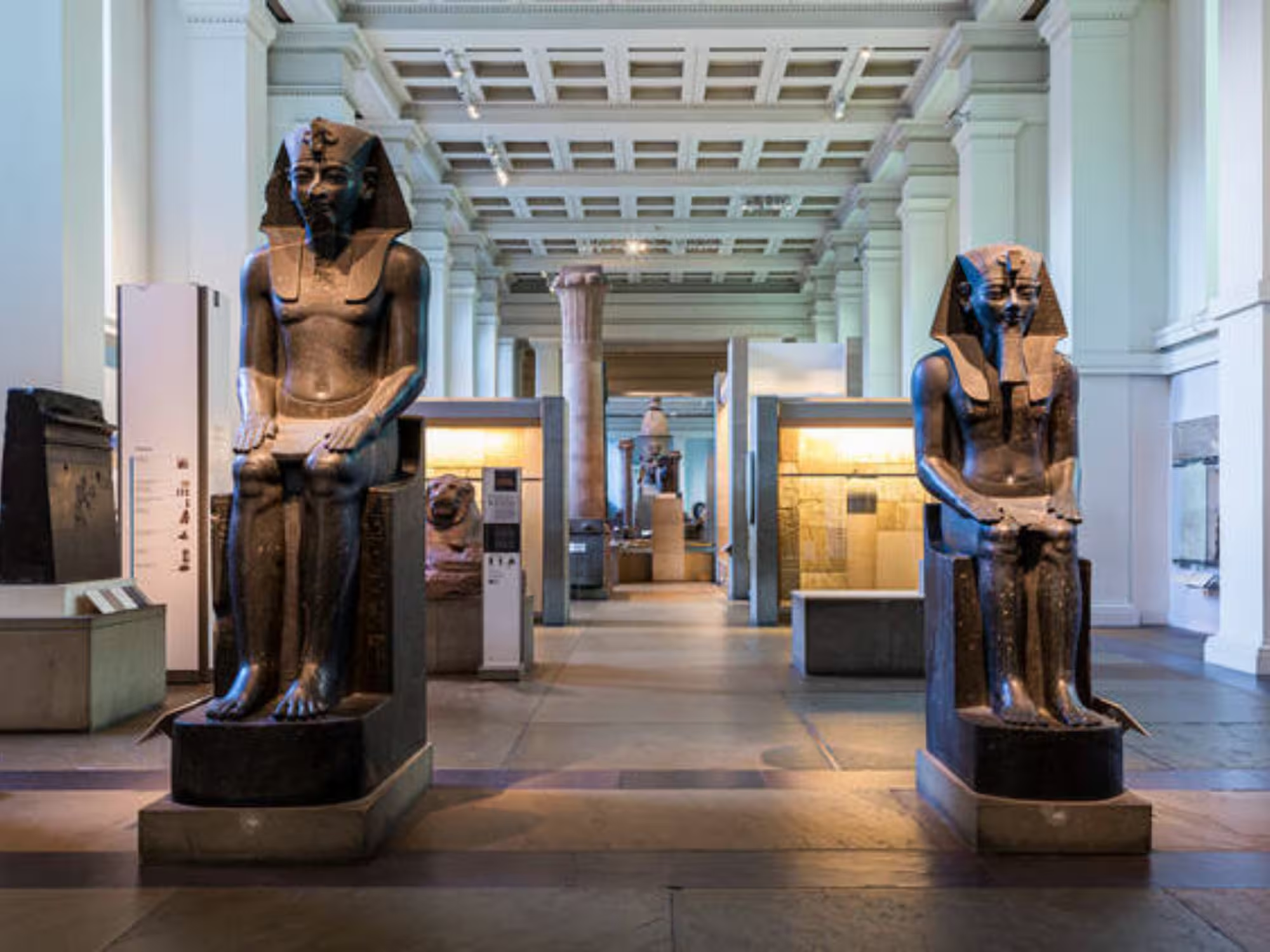
Choose a small number of galleries linked to your lessons, such as ancient Egypt or ancient Greece. You could also check with your group what they are most interested in learning about!In this huge museum, trying to see everything can quickly feel overwhelming, so it’s best to focus on just a part of the exhibitions.
You could also discuss how objects enter the museum’s collections and why their ownership sometimes becomes a subject of debate.
Admission to the permanent collection is free, but school groups need to arrange their visit in advance.
After the museum, stop for packed lunches from your accommodation, or let students choose somewhere to eat within an agreed area. Many accommodation providers in London offer packed lunches to their school group guests, so check with your chosen provider if this could be possible for you as well.
After eating, continue towards Soho for shopping and free time.
After eating, stay in Soho for shopping and free time.
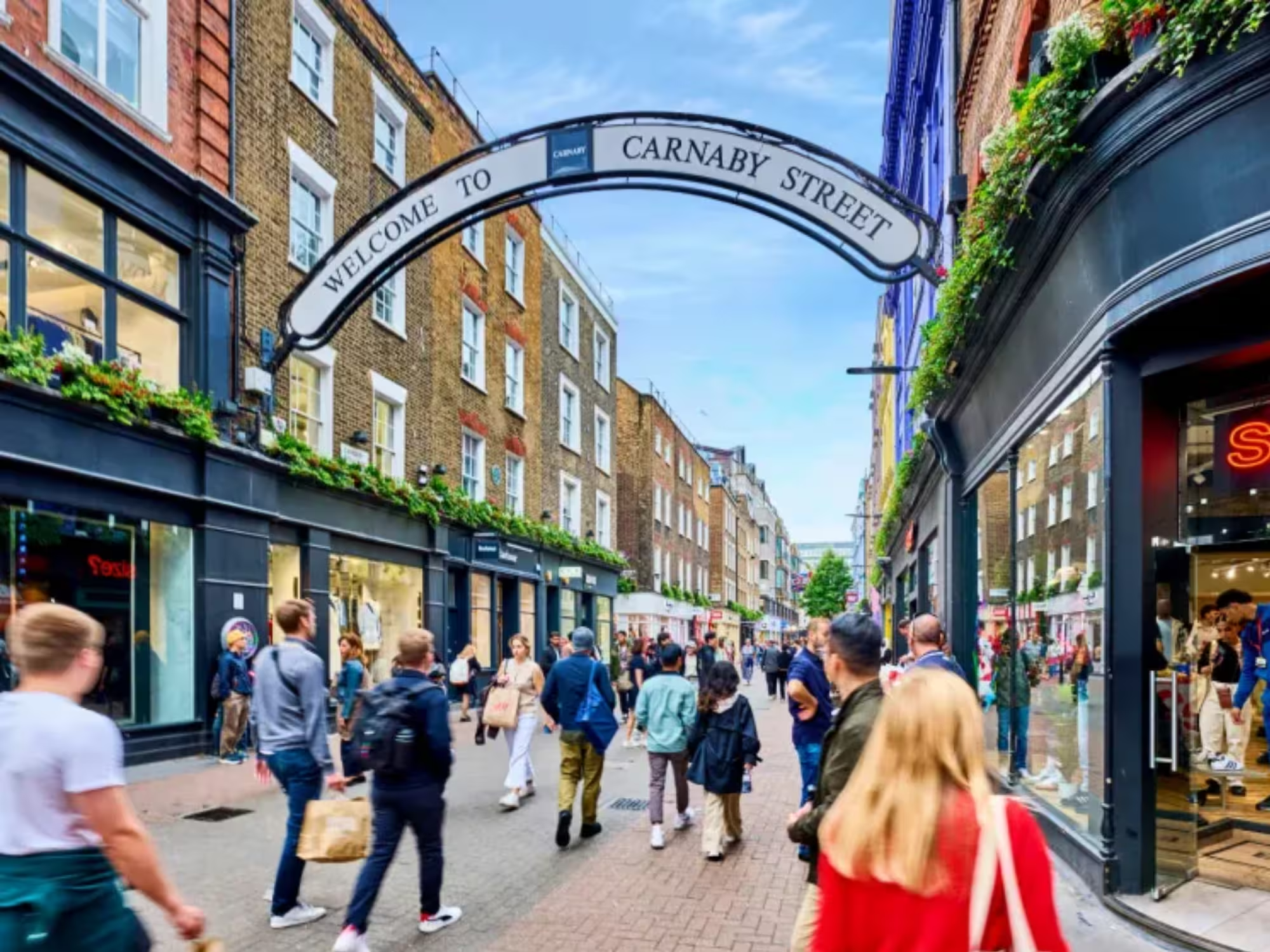
This gives students a chance to browse stores you don’t have at home, buy souvenirs or simply enjoy being in London with their friends. Keep the area clearly defined and agree on a meeting place before splitting into smaller groups.
After a morning of world history and museum exhibitions, an afternoon with fewer instructions can be very welcome.
Return to your accommodation to pack and have dinner.

Getting organised now makes the following departure easier. It also means everyone can enjoy the final evening without returning to a room full of unpacked bags.
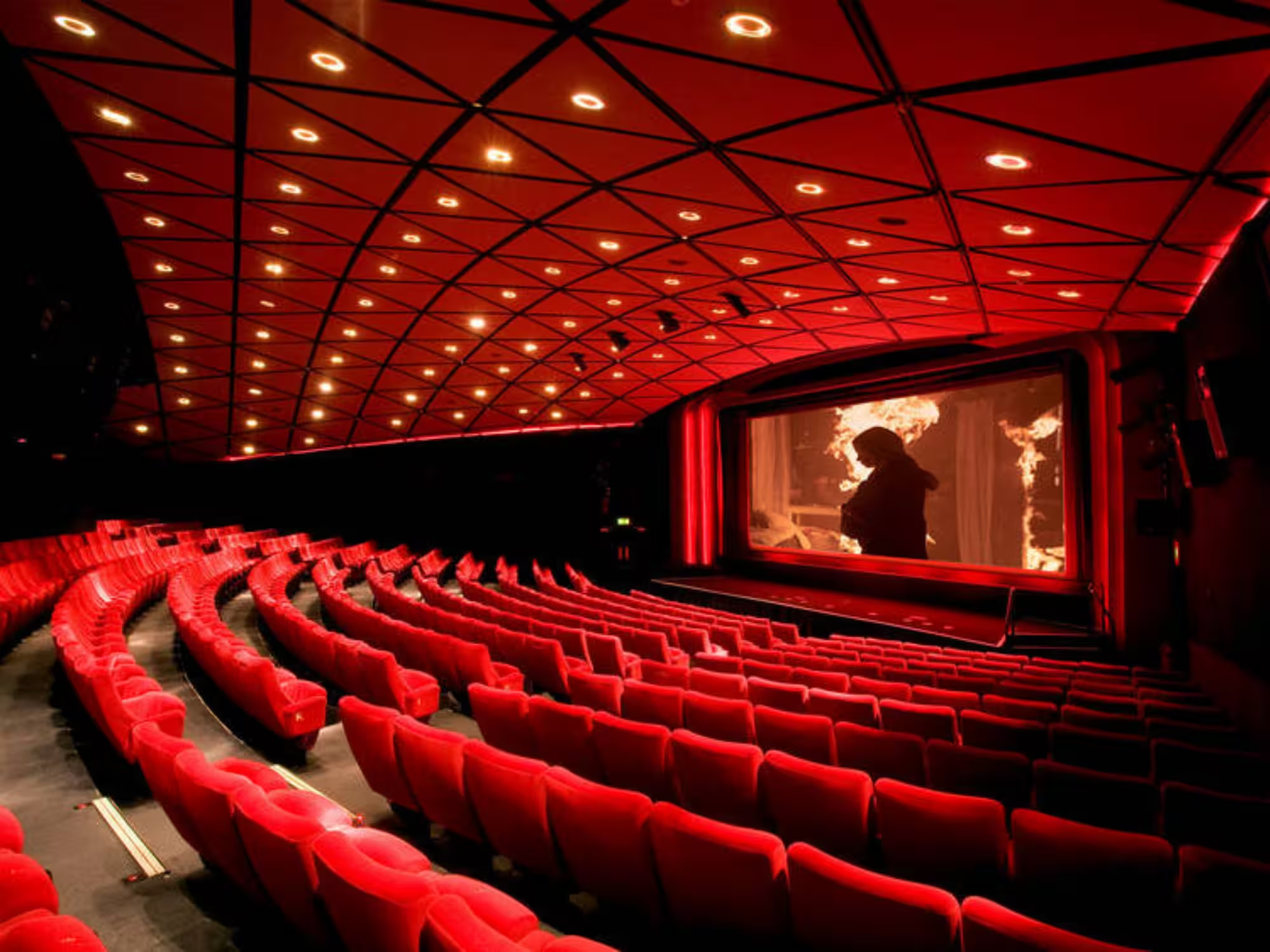
A cinema visit is a relaxed way to finish the trip.
Choose a film that suits the class and enjoy one last evening together. An English-language screening can also give students an enjoyable chance to use their listening skills.
If you would prefer a more active finale and have room in the budget, consider BOOM Lab in Shoreditch.
Its physical and mental team challenges give students another opportunity to work together. Because it involves an additional journey and a separate group booking, treat it as an optional upgrade.
For a trip with several paid attractions already included, we would keep cinema as the main suggestion and ask BOOM Lab for a group quote before making the swap.
Four days give your class time to experience several sides of London.
The Thames introduces the famous landmarks. The East End encourages students to think about inequality and justice. Westminster adds royal traditions, while the British Museum opens up conversations about cultures and history beyond Britain.
Between these activities, there is time for food, shopping, parks and evenings together.
Adapt the order to your travel dates, attraction availability and teaching priorities. In particular, check Changing the Guard and the Globe’s performance calendar before fixing the rest of the programme.
Want your students to experience history through active participation?
With “Murder & Corruption in the Streets of London”, your class explores the historical East End in small teams, solves puzzles and investigates a Victorian murder case.
It’s a chance to turn learning into gameplay, with students making decisions and working towards a shared goal together.
Explore the London SchoolRallye and plan your class’s mission
Planning a school trip to London and looking for a programme that combines learning, sightseeing and time together? This four-day itinerary brings together famous landmarks, an East End murder mystery, royal traditions and relaxed evenings, with suggestions for cheap lunches along the way.
Finding a good combination of fun, education, and convenience while staying within budget on a school trip can be really frustrating. As providers of an educational svavenger hunt in five major European cities, we at SchoolRallye know all too well how hard it can be for teachers to plan the perfect school trip. That’s why this itinerary is planned with short travel distances in mind, while also prioritising cheap prices and nearby lunches for big groups!
In this plan, you’ll…
✅ … discover some of London’s best-known sights, from the Thames to Buckingham Palace.
✅ … explore crime, social inequality, royal history and cultures from around the world.
✅ … solve puzzles together, practise English and enjoy some free time as a class.
The programme groups activities by area where possible, with short Underground journeys between neighbourhoods. The goal of this plan is to make your field trip in London as convenient as possible. There are also regular breaks and optional evening activities, so you can adapt each day to your students and budget.
The first day is all about settling in. After travelling to London, transfer to your accommodation and leave your luggage.
Keep the morning free of organised activities. A delayed journey is much easier to manage when your first booking isn’t immediately after arrival. Have lunch at your accommodation before heading out for your first look at the city.
Start your London school trip with a different view of the capital: from the Thames.
The London Eye River Cruise takes you past landmarks including the Houses of Parliament, St Paul’s Cathedral, Shakespeare’s Globe and Tower Bridge. Live commentary introduces the sights as you travel along the river.
It’s an easy way to get your bearings after the journey. Students can spot places they already recognise, take photographs and listen to English commentary without starting the trip with a long walk.
Book through the operator’s schools service and confirm the rate and accompanying-teacher allowance for your date.
After the cruise, stay on the South Bank for some relaxed free time.
The area between the London Eye, Jubilee Gardens and Royal Festival Hall gives students space to enjoy the riverside, take photographs or pick up a souvenir.
Agree on clear boundaries and a meeting point before everyone heads off in smaller groups. With the first sightseeing activity already behind you, there’s no need to squeeze in another attraction.
Head back to your accommodation for dinner, unpacking and a relaxed evening.
A few card games or board games are enough for the first night. Everyone gets a chance to settle in and spend time together before the first full day of exploring.
After breakfast, head towards the East End.
Today connects a fictional Victorian investigation with real questions about London’s past. Who had power? Whose version of events was believed? And how did someone’s social position affect the way they were treated?
A murder has been committed. The police believe they have found the culprit. But does the evidence tell the same story?
In SchoolRallye’s “Murder & Corruption in the Streets of London”, students become investigators in teams of three or four.
They follow clues, examine evidence and solve puzzles based on early forensic methods as they explore the East End historical district. The mission combines a fictional case with themes from Victorian working-class history, including prejudice, justice and social inequality.
The activity lasts around one and a half to two hours. Your planned route begins and finishes at Spitalfields Markets, covering approximately 1.3 kilometres or 0.8 miles.
It gives students a shared challenge and a reason to look closely at their surroundings. They need to discuss their ideas, question assumptions and work together to move the investigation forward.
The scavenger hunt costs £9.50 per student, with teachers taking part for free! Teachers can choose to play along with their students, or grab a coffee in a nearby café and follow the groups’ progress in the Teacher Cockpit.
After the investigation, head towards Ely’s Yard for lunch.
The street-food options let students choose something for themselves before regrouping. Outdoor seating makes this a weather-dependent stop, so have an alternative in mind if rain is forecast. Luckily, the surrounding area offers lots of options, with the Spitalfields Market being one of them.
To get to the Tower of London, you can include a short walk down Brick Lane before hopping on the Underground. This is the most iconic street of the London East End, and gives the class a chance to view street art, vendors, and iconic buildings along the way. At the end of Brick Lane, take the Underground for one stop to the Tower of London.
At the Tower, keep the focus on crime, punishment and power. A booked school session or suitable tour can help students connect the morning’s questions about justice with the stories of a historic fortress and prison.
Who ended up imprisoned here, and why? How were accusations used against political opponents? These questions give the visit a clear theme and connection to the day’s programme!
After the Tower of London, give the class a break around Tower Gardens and the nearby riverside.
Students can take photographs of Tower Bridge, find a snack or sit down after a busy day. Set a clear meeting point and keep everyone within an agreed area.
Leave time for dinner before the evening programme.
If the performance calendar fits your dates, you can spend the evening at Shakespeare’s Globe!
Watching a play gives students a different way to engage with the English language, and especially the site immerses the students in English history. Everyone knows Shakespeare, and getting to watch a play in this historical theathre is definitely a memorable experience for everyone.
Choose a production that suits your class, and check the seating or standing arrangements before booking. After a full day out, it could be a good idea to avoid the standard standing ticket option.

.svg)
The third day starts with the ceremonial side of London.
After exploring the East End the day before, students will approach Buckingham Palace and its surroundings from a more nuanced point of view. Including this side of London on the third day is a chance to talk about how different parts of the same city reflect differences in wealth, status and tradition.
Begin the day near Wellington Barracks and, when the ceremony is scheduled, watch the New Guard prepare before following their route towards Buckingham Palace.
The uniforms, music and procession make this a memorable introduction to royal London. You can watch the outdoor ceremony without paying for a ticket.
Check the official Household Division calendar before deciding which day to visit. The ceremony takes place only a few days a week, and arrangements can change.
If the changing of guards isn’t running, use the morning for Buckingham Palace from the outside and a walk through St James’s Park. You can also switch the order of days in this itinerary to fit your schedule.
For lunch, head to Fresco at the Wash House, inside the Abbey Centre on Great Smith Street.
The café serves options such as jacket potatoes, panini, salads and hot lunch specials. Its indoor seating makes it a useful stop when the class needs a proper break.
Contact the café beforehand to discuss space for your group and a meal option that fits your budget.
After lunch, continue to the London Dungeon.
Actors, theatrical scenes and special effects introduce some of the darker stories associated with London’s past. It’s a lively change of pace after the royal sights, particularly for students who enjoy suspense and performance.
Check that the experience suits your class: the scares are part of the attraction.
Prefer a different option? Swap the Dungeon for Madame Tussauds if your students would enjoy wax figures and photo opportunities more. Allow extra travel time for this alternative, as it takes you away from the Westminster area. Madame Tussauds can be reached easily with the Underground.
After the afternoon attraction, return to St James’s Park for some breathing space.
Students can relax near the lake, chat or explore the area around Big Ben which is conveniently closeby.
For the evening, choose something simple and sociable: minigolf or bowling.
Both give students a chance to spend time together without another information-heavy activity. A little friendly competition is always a good way to finish the day!
Look for a venue that accepts school-age groups during your chosen evening session, and book lanes or playing slots in advance.
The final full day combines one focused museum visit with a more relaxed afternoon.
Keep the morning manageable. After several days in London, students will appreciate having time to explore at their own pace later on.
Start the day at the iconic British Museum.
Choose a small number of galleries linked to your lessons, such as ancient Egypt or ancient Greece. You could also check with your group what they are most interested in learning about!In this huge museum, trying to see everything can quickly feel overwhelming, so it’s best to focus on just a part of the exhibitions.
You could also discuss how objects enter the museum’s collections and why their ownership sometimes becomes a subject of debate.
Admission to the permanent collection is free, but school groups need to arrange their visit in advance.
After the museum, stop for packed lunches from your accommodation, or let students choose somewhere to eat within an agreed area. Many accommodation providers in London offer packed lunches to their school group guests, so check with your chosen provider if this could be possible for you as well.
After eating, continue towards Soho for shopping and free time.
After eating, stay in Soho for shopping and free time.
This gives students a chance to browse stores you don’t have at home, buy souvenirs or simply enjoy being in London with their friends. Keep the area clearly defined and agree on a meeting place before splitting into smaller groups.
After a morning of world history and museum exhibitions, an afternoon with fewer instructions can be very welcome.
Return to your accommodation to pack and have dinner.
Getting organised now makes the following departure easier. It also means everyone can enjoy the final evening without returning to a room full of unpacked bags.
A cinema visit is a relaxed way to finish the trip.
Choose a film that suits the class and enjoy one last evening together. An English-language screening can also give students an enjoyable chance to use their listening skills.
If you would prefer a more active finale and have room in the budget, consider BOOM Lab in Shoreditch.
Its physical and mental team challenges give students another opportunity to work together. Because it involves an additional journey and a separate group booking, treat it as an optional upgrade.
For a trip with several paid attractions already included, we would keep cinema as the main suggestion and ask BOOM Lab for a group quote before making the swap.
Four days give your class time to experience several sides of London.
The Thames introduces the famous landmarks. The East End encourages students to think about inequality and justice. Westminster adds royal traditions, while the British Museum opens up conversations about cultures and history beyond Britain.
Between these activities, there is time for food, shopping, parks and evenings together.
Adapt the order to your travel dates, attraction availability and teaching priorities. In particular, check Changing the Guard and the Globe’s performance calendar before fixing the rest of the programme.
Want your students to experience history through active participation?
With “Murder & Corruption in the Streets of London”, your class explores the historical East End in small teams, solves puzzles and investigates a Victorian murder case.
It’s a chance to turn learning into gameplay, with students making decisions and working towards a shared goal together.
Explore the London SchoolRallye and plan your class’s mission


