
.svg)


.svg)


.svg)
_converted.avif)
Planning a school trip to London and worried about safety? From navigating the Underground to keeping an eye out for pickpockets, a visit to a large and busy city can create plenty of concerns for teachers and parents.
At SchoolRallye, we understand this challenge all too well. As a provider of activities for pupils and young people, safety is always an important part of our planning. That is why we have spoken to London locals and experienced teachers about the precautions that make a school trip easier to manage.
The good news is that many risks can be reduced with a few simple routines. Clear communication, sensible group rules and good preparation can help pupils feel more confident while giving teachers greater peace of mind.
Here are seven practical safety tips for a school trip to London!

Pupils often keep their phones in their hands or back pockets without thinking. In a crowded city, this makes devices easier to drop, leave behind or steal.
Consider providing a secure phone strap, cross-body phone holder or breakaway lanyard for each pupil. The phone should sit close to the body and, where possible, beneath a jacket rather than hanging visibly.
Before the trip, schedule a short phone-safety check. Make sure pupils know how to lock and locate their devices, and ask them to bring a power bank if their phone will be needed for navigation or communication.
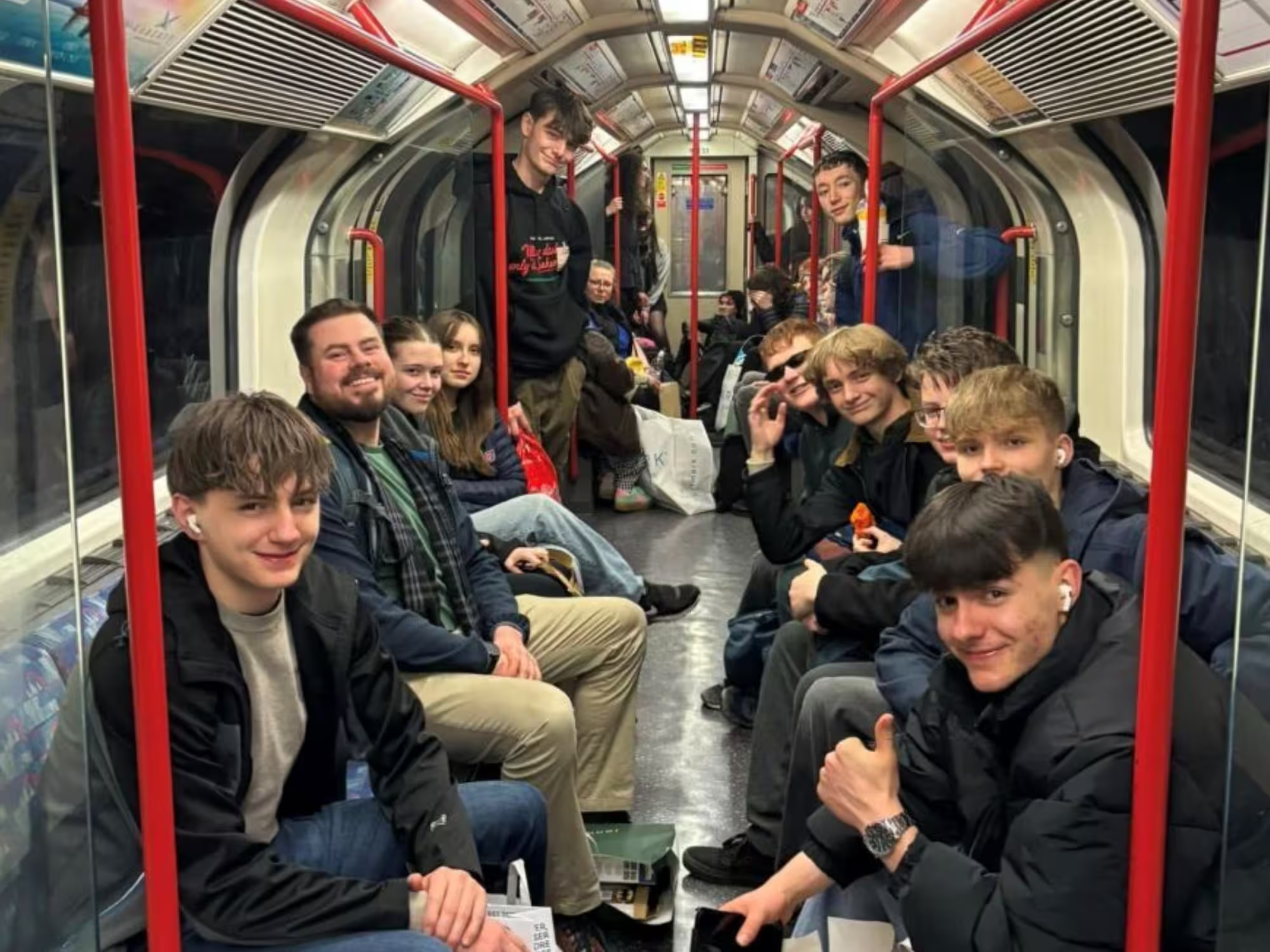
One of the most useful tips we received from experienced teachers was also one of the simplest: tell pupils where the group is going before every journey.
Before entering an Underground or railway station, clearly name the line, direction and destination. Pupils should know which station they are leaving from, where they need to change and which station they will get off at. If a door closes before everyone has boarded, or somebody becomes separated in a crowd, they will still know the plan.
Agree on a simple separation procedure in advance. For example, a pupil who misses a train could remain on the platform with their buddy and contact a teacher.
Another useful tip we got from experienced teachers is to provide everyone with a printed daily itinerary containing addresses, station names, meeting points and the teachers' contact details. Pupils should not have to rely entirely on their memory or on a phone that may run out of battery!
A shared communication channel makes it possible to send an update to the whole group within seconds. This is useful when a meeting point changes, a train is delayed or a teacher needs to check that every small group is on its way.

Depending on the school's rules, this could be a WhatsApp group, a Telegram group or a communication platform already used by the school.
Set clear rules before the trip. The channel should be used for practical information, not general conversation. Ask pupils to keep notifications switched on during travel times and require a short confirmation when an important message is sent.
The group chat should support the trip plan, not replace it. Teachers should still carry printed contact information and establish physical meeting points in case a phone is lost, damaged or has no signal.
No pupil should have to find their way through London alone. Pair pupils with a buddy, or place them in small groups, and make it clear that they must remain together during journeys, breaks and activities.
Before leaving a museum, boarding a train or moving away from a meeting point, pupils should confirm that their buddy is present.
Teachers should of course also carry a group list and count pupils at every transition. Give each superviser responsibility for a clearly defined part of the group rather than relying on one teacher to count everyone.
London's most famous attractions are generally busy, well-used places, but large crowds also create opportunities for pickpockets. Stations, shopping streets, markets, major squares and areas around popular landmarks deserve extra attention.
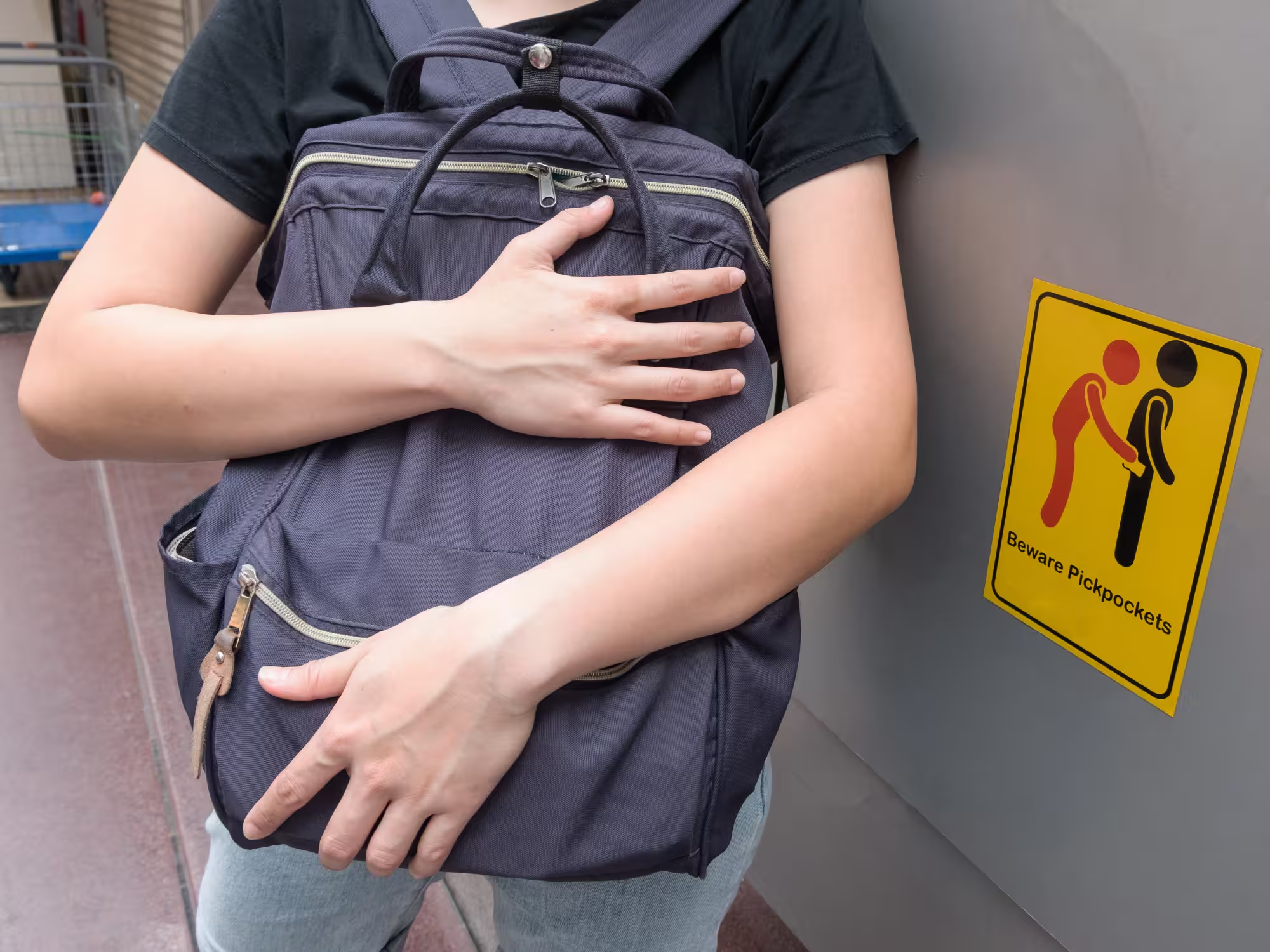
Street performers and public events are not automatically dangerous. The important point is to avoid becoming so distracted that belongings or other group members are forgotten. The Metropolitan Police warns that pickpockets may work in teams, with one person creating a distraction while another takes valuables.
Before booking an activity, ask the provider for its current risk assessment, safeguarding information and emergency procedures.
The assessment should reflect the actual group. Consider the pupils' ages, mobility, medical requirements, confidence and additional needs. Confirm the required adult-to-pupil ratio with both the provider and the school.
Official guidance from the Department for Education recommends proportionate planning that focuses on real and significant risks. The aim is not to remove every element of independence or adventure. It is to understand the activity and put sensible precautions in place.
Lastly, every teacher and older pupil should know who to contact if something happens:
Save these details in pupils' phones and include them on the printed itinerary. Teachers should also carry emergency contacts for parents, the school and any travel or insurance provider.
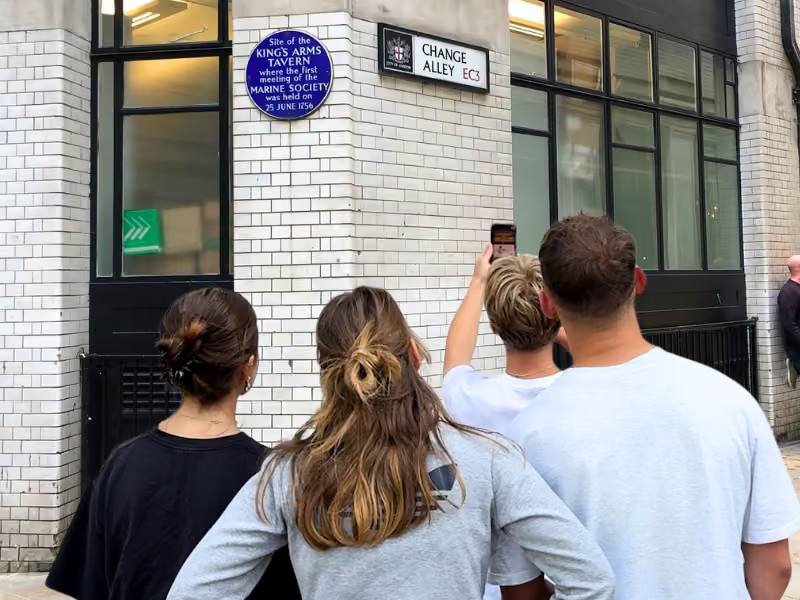
Our digital puzzle mission Murder & Corruption in the Streets of London allows older pupils to explore part of the East End while solving a historical case. Independence is part of the experience, but the route and game structure have been planned specifically for school groups.
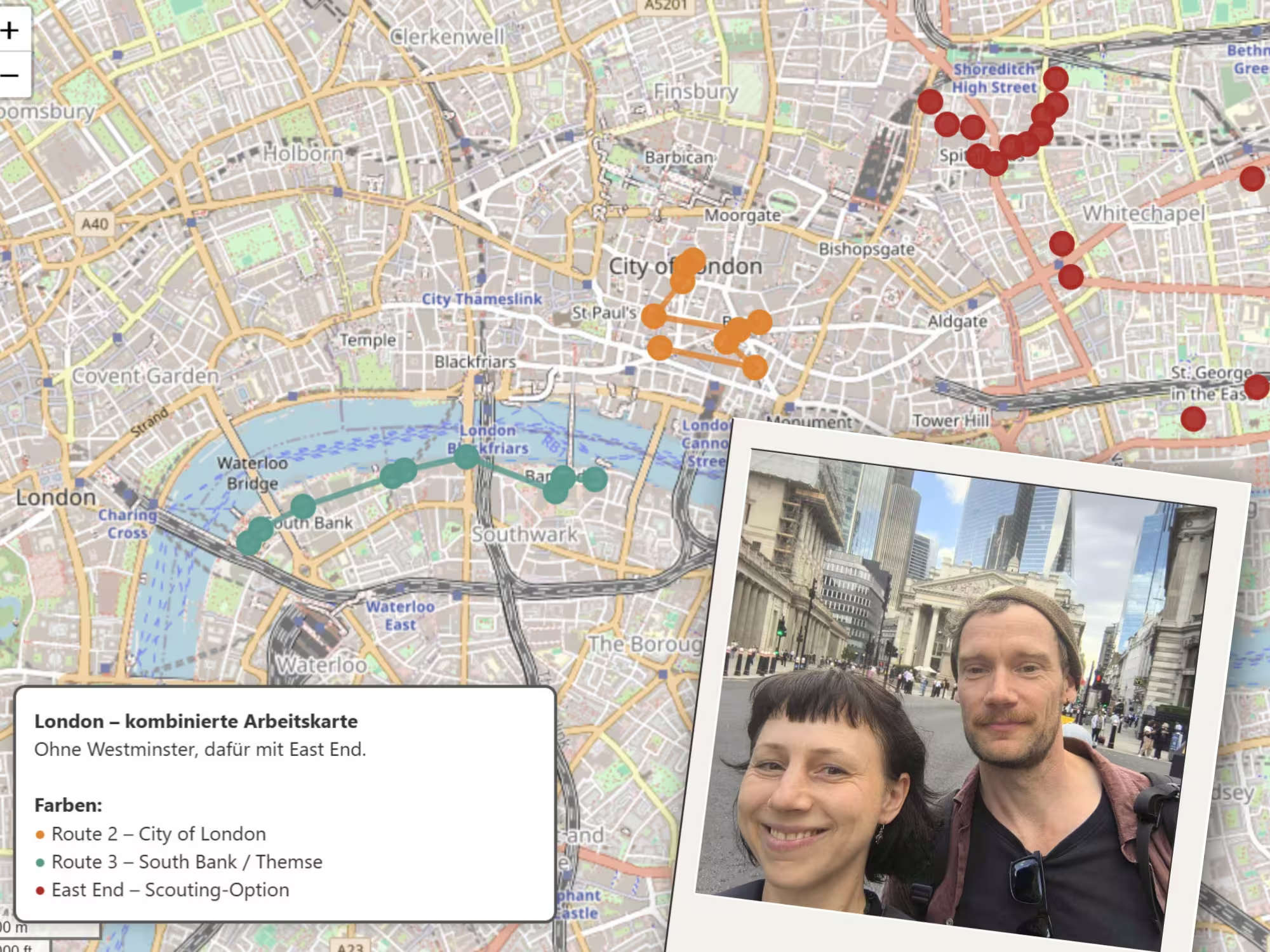
Our team consulted both London locals and experiences tour guides when choosing the area for the game. The route runs through mainly calm residential and business streets with limited traffic in London East End.
Our team travelled to London in person to scout three potential areas for the game, weighing entertainment, education and safety with accessibility and opportunities for independence.
The London East End area was selected since it avoids the large tourist squares and major attraction areas where dense crowds can make group supervision and protecting belongings more difficult. The East End area was recommended to us by both locals and tour guides for its balance between safety, calm traffic, and historical learnings.
_converted.avif)
As part of the game, you as a teacher receive access to the Teacher Cockpit! It provides an overview of the route and lets you follow the teams' live progress during the game. Teachers can see how far each group has advanced and identify a team that may need support.
There is also a possiblity to pause the game for all teams through the Teacher Cockpit if a short rain shower or another interruption makes this necessary!
Pupils complete the mission in teams of three or four. They solve the puzzles, follow the route and make decisions together. No pupil is expected to move around the game area alone.
The London SchoolRallye is designed for pupils aged 13 and above. Older pupils are better able to follow navigation instructions, communicate with teachers and respond appropriately if the group encounters an unexpected situation.
London is a fascinating destination for a school trip. Its transport network, museums, historic streets and cultural attractions give pupils opportunities they cannot experience in a classroom.
The key to managing a group safely is preparation. Make sure pupils know the next destination, stay with their buddies and understand what to do if they become separated. Protect valuables in crowded places, check every activity's safety information and ensure that important contact details are available both digitally and on paper.
When pupils understand the plan, they can move through the city with greater confidence. You as a teacher can then spend less time worrying about avoidable problems and more time helping your class enjoy everything London has to offer!
%20(4).png)
_converted.avif)
_converted.avif)

%20(2)_converted.avif)
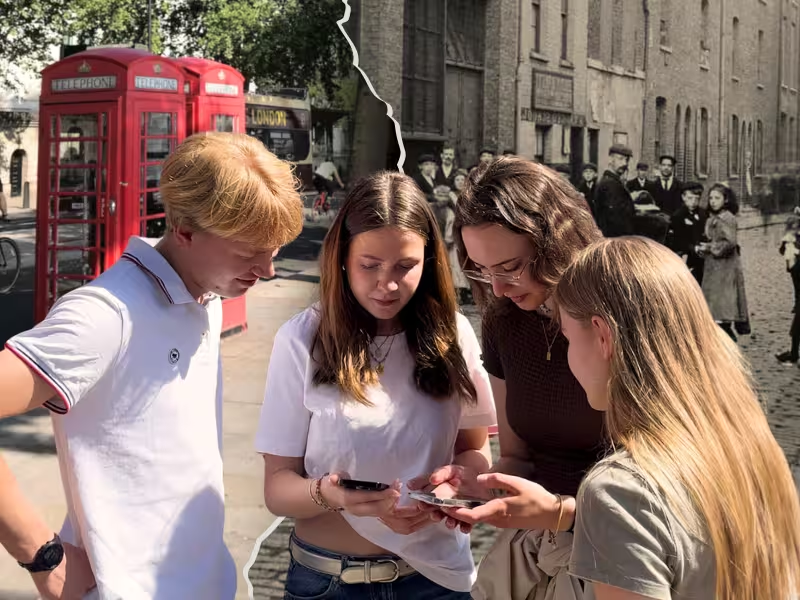
A spectacular mission awaits you! Scotland Yard sends a young detective to investigate a brutal murder. For the local police, the case is clear: a factory worker is the killer. But hidden in the thick fog of London’s streets lies a dark truth. Recover the stolen police file, examine the evidence and help the detective bring the real murderer to justice before an innocent man is convicted.
Read more_converted.avif)
Planning a school trip to London and looking for a programme that combines learning, sightseeing and time together? This four-day itinerary brings together famous landmarks, an East End murder mystery, royal traditions and relaxed evenings, with suggestions for cheap lunches along the way.
Read articlePlanning a school trip to London and worried about safety? From navigating the Underground to keeping an eye out for pickpockets, a visit to a large and busy city can create plenty of concerns for teachers and parents.
At SchoolRallye, we understand this challenge all too well. As a provider of activities for pupils and young people, safety is always an important part of our planning. That is why we have spoken to London locals and experienced teachers about the precautions that make a school trip easier to manage.
The good news is that many risks can be reduced with a few simple routines. Clear communication, sensible group rules and good preparation can help pupils feel more confident while giving teachers greater peace of mind.
Here are seven practical safety tips for a school trip to London!
Pupils often keep their phones in their hands or back pockets without thinking. In a crowded city, this makes devices easier to drop, leave behind or steal.
Consider providing a secure phone strap, cross-body phone holder or breakaway lanyard for each pupil. The phone should sit close to the body and, where possible, beneath a jacket rather than hanging visibly.
Before the trip, schedule a short phone-safety check. Make sure pupils know how to lock and locate their devices, and ask them to bring a power bank if their phone will be needed for navigation or communication.
One of the most useful tips we received from experienced teachers was also one of the simplest: tell pupils where the group is going before every journey.
Before entering an Underground or railway station, clearly name the line, direction and destination. Pupils should know which station they are leaving from, where they need to change and which station they will get off at. If a door closes before everyone has boarded, or somebody becomes separated in a crowd, they will still know the plan.
Agree on a simple separation procedure in advance. For example, a pupil who misses a train could remain on the platform with their buddy and contact a teacher.
Another useful tip we got from experienced teachers is to provide everyone with a printed daily itinerary containing addresses, station names, meeting points and the teachers' contact details. Pupils should not have to rely entirely on their memory or on a phone that may run out of battery!
A shared communication channel makes it possible to send an update to the whole group within seconds. This is useful when a meeting point changes, a train is delayed or a teacher needs to check that every small group is on its way.
Depending on the school's rules, this could be a WhatsApp group, a Telegram group or a communication platform already used by the school.
Set clear rules before the trip. The channel should be used for practical information, not general conversation. Ask pupils to keep notifications switched on during travel times and require a short confirmation when an important message is sent.
The group chat should support the trip plan, not replace it. Teachers should still carry printed contact information and establish physical meeting points in case a phone is lost, damaged or has no signal.
No pupil should have to find their way through London alone. Pair pupils with a buddy, or place them in small groups, and make it clear that they must remain together during journeys, breaks and activities.
Before leaving a museum, boarding a train or moving away from a meeting point, pupils should confirm that their buddy is present.
Teachers should of course also carry a group list and count pupils at every transition. Give each superviser responsibility for a clearly defined part of the group rather than relying on one teacher to count everyone.
London's most famous attractions are generally busy, well-used places, but large crowds also create opportunities for pickpockets. Stations, shopping streets, markets, major squares and areas around popular landmarks deserve extra attention.
Street performers and public events are not automatically dangerous. The important point is to avoid becoming so distracted that belongings or other group members are forgotten. The Metropolitan Police warns that pickpockets may work in teams, with one person creating a distraction while another takes valuables.
Before booking an activity, ask the provider for its current risk assessment, safeguarding information and emergency procedures.
The assessment should reflect the actual group. Consider the pupils' ages, mobility, medical requirements, confidence and additional needs. Confirm the required adult-to-pupil ratio with both the provider and the school.
Official guidance from the Department for Education recommends proportionate planning that focuses on real and significant risks. The aim is not to remove every element of independence or adventure. It is to understand the activity and put sensible precautions in place.
Lastly, every teacher and older pupil should know who to contact if something happens:
Save these details in pupils' phones and include them on the printed itinerary. Teachers should also carry emergency contacts for parents, the school and any travel or insurance provider.

.svg)
Our digital puzzle mission Murder & Corruption in the Streets of London allows older pupils to explore part of the East End while solving a historical case. Independence is part of the experience, but the route and game structure have been planned specifically for school groups.
Our team consulted both London locals and experiences tour guides when choosing the area for the game. The route runs through mainly calm residential and business streets with limited traffic in London East End.
Our team travelled to London in person to scout three potential areas for the game, weighing entertainment, education and safety with accessibility and opportunities for independence.
The London East End area was selected since it avoids the large tourist squares and major attraction areas where dense crowds can make group supervision and protecting belongings more difficult. The East End area was recommended to us by both locals and tour guides for its balance between safety, calm traffic, and historical learnings.
As part of the game, you as a teacher receive access to the Teacher Cockpit! It provides an overview of the route and lets you follow the teams' live progress during the game. Teachers can see how far each group has advanced and identify a team that may need support.
There is also a possiblity to pause the game for all teams through the Teacher Cockpit if a short rain shower or another interruption makes this necessary!
Pupils complete the mission in teams of three or four. They solve the puzzles, follow the route and make decisions together. No pupil is expected to move around the game area alone.
The London SchoolRallye is designed for pupils aged 13 and above. Older pupils are better able to follow navigation instructions, communicate with teachers and respond appropriately if the group encounters an unexpected situation.
London is a fascinating destination for a school trip. Its transport network, museums, historic streets and cultural attractions give pupils opportunities they cannot experience in a classroom.
The key to managing a group safely is preparation. Make sure pupils know the next destination, stay with their buddies and understand what to do if they become separated. Protect valuables in crowded places, check every activity's safety information and ensure that important contact details are available both digitally and on paper.
When pupils understand the plan, they can move through the city with greater confidence. You as a teacher can then spend less time worrying about avoidable problems and more time helping your class enjoy everything London has to offer!
A spectacular mission awaits you! Scotland Yard sends a young detective to investigate a brutal murder. For the local police, the case is clear: a factory worker is the killer. But hidden in the thick fog of London’s streets lies a dark truth. Recover the stolen police file, examine the evidence and help the detective bring the real murderer to justice before an innocent man is convicted.
Learn more
Plan an educational London field trip with eight fun ideas for school groups, from historic ships and city puzzles to river fieldwork.
View article

